Showing posts with label 5 (So-So). Show all posts

Sunday, July 15, 2018

The Incredibles 2


Alternate Title:  Bird Food
                                                                                                                                                            
One sentence synopsis:  The Incredible family struggles to get Superheroes accepted by the populace at large while facing down the threat of the mysterious Screen Slaver.


Things Havoc liked: It's hard to imagine the cinematic world that the original Incredibles was released into in 2004, a world wherein superhero movies were considered a risky proposition, cinematic universes did not exist, Marvel made bad movies, and Brad Bird was an ex-Disney animator, who had directed and written a well-regarded bomb called The Iron Giant, and whom Pixar was taking one of a series of massive gambles on in entrusting him with another animated picture to helm. Of course that gamble paid off, with Incredibles becoming one of the many sterling victories that led Pixar to dominate the animation landscape of the 00s. In the wake of its success, I, and others, wondered for years why Pixar never followed up on such a rich opportunity, particularly as other sequels such as Monsters University or the Cars followups came and went. I still don't know the answer, but I do know that here we are, fourteen years later, and Bird has finally come up with the sequel we all expected years ago.

Picking up exactly where the last film left off, Incredibles 2 continues the (mis)adventures of the Parr family, still struggling with the fact that superheroes like them are officially illegal. With their existence exposed yet again following the first movie, and their house destroyed by a supervillain, they come into contact with a pair of billionaire siblings who intend to see the laws against superheroes reversed through timely, high-profile actions and heroics. While Elasti-girl (Holly Hunter) goes out to fight crime, legally or otherwise, her husband Mr. Incredible (Craig T. Nelson) must stay at home to take care of their kids, Violet, Dash, and Jack-Jack. This much the trailers reveal, and I wasn't exactly enthralled with the prospect, as the "bumbling Dad trying to take care of the house and kids" routine is a staple of bad sitcoms for a reason. To my surprise though, these sequences are probably the best ones in the film, full of sight gags and general madness enough to keep the movie moving. As with the first film, the characters are both well-drawn and well-animated (I apologize for nothing), and the movie doesn't spend a lot of time on Mr. Incredible's incredible shortcomings, instead going rapidly for mad science, the insanities of a superhero fashion designer (voiced again by Brad Bird), and battles between a superpowered baby, a raccoon, and physics. The best parts of Incredibles 2 are when the characters are just allowed to exist in their world together, as it was in the first movie.

Not that the rest of the movie is letting the side down, necessarily. Samuel L. Jackson's Frozone gets a much increased role, including impromptu babysitting support, which is always good for a laugh. The action, and there is quite a bit of it, is well-paced and orchestrated beautifully, with most of the work going to Elasti-Girl, and standout sequences involving a fistfight in a Faraday Cage covered in hypnosis-inducing screens, and an extended brawl in the innards of a cruise ship between a girl who can turn invisible and summon forcefields and another one who thinks with Portals. The voice-acting is top notch across the board (save for Nelson, who sounds tired and detached from his role), with all of the old standbyes returning for more, and the addition of everyone from Catherine Keener (second week in a row I've encountered her), to Johnathan Banks, Phil LaMarr, and (of all people) Isabella Rossellini.


Things Havoc disliked: If all of the above seems rather mechanical (here is what the movie is about, here is who is in it), I assure you, there's a reason.

I want to get out ahead and say that I didn't dislike Incredibles 2 at all, it's a well-made movie with decent-to-good animation, casting, and action. But I also want to get out ahead and say that it isn't much more than those things, a competent movie executed by a competent cast, crew, writer and director. And as to why that is, we have to go back to the creator of the Incredibles, Brad Bird.

You see, Brad Bird, moreso than most writers or directors in Hollywood, is obsessed with a single idea, that of special, uniquely gifted people who are hated and feared by the wider society around them. The Incredibles 1 was about this. The Iron Giant was about this. Tomorrowland was about this. And guess what, Incredibles 2 is... also about this. Granted, to a certain extent that makes sense, the first movie set up a world wherein supers were feared and rendered illegal, and dealing with the ramifications of that is an obvious way to take the story, but that's just it, it's an obvious way to proceed, and one that should have been re-thought. Incredibles is set in no discernible time, but seems to be focused on some kind of golden-age-of-comics era crossed with a comic book future, and that whole dynamic does not jive very well with sad parents contemplating homelessness for themselves and their children because their superpowers make them outcasts and pariahs. I don't mind a bit of tonal discord now and again, but Bird's continuing fixation on how put-upon the special people of the world are gets in the way of the story, and is one of the reasons he's often accused of being way too Randian in his fixations (trying to get a movie version of The Fountainhead produced doesn't help). I'm not going to go that far (Tomorrowland spent half its runtime rebutting such allegations by casting the Randians as the villains), but at this point, Bird has said everything there is to say on this subject, and it's becoming boring.

And when you take that subject out of the movie, there's just not much to Incredibles 2. The plot is... fine, I guess, but entirely predictable from beginning to end, with yet another villain who is not only telegraphed but out to get the Parr's because they resent special people for some reason (*yawn*). The progression of the story is pedestrian in the extreme, with everything happening because it makes sense structurally to happen. When the end of the movie comes, there's little-to-no emotional catharsis to anything, because the stakes have never been established in a way anyone can relate to, and if the MCU has taught us anything, it's that this is something great comic book movies need to be able to do. Incredibles 2 cannot, which in turn leads one to question automatically if it can be called a great anything.


Final thoughts:   I see why Incredibles 2 made a billion dollars and why it is popular, for there's nothing really wrong with it, but like most of the films I've seen in 2018 so far, there's not a lot really right with it either. The characters are engaging enough, particularly Violet, and the animation is generally engaging and occasionally interesting (though it does come with a warning about photosensitive epilepsy, so YMMV). But there's just not a lot within it that demands to be seen. Maybe that's faint criticism overall, but I'm just getting tired of movies that refuse to insist on a reason for their own existence.

Go see Incredibles 2 if you're interested. I, on the other hand, am moving on to smaller and better things. I hope.

Final Score:  5.5/10


Next Time:  Smaller and Better Things (I hope)

Sunday, June 24, 2018

Ocean's 8


Alternate Title:  Diamonds are a Girl's Best Friend
                                                                                                                                                            
One sentence synopsis:  Danny Ocean's sister recruits a team of female thieves to steal a valuable diamond necklace from the New York Met Gala.


Things Havoc liked: I really liked Ocean's Eleven (the Clooney version). I did not like its sequels. In this, I expect that I resemble largely every moviegoer in America. The original (yes, I know it's a remake, shut up), was a cool, confident heist film, one that held together well, had interesting character actors playing interesting character roles, and was overall a template for how modern heist movies should be made. Soderbergh has gone on to bigger and better things since the Ocean's series seemingly ended, but here comes Gary Ross, of Pleasantville and the surprisingly good Free State of Jones, to give us an all-female version of the formula.

All-female versions of movies, well... let's be honest with ourselves here, they generally suck. They suck because the selling point of the movie is simply that the cast is female, with no thought given to making the movie stand out from their source material in any way beyond this, meaning that the film is almost definitionally derivative, often resulting in abject crap like the Ghostbusters remake of 2016. But to do this as a heist film makes a lot more sense. Heist films are inherently derivative, in that the plot is effectively "steal some shit", and the film is the course of the characters going about stealing it. Doing an all-female version of that makes far more sense than remaking a specific film, especially if the cast is good.

And oh yes, this cast is good. Cate Blanchett, an actress I love, plays Lou, partner in crime to Debbie Ocean, our protagonist, and basically takes on the Brad Pitt role from the original film, wisecracking and being generally cool. Mindy Kaling, whom I love dearly, and Helena Bonham Carter, whom I love dearly on the rare occasions when she's not working with Tim Burton, both liven the cast tremendously, the former as a jeweler desperate to get away from her domineering parents, the latter as an Irish fashion designer desperate to get away from the piles of IRS debt she has incurred through disastrous decisions (an early sequence wherein one of her fashion shows flops magnificently is a highlight). But the best element of the cast is Anne Hathaway, playing the air-headed celebrity target of the heist itself, who gets all the best material playing the sort of person who can lose someone else's $150,000,000 necklace and get angry at them for being upset.

Heist films live or die by their plot coherence, and Ocean's 8 manages to avoid the pitfalls that ruined movies like Logan Lucky by having one that works. The key here is plausibility. The steps that the girls take to steal the jewels they are after make sense within the context of the film, even if a sharp-eyed smark can find ways in which things would fall apart in the real world. We can follow the action from start to finish, and the obligatory twists as the plan almost falls apart and is rescued at the last second are believable, if extreme. This is not as minor a factor as it sounds, as it takes real skill to put together a plot that convincingly sounds like an impossibly difficult plan pulled off by a team of skilled con artists and thieves, and not like a load of writer contrivance designed to get the audience forcefully to the next scene.


Things Havoc disliked: You may have noticed, if you are familiar with this movie, that when I praised the cast, I neglected to mention the actual lead, Sandra Bullock, an actress I also dearly love, and who is just not good at all in this one. I don't know what went wrong, if she made a bad set of decisions in terms of her acting or if the director gave her bad instructions, but she's terrible in this film, attempting to replicate the George Clooney chill by simply bleeding all emotion out of her character entirely. Everyone else in the movie manages to evidence cool without evidencing such a boring affect, so why Bullock can't is utterly beyond me.

But the main problem with Ocean's 8 is that it's just... alright. It has an all right plot with an alright heist attached to it, planned and executed by alright characters to meet its alright ending with some alright jokes along the way. It managed to entertain for its run time, but only just, and leave a positive impression, but only slightly. It's in every way a 'passable' film, not excelling, not failing, just pretty decent across the board. Whether this is because there was no real intention to make it more than "alright", given that most movies of its type are not even that, or because whatever thrills and excitement the filmmakers intended to add to it simply didn't make it through, I have no idea. The result is the same. Ocean's 8 is an alright film. It is not much more.


Final thoughts:   I really hate writing reviews like this one, as movies that engender a passionate response, be it positive or negative, are much easier to review. Still, I can't get mad at Ocean's 8, as it is a perfectly serviceable, pretty decent movie, one I will not be recalling with scorn once the end of the year worst list comes around (probably). Go see it if you are enthusiastic about the cast or concept, and skip it if not. It makes very little difference either way.

Final Score:  5.5/10

Next Time:  Dinosaurs!

Wednesday, August 16, 2017

Atomic Blonde


Alternate Title:  Sexy Iron Curtain
                                                                                                                                                            
One sentence synopsis:  An MI6 super-spy is sent to 1989 Berlin to extract a Communist dissident with a list of undercover agents.


Things Havoc liked:   And so begins the John Wick ripoffs!

Well, actually, let's be honest. John Wick ripoffs have been a thing for a while now, pretty much since the original John Wick came out back in late 2014. Movies like The Accountant and The Equalizer have been gleefuly stealing a page from John Wick's handbook, to say nothing of the sequel itself, and frankly, I'm all for it. I once famously predicted that Action movies were "over", right before a whole slew of them came out and proved how wrong I was. Not all of this new wave of action films used John Wick as a model but a lot of them did, and why not? John Wick was a breath of fresh air in a stale genre, a move away from the ugly, grimy dictates of shaky-cam into a more stylized and cinematic style of action filmmaking. Not all of the movies made in this style have been any good (The Equalizer was largely a waste of time), but the style itself has earned my attention, and throwing one of the biggest female action stars of the day into one of them was the sort of thing destined to make my film schedule, particularly when the director of the affair is David Leitch, a former stuntman whose directorial debut, all the way back in 2014, was John Wick itself.

Atomic Blonde stars Charlize Theron, the most beautiful woman in the world, of Snow White and the Huntsman, Fast and Furious 8, and Mad Freaking Max (to name only her recent works). I was sold on this one from the word go, as a result, and as far as Theron is concerned, that was a wise decision. Theron is no stranger to action films, of course, nor to inflicting tremendous punishment on herself in order to make them work, and her credentials as an actress have never been in doubt (she won an Oscar for Monster, after all). Theron's character, a late-cold-war spy and ludicrously dangerous killer, is rather thin on detail, but Charlize has so much native charisma that she can take the "tough, monotone badass" interesting to watch despite the paucity of actual material. And she is ably assisted in this one by her supporting cast, including James McAvoy as a gallivanting British spymaster (and drunk), John Goodman as a CIA handler (doing his best avuncular semi-asshole routine), and everyone from legendary character actors James Faulkner, Toby Jones, and Til Schwieger to ubiquitous Algerian badass Sofia Boutella in supporting roles. I will be the first to admit that these guys don't always have a lot to work with, but they're an exalted group of cinematic veterans, and it's fun watching any of them doing anything at all, to be honest.

But John Wick and its imitators are not character-heavy dramas bursting with human interest, they are action movies, and the action in Atomic Blonde is what the movie has to stand on. We'll talk more about the action overall in a moment, but the quality of the work here is superb, by and large, hinging in particular around a showstopper of a long-take sequence in which our heroine has to battle six men inside a Berlin apartment building, a battle which lasts at least six minutes, and spills through corridors, stairwells, and into vacant apartments. Not only is the sequence a masterpiece of action filmmaking, something that should be beyond question with someone like Leich at the helm, but it is a masterpiece of how to shoot a female action lead, as with the exception of a few action movie suspension of disbelief staples (like the fact that anyone can keep fighting after having been thrown down a flight of stairs and struck in the face with a lead pipe), the movie showcases the myriad ways in which a 120-pound woman might well try to fight six men who are each twice her size and weight. The sequence begins with precise, brutal martial arts, and ends with two combatants so exhausted and beaten that they can barely stand, grabbing desperately at corkscrews and shards of crockery to try and stab one another's eyes out. It's marvelous.


Things Havoc disliked: The rest of the film is not.

John Wick for those who don't remember, was a seminal work of action filmmaking, but part of the reason for that was its laser focus on the action and the style. Its plot was so throwaway as to be a joke, a single invincible killing machine wreaking death and vengeance on his enemies for the slight of having stolen his car and killed his dog. Atomic Blonde, on the other hand, based as it is on an Antony Johnson graphic novel (unread by me), tries to be much more than just a grindhouse-style action fest, and in doing so, more or less screws the whole enterprise. Absent that one, stellar action sequence, the movie is almost entirely bereft of major action, instead concentrating on its plot, a labyrinthine, inchoate mess of espionage and double crosses that seems poorly thought out and barely coherent. Characters double and triple cross one another left and right, occasionally seeing through one another's intended double crosses, all without letting the audience actually know what is happening, with the result that most of the film, we spend in a complete fog as to what is happening and why it is doing so. Several times, I thought that one major character had been established as having betrayed and attempted to murder Charlize Theron, only for the characters to pretend that nothing had happened, until all of a sudden they ceased to do so for no discernible reason. This all wouldn't matter so much if Atomic Blonde were a typical action movie (the plots for which are usually thinly-veiled excuses for the action), but this film wants so desperately to be taken seriously as a spy thriller in the style of a John LeCarre novel that it spends most of its run-time laboriously running through the motions of backstabs and betrayals by characters we know nothing about in the background of a grey, grimy city. I'm not saying that all action movies have to be brainless, but the core tenets of LeCarre films like The Constant Gardiner or Tinker, Tailor, Soldier, Spy are that spy work is not a matter of gun battles or action setpieces, but boring, mundane work performed by dumpy, middle-aged men with no particular combat aptitude. This sort of thing clashes dramatically with high-powered luxury-and-assassins style Bond escapades, created as it was to refute the mythos of the Super-spy as a dashing womanizer with high-tech gadgets and superb fighting skills. Trying to merge the two together creates nothing but a giant mess.

But fine, tone and plot are not what you go to see this movie for. Unfortunately, the film spends so much time on the tone and plot that there's not much room for anything else, not even for the action, which absent the one sequence referenced earlier, is pretty much a complete bust. A handful of brief and un-inventive action sequences, sprinkled throughout the plot as though keeping to a timetable, are all we have to look at between bouts of Charlize Theron wandering rather aimlessly through Berlin in search of this informant or that Macguffin. The filmmakers attempt to raise some interest by providing a lesbian subplot between Theron and Sofia Boutella, playing a young French spy caught up in the middle of this tangled web, but the sequence, for all its progressive credentials, seems entirely pointless, as though it was felt that if Bond has a sexy female spy to fall in with, then Theron must as well. Theron and Boutella share no real chemistry, an achievement of sorts given their respective pedigrees, and Boutella's character serves no purpose that I was able to discern in the movie at all. She's not the only one to suffer that fate. Indeed, it's probably not a co-incidence that Kurt Johnstad, writer of this gnarled mess, made his bones on the epochal 300, another graphic novel adaptation that had an exceptionally simple plot, preferring to focus the movie entirely on narrative and visual artistry. Making a similar choice might have saved this movie, but we shall never know.


Final thoughts:   Atomic Blonde is by no means an awful film, but it is a pretty lackluster one all told, not smart enough to be a proper spy thriller, and too obsessed with pretending it is smart enough to be anything else. I've got nothing against incoherent films if they have compensating virtues, but Atomic Blonde almost entirely lacks these, and the one good action sequence and the prospect of watching Theron parade around East Berlin in thigh-high boots is not enough to retain interest across the board. By the end of the movie, long after I had worked out who was probably going to wind up on whose side based on the time-honored ratio of screentime to billing rank (I have been going to the movies for a while now, folks), I was prepared to simply write this one off as another misfired action film with intellectual pretensions, and that position has not shifted in the days since I saw it.

Still, if all you want to do is watch a bunch of good actors play off one another for a couple hours, I suppose Atomic Blonde is a harmless diversion. For my money though, I'd suggest looking up the one great scene on Youtube, and finding something else to do with twelve dollars and two hours.

Final Score:  5/10


Next Time:  A Steven King adaptation?  Be still my beating heart...

Monday, July 3, 2017

Summer Vacation Roundup

And now, a note

As some of you might already know, I spent a number of weeks on vacation last month in various remote parts of the world (Stalingrad!). As such, this threw my schedule into more chaos than it typically is in even at this time of year, and I was unable to give proper reviews and attention to a handful of movies I saw, and liked. Though the films below are now pretty much all out of theaters, I wanted to record, for the record, my thoughts on a trio of films that you may or may not have seen, such that if you did miss them, you have a chance to make up for it on Netflix or other such services.

I also wanted to take the chance to talk about a film that deserves no longer review, but we'll get there...


Three films you should see if you haven't already (and one you should not)


Sleight

Alternate Title:  Straight Outta Frankenstein

One sentence synopsis:    A young man with a passion for street magic gets tangled up in the drug world while trying to find a way out for himself and his sister.


The Verdict: When the mainstream theaters fail you, and they eventually will, I find that the indie parts of the multiplex often provide relief. And so it was that I decided to see an intriguing little film by the name of Sleight, a biopic of sorts about Bo (Jacob Latimore) a young black man living in the bad parts of LA. With his parents both dead, Bo's life consists of trying to make enough money to get himself and his younger sister out of the ghetto. By day, he works as a street magician, using sleight of hand, misdirection, showmanship, and clever film editing (all magician movies give into this temptation eventually) to amaze crowds on Venice Beach. By night, he works as a drug dealer for regional drug baron Angelo (played by The West Wing's Dulé Hill), selling pot and ecstasy to partyers and club owners around Los Angeles. Bo treats his drug work as just another job (as, I assume, do most dealers), but inevitably things begin to get darker when a rival gang moves in and Angelo's demands begin to escalate from drug running to hardcore violence, and Bo must find a way to get out of a life he no longer wants any part of.

Oh, and there's also mad science.

Yeah, Sleight is kind of a weird one, folks, in that it's a perfectly conventional "nice kid tries to escape the hard life" story that periodically dips into semi-deranged territory, as early on we discover that Bo's magic isn't a hobby or even a vocation but an obsession, a means by which he can, as he puts it "do what nobody else can", using everything from old-fashioned tricks to backyard cybernetic surgery to give himself the capacity to amaze and astonish. If that means implanting an electromagnetic dynamo in his shoulder and swabbing the resulting infection with iodine every day, then in Bo's mind, it's a small price to pay for greatness. As such, while the whole pattern of the movie is something we've seen a dozen times before, the film has these moments where all of a sudden it replaces the scared, naive kid at the center of the swirling world of drugs and crime with Magneto and just kind of watches what happens. The result isn't quite as revolutionary as it could be, but it has its moments, such as one scene where Bo walks into Angelo's house and responds to a gangster's threats by ripping out his dental fillings.

All of the participants do a reasonably decent job with the material, particularly Latimore, and Seychelle Gabriel, playing Bo's girlfriend Holly (and whose previous appearance in a movie I saw shall not be spoken of). Neither one are transcendent, mind you, but this is a genre where the primary competition is Pras in Turn it Up, and both of them manage to clear that low bar with fair ease. Dulé Hill, meanwhile, tries his best to be a menacing gangster in the vein of Denzel Washington from American Gangster, talking a big game and smiling a lot before switching on the screaming tirades and machete mutilations, but is hampered by the fact that Dulé Hill has always appeared approximately as intimidating as a bowl of soup, regardless of the role. The story is entirely predictable, from the gradual descent into moral quandaries to the beyond the pale threats of the villainous gang leader, to the final rousing scene in which our hero finally stands up to the violent thugs who are oppressing him, but the details, tinged as they are with the unhinged, keeps things reasonably fresh, even if we know where the movie is ultimately going.

In the end, I have to admit that I liked Sleight a good deal more than I expected to. There are, after all, always new ways to tell a well-worn story, and while Sleight never quite lives up to the zaniness of its premise, it does enough to avoid being just another stale rehash of one of Hollywood's oldest tales. And given that I've seen movies with literally a thousand times its budget come up with literally a thousandth of its sincerity and charm, I'm certainly not going to gainsay an interesting movie for not being anything more.

Final Score:  7/10


o-o-o-o-o


Guardians of the Galaxy, Volume 2

Alternate Title:  Daddy Issues

One sentence synopsis:   The Guardians discover Starlord's semi-divine father while fleeing from a host of old foes hellbent on taking their revenge.


The Verdict:  And speaking of small, modest indie films that you've probably never heard of...

Guardians of the Galaxy was a spectacular movie in more senses than one, proof positive (if ever it were needed) that Marvel's infinite universe of magic and wonder could extend beyond basic superhero stories and into other genres like Space Opera. I loved Guardians, but was concerned about the possibility of a sequel, so delicate was the balancing act it performed, trying to be both totally irreverent and totally sentimental at the same time. And perhaps returning writer/director James Gunn knew that, for this time he has put together a movie that is much heavier on the sentiment while going a bit lighter on the irreverence. I suppose there probably wasn't much of a choice.

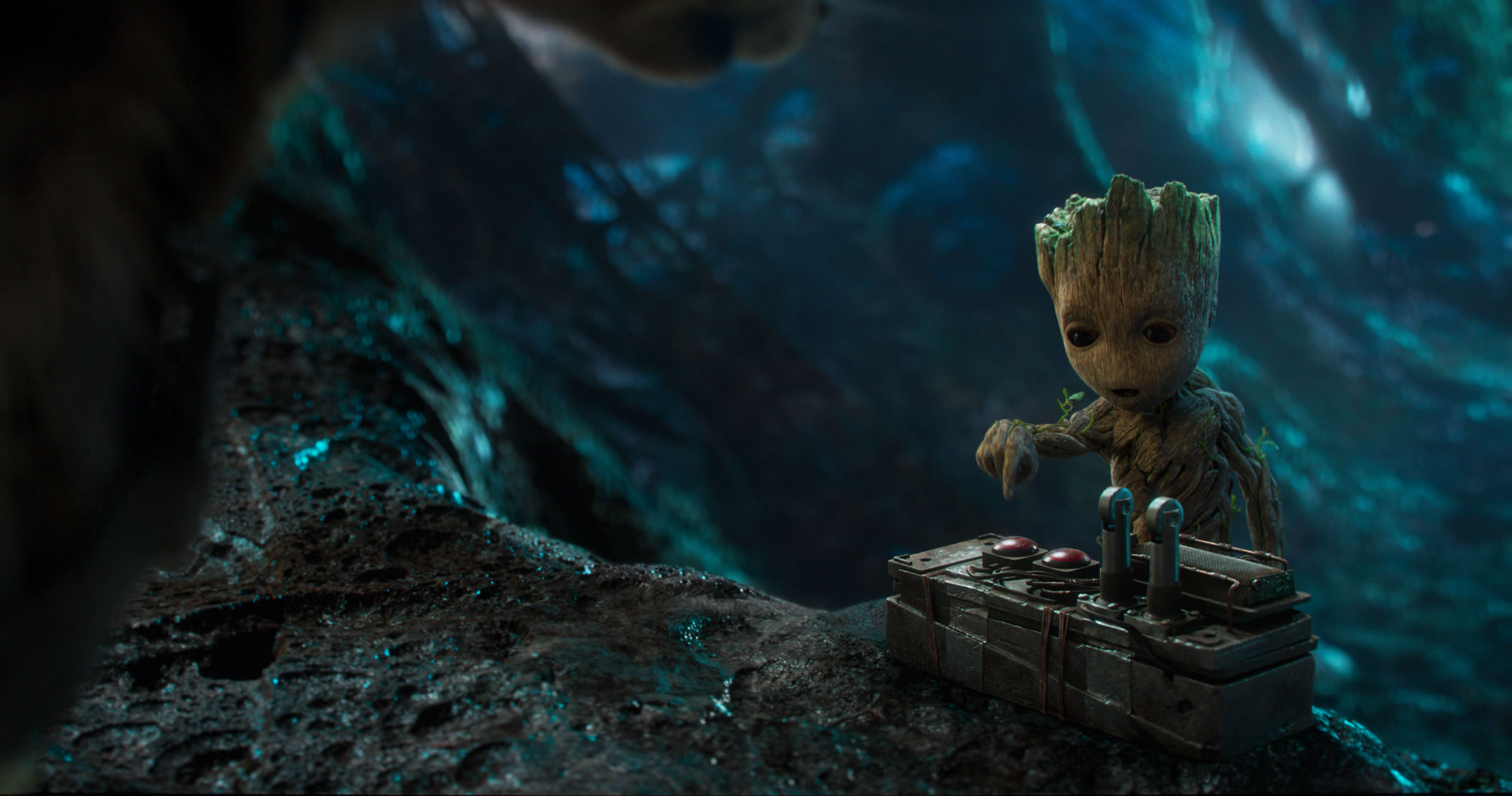
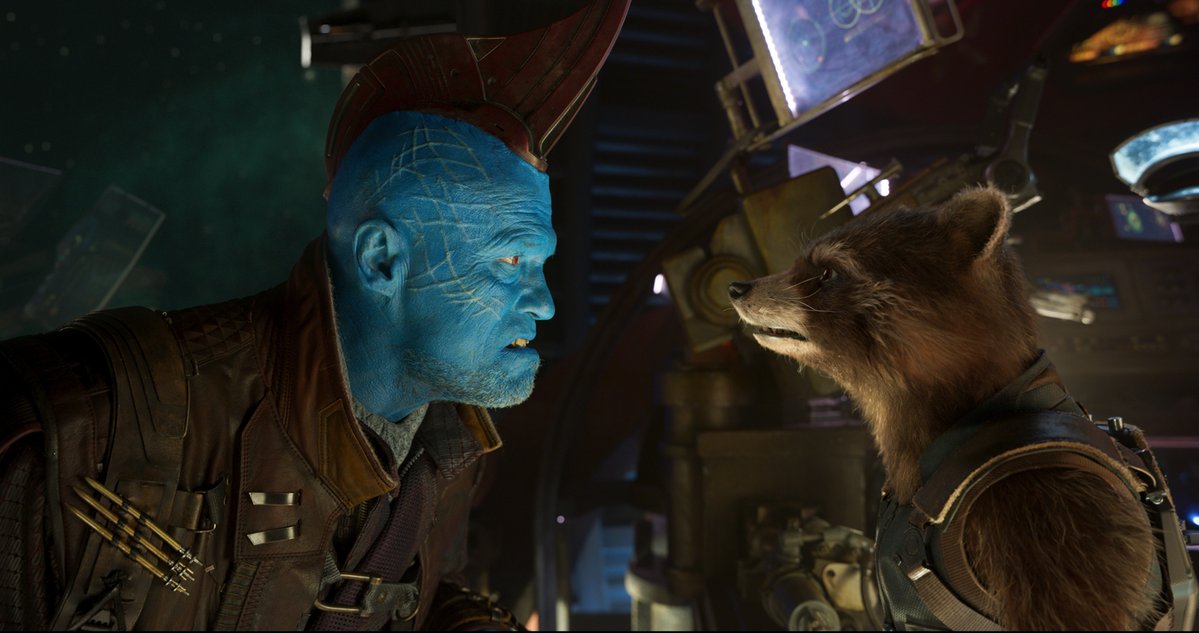
Now a semi-organized band of douchebag mercenaries/bounty hunters for hire, the Guardians have made themselves a host of enemies across the galaxy, partly because of the Marvel Cosmos being filled with officious dickheads, and partly because the Guardians themselves are the same kleptomaniacal, violent lunatics that we all fell in love with back in 2014. On the run from several different gangs of heavily armed assholes out for their heads, they encounter Kurt Russell (his character has a name, but it's basically Kurt Russell), who has been searching for them so that he can reveal to Starlord that he's his father, and that he's a God. Because of course he is. At the same time, half the galaxy is chasing down the rest of the guardians, be it Gamora's sister Nebula (Dr. Who's Karen Gillian), screaming mad and desperate for revenge, Ravager captain Yondu (Michael Rooker), now exiled from his fellow space pirates for child trafficking and looking to find Starlord for purposes he himself likely doesn't know, or an entire host of gold-painted douchebags called the Sovereign, who want to lay waste to the Guardians because they are assholes (and because Rocket, in perfect raccoon style, stole everything of theirs that wasn't nailed down. A lot of these subplots exist simply to give some of the other Guardians something to do for most of the run-time, but I'm hardly going to complain about that, resulting as it does in things like an opening battle sequence filmed completely offscreen as a backdrop to the adventures of baby Groot's misadventures, David Hasselhoff cameos, two enormous battle sequences where one of our heroes disposes effortlessly of so many heavily-armed ravagers that the sequence becomes gut-bustingly funny, and best of all, Sylvester Stallone making an appearance as a Ravager admiral with ties to Yondu. Sly seems to be sending up his performance in Judge Dredd, which given the tone of this movie, is beyond hilarious, and if this leads to him appearing in future Marvel films, so much the better.

Honestly though, the focus this time isn't on the zaniness but the characters, which is not exactly what I expected from Guardians of all movies, but looking back is probably the correct move. Starlord's lingering abandonment issues from having lost his mother and having been kidnapped by space pirates as a kid continue to haunt him, while both Gamora and even Rocket, of all people, get some excellent moments circulating around their place in a misfit surrogate family like the Guardians, and the distance between what they claim their place is and what it actually is. The film never moves into telling instead of showing, but it's plain that Gunn is more comfortable with the characters this time, and more willing to explore the dynamics between them in greater depth than the previous movie, five-way-origin-story as it was mixed with a galaxy-devouring threat, had time to do. The core theme of the film though is fatherhood, surrogate or otherwise, as evidenced by Kurt Russell trying to make up for lost time with his demigod son, Yondu's remarkably complex relationship with Starlord, one explored throughout the course of the film with surprising depth and even pathos, Nebula and Gamora's shared experience being raised by an abusive monster in Thanos, and even Sly's own semi-father relationship with Yondu (okay, I'm stretching here, but I wanted to shoehorn the fact that Stallone is in this film into the review once more).

So does this mean that Guardians of the Galaxy, Vol. 2 is just as good as its predecessor? Well... no. It's not far off, to be fair, but with this much emphasis on secondary characters and on the sentimental possibilities of certain characters' stories, someone kind of has to get the shaft. Both Dave Bautista's Drax and Zoe Saldana's Gamora have very little to do in this film save for sitting around commenting on the actions of other characters, including those of Pom Klementieff's Mantis, a fairly forgettable throwaway who doesn't bring enough to the film to justify her existence there. The writing isn't quite as sharp as it was last time, the film needing to spell more of its emotional core out rather than let it flow organically. The difference is one of degrees, but it's there, palpable in that the sequel to a movie that created a surrogate family without once using the word 'family' now has to actually hammer the point home with considerably less finesse. There's also the question of the missing humor. Not that Guardians 2 isn't funny mind you, it's just not as funny as the last film, in part because the movie is concentrating on other matters, but also because the simple fact that the characters embody their archetypes is no longer good enough. Rocket being homicidal despite being a furry little procoynid, or Drax speaking in utterly literal statements all the time is no longer good enough to carry the film. In fairness to Gunn, it's clear he and the cast knows this, but nevertheless, some of the edge that carried Guardians through the original minefield of sentiment and saccharinity has clearly been lost, and will need to be freshly honed in the sequel.

All that being said, Guardians of the Galaxy's second chapter is a really good film, the best superhero movie of the year so-far, and a worthy addition to the illustrious Marvel canon. It may be a little less fresh than its predecessor and it may feel unavoidably like filler at points, but when the filler is this good, it's hard to get upset.

Final Score:  7.5/10


o-o-o-o-o


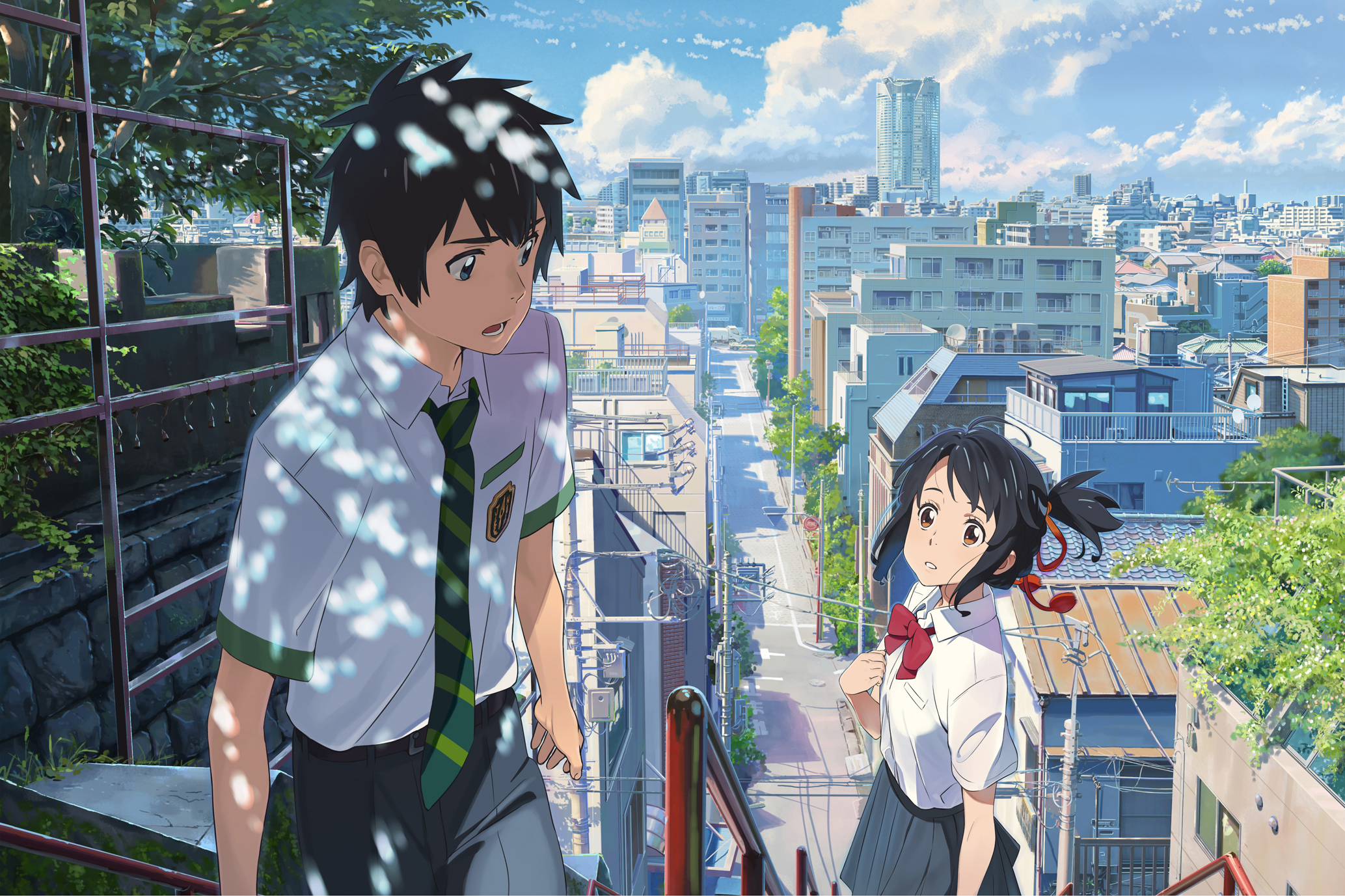
Your Name

Alternate Title:  Freaky Friday the 13th

One sentence synopsis:    A young man in Tokyo and a girl in the Japanese countryside begin spontaneously switching bodies, and struggle to discover who each other are.


The Verdict:  I will not pretend to be the biggest anime fan around. Oh don't get me wrong, I've nothing against Japanese animation, and I've seen the classics, like Spirited Away, Princess Mononoke, Naussica, Akira, Ghost in the Shell (not that one), Howl's Moving Castle, to name a few. But beyond the Miyazaki canon and a handful of other films or series that have crossed my path, Anime and I have a fairly cool, if cordial, relationship. It's not that I dislike it, it's just that the cultural conventions of the art form, from the stammering male protagonists to the unsubtle upskirt shots of the female ones, just really aren't my thing overall. Still, that sort of objection has never prevented me from catching a good movie when one presents itself, and so on the back of several absolutely glowing reports from friends of mine who do appreciate Anime, I decided to go and check out our latest import from our friends in the Far East.

Your Name comes to us from the CoMix Wave Films studio, a studio whose pedigree is second only to the legendary Studio Ghibli itself, and not by much at that. Though nowhere near as well known in the States, CoMix Wave is responsible for several classic masterpieces of the Anime film world, including 5 Centimeters per Second, The Place Promised in Our Early Days, and The Garden of Words. The majority of CoMix Wave's films, including the aforementioned three classics and Your Name itself, come from director Makoto Shinkai, CoMix' Miyazaki (though he disputes this characterization). Shinkai's specialty has always been labyrinthine films with complex, philosophical plots, rather than the more artful fantastical fare that Ghibli focuses in, and Your Name is no exception. At its core, the film is about two young people, Taki, a university student in Tokyo, who works nights as a waiter to make ends meet, and Mitsuha, a high school student from a small town in rural Japan, who serves as a shrine priestess in the local Shinto temple, and who is otherwise bored stiff by her small town's limited horizons. For reasons neither of them can understand, the two begin body swapping one day, waking up in one another's lives for a day at a time. Communicating with one another by leaving text messages on their smartphones, the two try and puzzle out what's happening without actually having physically met, at least until...

... well never mind the until, really. Let's just say the plot gets real complex real fast, as Taki and Mitsuha try and discover what seems to be happening here, and why. All of this, however, takes place before the backdrop of gorgeous animation, classical in style for anime, though not if one is only used to the Ghibli films. The focus here is on quotidian animation, fireflies at night, the glint of torchlight on painted faces, a weed-filled vacant lot near the outskirts of a town, cramped Tokyo apartments, that sort of thing. It's a far cry from the hyper-extended fantasias of films like Paprika or Spirited Away, but no less beautiful for the lack. The characters, as well, are more subdued than the customary anime stock types, less explosive screaming and sweat drops than the typically-madcap pace of Anime allows for (I don't want to paint with too broad a brush here, but Anime does have its tendencies). The characters are well written, and sharp enough to follow along with the twists of the plot, and the film overall has a charming, romantic quality to it that translates well out of context, cultural and otherwise.

Unfortunately, the need to translate out of context is pretty vital, because Your Name, for all its charming simplicity at points, is a tremendously complicated film, involving not only body swapping but time travel, astrophysics, spiritualism, hallucinogenic drugs, memory loss, and a pair of narrators, both of them unreliable. Readers of this blog know that I've got nothing against a complex plot, I sang the praises of Cloud Atlas for years after all, but Your Name stuffs so much intricacy into its runtime that it is legitimately difficult to follow. This is not an uncommon problem with more adult-oriented anime (not that kind of adult-oriented... well maybe that kind too). Ghost in the Shell's films and TV shows both involved complex philosophical-political discussions about everything from cognitive theory to tax policies in parliamentary governments, smashed into the middle of a modern techno-thriller. Your Name, though, is supposedly a lightweight romantic drama, which periodically gets so dense that the audience is expected to simultaneously keep track of intricate animation, complex subtitles, and explanatory super-titles used to illustrate untranslatable subtleties of grammar and wordplay within the sub-titled dialogue. Watching a film while reading two books at the same time is a tall order for anyone, and it's for that reason that, contrary to all of my snobbish tendencies, my recommendation for those who do go looking for Your Name is to find a dubbed copy, and reduce the parallel tracks you have to simultaneously juggle to two or so.

Honestly, Your Name is quite a good film, though its indulgence of far too much complex gamesmanship keeps its from being a great one. It bears very little in common with most of the popular anime which we of the non-Otaku world encounter, but it's no less of a film for it, a highly-complex telling of a very simple story, done without the melodrama and artifice that such stories would normally be lathered with, either in Japan or here. And given the number of people I know who absolutely adore this film, I'd bet that if you're willing to put work into decoding it, Your Name may just wind up surprising you.

Final Score:  7/10


o-o-o-o-o


Megan Leavey

Alternate Title:  The Arf Locker

One sentence synopsis:   A marine with a troubled past bonds with her bomb-sniffing dog while deployed to Iraq.


The Verdict:  As longtime readers of this project already know, some weeks do not offer a lot of choice when it comes to what to see, weeks that offer either a slate of movies I've already seen, or things like Alien: Covenant (Prometheus did not warrant a sequel) or The Mummy (now with 90% less fun!). As such, I went to see Megan Leavey despite my ambivalence towards both subject and cast, in the hopes that, as has happened many a time, the movie would prove better than my expectations allowed for.

It did not.

Admittedly, it didn't prove much worse either. Megan Leavey stars Kate Mara, older sister of Rooney Mara, and an actress I have never, despite all the stuff I keep seeing her in, decided if I like or not. Marta plays the titular character of Megan Leavey, a washed up kid from some dead-end town on the Atlantic seaboard who joins the Marines due to a lack of options beyond overdosing on drugs, and through a series of misadventures, winds up assigned to the K-9 corps, working with an "incorrigible" German Shepherd named Rex. They don't like one another at first, they bond, they go to Iraq, they get into combat and perform heroically, they have trouble adjusting to civilian life back home, you've seen this song and dance before, both better and worse, in a hundred other movies. So what makes this one different?

Well... not much, to be honest. This one has a dog, certainly, and that's not nothing, as the dog actor playing Rex is the best actor in the movie (animal actors often are, I find, mostly because they have better lines). True, the film has the usual problem wherein they get the dog to bark a few times and then expect the audience to pretend that it's a 'wild, uncontrollable beast', but I suppose there's limited options for getting a nice dog to appear fearsome. There are, admittedly, a couple of nice lines relating to the business of dogs in Iraq, such as the one where a soldier tries to scare Megan with tales of how the insurgents will kidnap K-9 dogs and strap bombs to them before sending them back to their handlers, only for Megan to respond that, given that Rex can tear a man's arm off with his jaws at her command, she's not overly concerned about that possibility (there's a really awesome action movie to be made here somewhere).

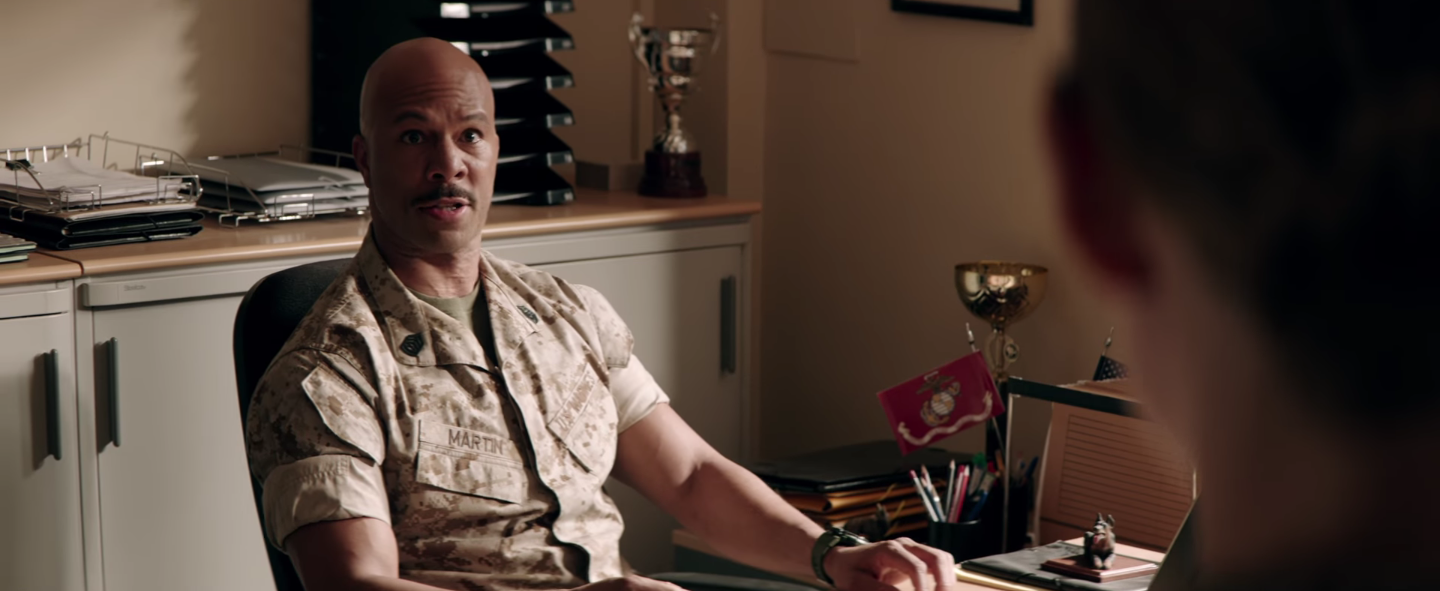
There's also the cast, which is somewhat more exalted than one might normally find in movies like this, though the film does not exactly take full advantage of that fact. Common, who I'm finding increasingly ubiquitous in my filmgoing experiences, plays Megan's tough-but-with-a-good-heart sergeant at the K-9 corps, but while on paper this should seem to be a perfect choice, the fact is that Common is not a particularly good actor when forced to play things straight, being wooden and inflexible in all the wrong ways. Granted, there are movies where he can work around this (John Wick 2 for instance), but here he goes into his Selma/Timothy Green style of direct unemotional declarations of his lines, and it just doesn't work. Tom Felton, of the Harry Potter series, has a small role as a veteran dog handler, which seems to have been added to the movie purely to make the young girls coo (which several of them literally did upon seeing him in my screening), while veteran stars Edie Falco and Will Patton get to play Megan's mother and step-father, the former as a bubble-headed shrew, the latter practically without lines. Neither has much chance to do more than play stereotypes. At least they get a better shot than Bradley Whitford though, who is horrifically mis-cast as Megan's blue-collar working stiff father. I love Whitford, I have for years, but he's about as authentically blue collar as Donald Trump, and has about the same ability to pretend as much, and his attempts to portray a salt-of-the-earth character are just embarrassing, given his polished accent and upper-crust mannerisms. Whitford works great in films like Get Out or The Cabin in the Woods, not in this.

Ultimately, Megan Leavey isn't a bad film. The dog is always entertaining, and Mara is actually pretty decent given the material, underselling everything heavily, which is the right call in a story that can easily slide into melodrama. But the movie overall is really nothing special, a re-hash of American Sniper with dogs, and of about the same level of quality. Unless you're one of those who absolutely has to see every movie involving the military out of some misplaced sense of patriotism (or if you're punishing yourself with a weekly film schedule), there's just no reason to run out for this one. If you've seen the trailers, you've already seen the entire production.

Final Score:  5/10


Next Time: We kick off the heart of the summer blockbuster season with style.

Sunday, April 16, 2017

Logan


Alternate Title:  Requiem for a Wolverine
                                                                                                                                                            
One sentence synopsis:   In a dystopian future bereft of all mutants, Logan and Charles Xavier must protect a young mutant from a PMC intent on taking her into custody.


Things Havoc liked:  For seventeen years and ten films, the X-men movies have existed in one form or another. Seventeen years and ten films, some good (X-Men 2, First Class, Days of Future Past, Deadpool), some execrable (Origins, The Wolverine, X-Men 3, Apocalypse). If nothing else, here at the end of all things, it's worth stopping and recognizing just how long and how important this series has been in the ongoing godzilla-like rampage of Superhero movies at the box office. And while the question of whether or not Logan represents an end to the entire affair is more open than I anticipated when I first saw the movie, for whatever it's worth, Logan feels like an ending to a series of weight and importance, and deserves to be judged as such. The promises of the ad campaign that preceded it were that we had never before seen a superhero movie like this, and that, for better or worse, was no lie.

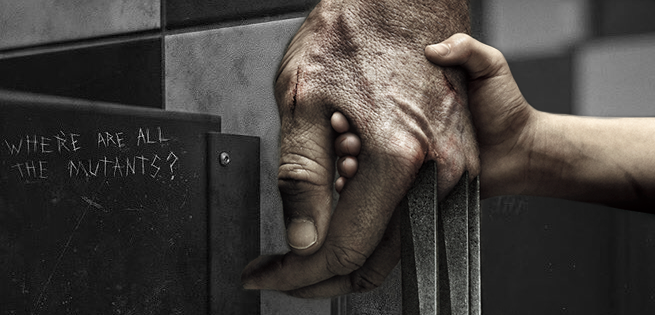
The year is 2029, a dystopian time of brown skies, corporate dominance, and wind-blown grit. Logan (Hugh Jackman), AKA the Wolverine, is an old man at last, his body ravaged by the abuse he has suffered over the years (centuries if you believe X-Men Origins, but I can understanding why one would not), and by the fact that his unbreakable adamantium skeleton is finally starting to poison him to death. Kept going only by his preternatural healing factor and the need to care for a nonagenarian Charles Xavier (Patrick Stewart), whose brilliant mind is finally disintegrating under the weight of raw age and raw despair. Together with a new-to-the-series precognitive mutant named Caliban (a barely-recognizable Stephen Merchant), these three may well be the last mutants on Earth, due to a combination of an unexplained cessation in mutant births some twenty-five years ago, and a horrible accident, only hinted at in the story, in which Xavier's faltering mind obliterated a large number of mutants and humans some years previously. I normally try not to go so deep into plot matters in these reviews, but what's important here is how distinct this setup is from anything else we've ever seen in X-men movies, or really in comic book movies whatsoever. The style is not high adventure, as is the common theme for these films, nor mystery or thriller or heist or space opera, as in many of Marvel's recent outings, but modern western, ala Hell or High Water or No Country for Old Men. The scenes are elongated, the characters exhausted and worn, the tone funereal and bleak, the shot selection (by Kingdom of Heaven and X-Men: First Class' cinematographer John Mathieson) positively Coenesque. If only by sheer novelty, in consequence, Logan is a revelation for the entire Superhero genre, an application of dramatic cinematic language to a genre still dismissed by many critics as having no soul. I've never seen someone try to adapt a Cormac McCarthy book to the screen with superheroes in it, but if I ever do, I expect it will look exactly like Logan.

The director of Logan, James Mangold, also directed Wolverine's last solo instalment, 2013's The Wolverine, which was distinguished only in that it was better than its predecessor. For Logan, though, Mangold has chosen a very tight story, wrapped closely around three characters, trusting that the actors involved will sell the material themselves, as they have been doing for the better part of two decades now. It's a wise decision. Jackman has always been the original genius-casting for a superhero character, even in the worst of all movies. Here, he's given an opportunity to dig down into the soul of the character in a way he was only ever allowed to hint at before, and the result is everything it should be. He plays Wolverine like a broken, beaten man going through the motions because he doesn't know what else to do, who has grown accustomed to losing, and whose primal rage is no longer sufficient to carry him through. Stewart meanwhile, in the character he defined, is the picture of sadness, his high-minded ideals in ashes, his life's work a failure. The sudden shift to an R-Rating (a first for the X-men series if you don't count Deadpool, and you shouldn't), only re-enforces things, as listening to Professor Xavier, the grandfatherly mentor of the mutants of old, cursing and weeping in a deserted steel foundry that has become his jail cell and hospice room is a more startling image than I expected it to be, accustomed as we are to seeing the character in a totally different context. And with none of the rest of the panoply of X-men characters on-hand or even mentioned, much of the film is given over to the interplay between Logan and Xavier, as though in the end of this epochal series, we have returned at last to its original roots. But the final element the film cores itself around is a new addition, a young mutant girl named X-23 (Laura, eventually), lab-grown by the inevitable evil super-corporation, and now on the run from their army of paramilitary hitmen, played by Spanish-English child actress Dafne Keen. There's a lot of you out there who, upon hearing that Wolverine was to be paired with a child sidekick, no doubt reached for vomit bags, but let me assure you, this girl, and this character, are goddamned incredible. Entirely mute for most of the film save for guttural growls of tempestuous rage, and possessed of a violent potency that makes Hit-Girl look like Kit Kittredge (the introduction to her mutant powers involves a freshly-severed head), this is not your average child sidekick, but a violent blender in the shape of a pint-sized girl, and Keen, whether speaking in English, Spanish, or not at all, is transcendently-good in the film, not merely the physicality demanded by the action, but also in holding her own against two titans of the superhero genre in the quieter, more desolate scenes that the movie is replete with.

And that's... more or less Logan in a nutshell, folks, an experiment in character and tone and the capabilities of superhero violence, as the R-rating allows the movie to get sublimely brutal with its action, befitting the darker tone of the movie and thrilling any long-time fan of ultra-violence (hi). Snapshots of Americana, such as an extended sequence with a black farming family somewhere in Kansas (headed by ER's Eriq LaSalle) are interspersed with moments of quiet desolation, allowing the characters to reflect on the irrecoverable ruin that their lives have become. The classic comic relief that comes naturally when a character as broody as Wolverine is forcibly paired with small children breaks up the tension now and again in the right spots, but the film is overall a dark and funereal mediation on the end of dreams, on the grim side of human nature, and on the human condition in its most agonizing forms.


Things Havoc disliked:  That does not make it a good movie.

I wanted to like Logan. I wanted to love it. I wanted to use it as ammunition against every snobbish artistic oligarch who have been spitting on this entire genre for twenty years, and implicitly or explicitly on those who enjoy them. I wanted to herald it as a sea-change in the makeup of Superhero filmmaking, as proof positive that these films are the Greek Myths of our modern world, re-shaped and re-packaged to deliver the universal truths of the human condition by exaggerating what it is to be human. I wanted Logan to blow me out of my seat, and to leave the theater showering it with praise. And maybe that was my mistake in the first place, because for all of the very good things in Logan... I didn't like it at all.

Why not? Well, let's see if I can illustrate.

Logan wishes, very very much, to be its own film, to be viewed as its own film, unrestrained by the decisions and canon of the nine movies that preceded it. To an extent, I understand. Ten films is a lot of films, particularly if you are not Marvel, and have not been comprehensively building your cinematic universe in a holistic manner. We've already retconned one film (X-men 3) out of existence entirely, after all, and I can fully understand the desire to break with tradition in this regard. The problem though, is that the movie wants to have its cake and eat it too. It relies entirely on those previous movies for the establishment of the characters of Logan and Xavier, to give weight to what's actually going on here. Otherwise we're just watching two ornery old men snap at one another for two hours with no context. And yet, having invited us to remember all of the previous adventures of Xavier and Logan and their band of merry mutants, the film expects us to selectively forget everything else in those movies, from Magneto to Mystique to the X-men to the fundamental themes of the X-men movies themselves, all without comment. That is a huge order for any franchise, the equivalent of releasing a Star Wars movie that has no spaceships, no Jedi, no Empire or Rebellion, no Force, no aliens, no adventure, and no fun, and then pretending that any confusion that results is the fault of viewers who are afraid of change.

Where, for instance, are the X-Men? This is not an unreasonable question to ask given that the plot of the movie is entirely contingent on the fact that they no longer exist, and that nine previous films were entirely or in part about the X-men in one form or another. I'm not asking that the movie be identical to First Class or Days of Future Past, or upset that Cyclops and Jean Grey didn't get cameos. I'm annoyed that the question of where all the mutants are is not answered in any manner save by one of the most perfunctory, stupid, and ill-thought-out plot excuses imaginable. This isn't a minor question. The entire series was built around mutants' position in society, as allegories for homosexuality or other forms of discrimination. I don't expect Logan to chain itself to the themes of previous films, but if it's going to position itself as the last word to a twenty-year series of films, it has a goddamned obligation to remember that they existed, at the very least. But no, those movies are entirely separate from this one, except for when we say so. Or indicate so. Or decide retroactively that it is so. And it doesn't stop with that question alone, indeed Logan seems almost perversely uninterested in answering any questions, whether brought up by previous films or by its own plot. If Wolverine's adamantium is poisoning him to death, then doesn't that indicate that Laura, who is established to also have Adamantium grafted to her skeleton, is also at risk of being so-poisoned? Never addressed. If the X-men have been destroyed (which I think is where the movie is going, but it hardly makes things clear), then what happened to all the other mutants of the world, particularly the world-shattering ones that the X-men fought? Never addressed. How is it that a PMC is operating throughout Mexico, Canada, and the US with massive military deployments, utterly unchecked by even a modicum of government oversight, up-to-and-including drone strikes and massive civilian casualties? Never addressed. These aren't minor nitpicks, like how Laura's growing skeleton is going to respond to adamantium grafts, or why evil corporations always think that living-weapon super-soldiers are going to pay for themselves despite their propensity to kill everyone nearby (I call this the Wayland-Yutani Paradox), these are core elements of the story, logical questions that anyone, let alone the fans of the series that the movie has gone out of its way to attract, would wonder at the instant the subjects were brought up. And the film's response is to ignore them all entirely as unimportant, because they might take valuable time away from the misery on screen.

But all of this I might have forgiven if not for the ending of the film, an ending that is so deliberately unfulfilling that it can only have been intentionally designed that way. After an hour-and-a-half of confusing but interesting buildup, of morbidly funereal tone, of the nadirs of human experience being showcased on screen, we get to the end of the film, and the filmmakers reveal that there was no point to any of it save to wallow in the misery of human suffering. Make no mistake, there are great movies that exist solely to wallow in the misery of human suffering, as films as diverse as Requiem for a Dream, Grave of the Fireflies, Dancer in the Dark, or Breaking the Waves can attest to. But those movies were trying to make a statement about their characters, their world, and what it is to be human. Logan is not, in fact Logan rejects the notion of such things so violently as to appear contemptuous of them. Not only does it seek to end the X-men movies with a whimper, but it implies in doing so that the themes around which the previous films lived or died were so unimportant that they aren't worth a mention, and that the movie's own plot, independent of what came before, is similarly unimportant. Nothing is resolved by this film, not from previous installments nor from this one itself. We never even get to know if the purpose that Logan and Xavier drove themselves out of retirement for, the driving force of the entire film, was a success or not. Some might call that decision bold. I call it lazy. And the film ended, I realized that the whole business, the quantum canonicity, the alternating respect for and rejection of the previous works, the wild and unexplained shift in tone, the casual discarding of the hallmarks of the series in favor of something else entirely... all of it spoke to me not of a movie in a series, but of Fanfiction. An experiment in fiction by those who want to take what they want of the canon and discard the rest without comment. And while I remain a stalwart defender of, and yes, even practitioner of the art of Fanfiction (come the fuck at me), Fanfiction is not what I go to the movies to see.


Final thoughts:   Logan is a movie of great paradoxes. It has many admirable qualities to it and many decisions that baffle me even now, a month after seeing it, and it is this paradox that has kept this review so-long delayed (among other things). I cannot, in good conscience, call it a great film, as many others have, though I also do not deny that it is in many ways a daring and admirable experiment in how one may take Superhero movies. As such, I remain of two minds about Logan, as I likely always will be. On the one hand, it is a film that has finally managed to be taken seriously by all and sundry, critics, audiences, and filmmakers alike. It has proven that not only can Superhero movies be serious, but that they can be R-rated and adult-themed and dour and reflective, and still make money at the box office. On the other hand though, it has also, probably inadvertently, sent a message to the critics that Superhero movies can indeed be good films, assuming that they jettison all that childish "superhero" stuff in favor of a grim deconstruction of the genre that borders on the monomaniacal at times. There is a consequent part of me that is concerned at the fact that a movie that many are calling the Greatest Superhero Movie of All Time is a film that regards the genre of Superhero movies as being stupid and lightweight to the point where it does not deserve consideration or thought.

Ultimately, Logan is a movie that many will love, some will despise, and I will not know what to do with for as long as I live. I did not, ultimately, enjoy it particularly, nor do I think that its gross ignorance of the basic conceits of plot, and its palpable contempt for and embarrassment by its predecessors somehow makes it a great film. But like it or not, Logan feels like a sea-change in how Superheros can be represented on the silver screen. I can only hope that the lessons we learn from it are to the genre's credit.

Final Score:  5.5/10


Next Time:  White People:  A Cautionary Tale

Tuesday, February 7, 2017

Hidden Figures


Alternate Title:  This Week, on a Very Special Episode of...

One sentence synopsis:  Three female black mathematicians at NASA confront prejudice and open discrimination as they work on the Friendship 7 program to send the first Astronaut into orbit.

                                                                                                                                                            
Things Havoc liked:  Following the embarrassing racial flub that was the 2015 Lily-white Oscars, the Academy, in their wisdom, seems to have decided that the hashtag for their Oscars this year should be "#OscarsSoBlack", giving out assorted nods to films like Moonlight (unseen by me), Fences (deserving at least in the acting categories), and the film we have before us today, the historical NASA/timely tolerance feature Hidden Figures. Yes, this movie, like the one from last week, did technically come out somewhere in 2016, but I do not base my film calendar around such technicalities. It entered wide release in 2017, and a part of 2017 it consequently is. So here we are.

1961. Langley, Virginia. The newly formed National Aeronautics and Space Administration has been in existence for three years, and spent all three of them getting embarrassingly lapped by their Soviet counterparts, who have succeeded in putting a satellite, then a dog, and then finally a human being in space, and returning the last one to the Earth. In their efforts to catch up to the Soviets and surpass them by being the first to place a man in orbit (not just grazing the outer atmosphere for a moment), NASA employs teams of computers, which at this time are not machines but job descriptions, men and women of tremendous mathematical gifts who perform the mind-shatteringly complex calculations necessary to launch anything into space, let alone to get it back again in one piece. Among these staggering mathematicians are a group of black women struggling under the prevailing racial attitudes of 1960s Virginia, and American society at large. Among this group are Katherine Goble (Taraji P. Henson) a prodigal mathematician and astrophysicist, Dorothy Vaughan (Octavia Spencer), a pioneering computer programmer, and Mary Jackson (Janelle MonĂ¡e), a technician-turned-aeronautics-and-space-engineer, and it is about these three women, and their attempts to, each in their own way, deal with the prejudices blocking their success, that the movie concerns itself with.


Leaving Goble aside for a moment, the other two women are played extremely well, particularly Vaughan, who gets the most nuanced and interesting storyline. Stuck with the responsibilities of a supervisor at NASA, but neither the pay nor the title, and confronted with the reality that mechanical computers will soon be replacing human ones, Vaughan dodges the thinly-veiled racism of her own boss (played by Kirsten Dunst of all people), and trains herself and her staff on the operation of IBM 7090 mainframes, all while teaching herself FORTRAN (God help her). A cutting remark, late in the film, following this tremendous effort that she is absolutely sure that Dunst believes (wrongly) that she has nothing against black people is as sharply-written as anything else in the rest of the film, and Octavia Spencer herself is plainly the best actor of the bunch. Other plaudits go to Kevin Costner, whom I have never managed to hate as much as I probably should, who takes on yet another all-American role as Space Task Group director Al Harrison, a man obsessed with besting the Russians in the Space Race. Costner is good at few things, but one of them is everyman charm, and he brings a lot of it to this role as he stoically trudges on with his efforts to get the project moving whatever the cost (it's not as bad as it sounds)


Things Havoc disliked:  I'm sure you can all guess why I chose to leave Goble aside a moment ago.

Goble, the main character among the three women at the heart of this case, is played by actress Taraji P. Henson, who has been in a great many other films and television shows, though none that I have previously watched. Based on her performance in this movie, I'm not about to start. Henson plays the character like a wilting violet, lacking all self-confidence and inclination to raise hell, which is fine in a general sense, but not when the character is going to be called upon to deliver a series of loud, aggressive speeches about the discrimination that she has been subjected to. There is a way, hell there are several ways that a character like this could have been naturally brought to the point where they would make such speeches, but just dropping one on a character not established to have enough wherewithal to speak above a mousy whisper is not one of those ways, and just turns the movie into a set of disjointed scenes fit awkwardly into place around disconnected lesson moments. The same problem afflicts Janelle MonĂ¡e, a much better actress with a much meatier role, who nevertheless, in the climax of her own plot arc, has to stop dead in her tracks to deliver a completely artificial speech about tolerance and justice, one that sounds like it was taken straight out of a fourth-grade essay on the subject of why we shouldn't be racist. Obviously I have nothing against the sentiment, but the message in question is hammered home with all the subtlety of a sledgehammer, resulting in a movie that feels less like a story of people that existed (which it is), and more like an after school special from the Lifetime channel, complete with dramatic, swelling music whenever it's time for someone to give their contractually-mandated speech about tolerance, and the big-damn-hero moment for our leading old white man character, as he demolishes a colored bathroom sign with a sledgehammer, in one of the least-subtle metaphors that Kevin Costner has ever engaged in. Think about that.

And unfortunately, if we try to turn aside from the message work here, there's just nothing else to the movie. 2016 omnipresent star Mahershala Ali has a completely pointless role as the love interest for our main character, one that doesn't emerge from behind that description, I'm afraid. Jim Parsons, meanwhile, of The Big Bang Theory, gets to play the obligatory role of the needlessly dickish racist asshole, something complicated by the fact that Parsons cannot act at all beyond his role in the aforementioned show, and comes across, consequentially, less like a figure of prejudice, and more like an oblivious douchebag who spends the entire movie being periodically astounded and amazed by the fascinating revelation that a woman, and a black woman no less, can perform mathematics! I wouldn't mind if he had expressed surprise once, but after the seventeenth time when Parson's character is astounded to discover that the black woman he disdains has managed to perform a complex calculation, it makes me think less of the crushing hand of institutional racism, and more than Parson is something of an imbecile who needs to be removed immediately from NASA before he accidentally impales himself with a protractor.


Final thoughts:   I could go on, of course, arguing about the fact that the movie gets its facts entirely screwy. NASA was, in reality, a fully integrated shop by executive decree from its inception in 1958, and women were in senior engineering positions, and authoring scientific papers at the organization by 1960, three years after this film is supposed to be taking place. I will not, however, complain about this, because these alterations to history were made in the interests of telling a compelling story, and represent one of the only concessions to doing so to be found throughout Hidden Figures. Admirable though the purposes of the movie may be, seeking to shine light on a subject relatively unknown to the public at large, the execution of the movie is almost entirely flat, pitched at the level of a classroom special for nine-year olds.

That said, it's worth noting that both of the people that I saw this movie with loved it, as did the audience at large, who gave it an ovation when the movie ended. Judging from the reaction the film has gotten, commercially and critically, it may simply be that I'm missing something here. Still, I have to call these films as I see them, or else there isn't much point to the entire project. And while the impetus behind Hidden Figures may be laudable, the movie that I was given to watch as a result of that impulse fails, comprehensively, to launch.

...

... I regret nothing.

Final Score:  5/10


Next Time:  Spiderman and Kylo Ren go to Japan.

The General's Post Summer 2018 Roundup

Let's get back into the swing of things, shall we? The General's Post Summer 2018 Roundup Ant-Man and the Wasp Alternate Ti...