Showing posts with label Marvel. Show all posts

Tuesday, May 29, 2018

Deadpool 2


Alternate Title:  Wait for the End Credits
                                                                                                                                                            
One sentence synopsis:  Deadpool must save a mutant boy from being killed by a time-travelling bionic commando named Cable.


Things Havoc liked: 2016's Deadpool was a goddamn miracle, even in this era where superhero movies have conquered the world, primarily because it was about a character that should have been unfilmable, given the fourth-wall-shredding madness that it customarily came with. And yet somehow, by the grace of God and Ryan Reynolds, they pulled it off, producing a madcap lunatic movie filled with all of the raunchy humor and general narrative absurdity that one should properly think of when one imagines "Deadpool: The Movie". Having drastically outperformed expectations, it is only fitting that the film be rewarded with a sequel, so here we are.

So how is it? Well... it's good! Primarily because Ryan Reynolds is still in it, and Ryan Reynolds is still awesome. There was a consensus among friends of mine that Ryan Reynolds, despite all the awful movies he made a habit of making (Blade 3, RIPD, Green Lantern, X-Men Origins Wolverine...) was not a bad actor, but simply one who was waiting for that one movie that he would make, to make everyone fall in love with him again. I don't know that anyone except him thought that Deadpool would be that movie, but it's a personal labor of love for Reynolds (he co-wrote the thing this time), and it shows. Reynolds is just as perfect for this round as he was before, indeed his performance is slightly more subtle than it was, imbuing Deadpool with a bit more of a settled, cool affect. There were moments in the last movie where I felt that the film was trying a bit too hard. There are no such moments this time.

All the old favorites from last time are back. Collosus (Stefan Kapičić), Blind Al (Leslie Uggams), Negasonic Teenage Warhead (Brianna Hildebrand), and Weasel (TJ Miller, who will likely not be appearing in the third film after getting caught calling fake bomb threats in against New York trains). But there are also a number of additions, foremost among them Josh Brolin, whom we last saw like two weeks ago in another Marvel film, this time playing the time travelling cyborg Cable. All of a sudden, I've become a huge fan of Brolin's, thanks to the incredible work he did on Infinity War. This round isn't quite as demanding, as Cable is basically a foil to Deadpool's insanity, but Brolin, as it turns out, is an incredibly good straightman to the antics of the Merc with a Mouth. Cable joins the cast by virtue of traveling back in time to slay a dangerous mutant who will one day do horrific things, the mutant in question being Firefist (Hunt for the Wilderpeople's Julian Dennison) a pyrokinetic kid stuck in a horrific situation, whose bitterness at the abuses he has suffered threatens to boil over into a cataclysm of pent-up frustration and rage.

Oh I'm sorry, did I forget to mention the themes of child abuse and murder that are riven into Deadpool 2? Because it's there, alongside a bunch of other heavy stuff, like suicide, depression, the pain of loss, and so forth. Why is all of this present in a madcap comedy? Because Reynolds and his co-writers (Paul Wernack and Rhett Resse, returning from the original) understand that the strength of the original Deadpool was that it wasn't a straight comedy, but tempered with a great deal of relationship drama, well-excuted relationship drama at that, which cut the insanity just enough for your average moviegoer (or your above-average movie critic) to get into the movie without being put off by a world without rules. Deadpool 2 doubles down on this concept, using its lunacy to get into some heavy topics, and coming off reasonably well across the board for all that. Family-style drama is hard to play straight, and yet ironically, it's Deadpool, Deadpool of all movies that pulls it off in a superhero context, better than practically any film I've ever seen. And it's not like this isn't tried, for half the superhero movies out there involve characters forming a surrogate family, and almost none of them do it as well as Deadpool does, in between the shirtdick gags and the R-rated ultraviolence.


Things Havoc disliked: Sooo... do y'all know what "Fridging" is?

"Fridging" is a term invented about twenty years ago by Comic author Gail Simone (a former writer of Deadpool), a trope found in comics whereby a female character is murdered, injured, or otherwise thrown out of the story so as to make the male character she is closest to sad, vengeful, or enraged. It's a veeery common trope in comics, and it is regarded, generally, as a lazy one (to say nothing else), a cheap way of generating pathos whilst robbing the audience of a potentially interesting character. Not every character who gets fridged is an interesting one, of course (one could argue that John Wick's dog got fridged, and nobody batted an eye there), but some of them are, and in Deadpool 2, the one that gets hit with the refrigerator is arguably one of the best characters from the first movie, Morena Baccarin's Vanessa.

No, I'm not giving the movie away, this literally comes before the opening credits, nor is the fridging standard by several metrics (which I shall not go into), but the fact is that one of the best things from the first movie is cashed out just to provide a bit of plot motivation for Deadpool himself, and that's just lazy goddamn writing right there, and there's no other way to put it. Fridging is a contentious subject among pop culture critics, and one that I have no interest in diving down, but on a narrative level, the point of writing characters out of a story is to get something out of it, either audience shock or narrative development, or yes, character growth from the remaining party members, and the return on investment that Deadpool 2 gets from shock-eliminating one of its strongest elements from the last time around is grossly disproportionate for what was given up. Deadpool is a character that can evolve any way the writers want, he's literally insane for God's sake, and the writers have shown themselves more than capable of evolving him along the razor's edge of what the film can support, and it strikes me, both now and as I was watching the film, that this was the first-draft response, and that no additional thought was put into it.

Neither am I impressed by the film's attempts to replace Vanessa with a brand new super-kewl character that we are supposed to care about (I SAID CARE ABOUT THEM DAMMIT) by the name of Domino (Zazie Beetz). I've never liked Domino in the comics or out of them, as the character's shtick (preternatural luck) means that there is never any meaningful tension as to whether or not she will get out of a situation, nor any reason to cause her to have to exert herself in any way, as lady luck will come to her rescue automatically. It's like if Death from the Final Destination universe were to come to life as an actual character, it's a character built on contrivances and narrative convenience, it sucks. And the screenwriters knew it too, because they basically stop the movie for ten minutes so that we can all bear witness to how awesome Domino is, how amazing it is that circumstances arrange itself for her to give no shits because she's protected by narrative fiat. This is the mark of an insecure screen element, and even if it were not, detatched apathy is a sensibility that only works in limited circumstances in movies, and certainly not in your epic superhero tale that is trying desperately to convince you has a heart.

Ultimately, all things being equal, Deadpool 2 just isn't as sharp as Deadpool 1 was. The jokes are just a little more forced, the action just a little more rote, the sentiment just a little less real, the writing just a little less expert. We've already proven that Deadpool can exist in his own movie, somehow, and so a bit of let down was probably inevitable, as the shock of just what Deadpool is has worn off a little bit. Still, there was unquestionably a part of me that hoped that the magicians who managed to put the original together in defiance of all common sense, might have been able to avoid a sophomore slump.

Pity.


Final thoughts:   I don't want to give the wrong impression here, for Deadpool 2 is, ultimately, a good movie, one that I enjoyed, and one that I wholeheartedly recommend to anyone who liked the first film. In a way, it is lightning striking twice, a return to the well that yields water almost as sweet as the first draught. That the movie ultimately relies on narrative tropes that are dated and tired to get its point across prevents it from being great, but not from being good, nor from being a worthwhile watch to anyone interested in the Superhero film as an art form.

Oh, and incidentally, Deadpool 2 has the greatest mid-credits sequence of any movie ever. That sequence alone earned it another half-point.
Final Score:  6.5/10


Next Time:  Star Wars time.

Saturday, May 5, 2018

Avengers: Infinity War


Alternate Title:  Not Fucking Around
                                                                                                                                                            
One sentence synopsis:  The Avengers and their allies gather to try and stop Thanos from obtaining all of the Infinity Stones, and slaying half of the universe's life.


Things Havoc liked: For eleven years, the Marvel Cinematic Universe has been giving us movies, and for most of those eleven years, I have been reviewing them. Starting with Thor, back in 2011, I have reviewed fourteen of the fifteen Marvel movies that have been deployed since I began reviewing, skipping Civil War only due to personal reasons. And yet despite the multitude of movies I have reviewed, and the heaps of praise I have typically poured forth upon them, I keep waiting for the other shoe to drop, for the universe to turn bad in some kind of cosmic balancing act against the glories that the MCU has given us. Cinematic Universes like this just don't work. They can't work. Universal and Warner Brothers and a host of other examples dating back a hundred years have shown us that. This sort of thing just isn't sustainable long term, right? This has to come to an end. One way or another.

Infinity War, the culmination of a decade-plus work on the part of Marvel and Disney and directors and actors and filmmakers great and small, was, as a friend of mine put it, yet another chance for the entire project to fall apart. Every film is, of course, in one sense, but this one, a crossover involving more than two dozen major and twice that in minor characters, had every chance to blow the entire enterprise by proving that movies like this could not be made, for all the thousands of reasons obvious enough to anyone casually familiar with the making of movies. Though the eighteen Marvel films leading up to this one have all served as opportunities for failure, this was perhaps the greatest chance for Marvel to blow it yet. This was where they had to lay all their cards down and determine if the iron laws of filmmaking applied even to their lofty ambitions.

So did they pull it off? Well of course they pulled it off, you idiots, this is Marvel!

Infinity War is amazing. It is fantastic. It is glorious. It is an act of pure, cinematic arrogance deployed in praise of itself and the accomplishments of a studio that has conquered the cinematic world. It is a wonderful film that all but dares you to hate it, a movie full of glories (and a few missteps), replete with bone-shattering action and wonderful moments of characterization for characters we've all come to know so well, and even a few that we haven't. I enjoyed the hell out of it because I have always enjoyed the MCU, and this is the MCU throwing itself a party, while reducing its entire fanbase to shocked gasps and, according to the reports of many others who have seen the movie, blubbering tears.

This review is not going to be long enough to recap where we are in the MCU at this point, nor go through what I thought of all the characters therein. I've reviewed fourteen Marvel movies to this point, go look them up. But in a cast this large, the filmmakers manage to deftly grant everyone who needs it a moment of their own, even for characters I had previously little-to-no use for. So it is with Scarlett Witch and Vision (Elizabeth Olsen and Paul Bettany), who turn out to be more interesting than I had expected them to be, having formed a couple offscreen and contriving to bring some actual warmth to the scant time we are given to establish it. So it is with the characters set up between the last team-up movie and this one, with Spiderman, still expertly played by Tom Holland as the protoge/sidekick, willing or otherwise, of Tony Stark, himself a man trying desperately to keep himself together in the face of a truly world-shattering apocolypse. So it is with Benedict Cumberbatch's Dr. Strange, who has matured considerably since the beginning of his film, and brings a cynical wit to the occasions to bounce perfectly off of Robert Downey Jr.'s own masterful performance. I loved Cumberbatch and Holland in their respective films and I loved them here, but Downey's Tony Stark/Iron Man has always been my favorite, and this time we get a Stark who is truly desperate, throwing everything he has of himself and his ingenuity at the problem in the knowledge that it may simply not be enough. But better than any of that is Thor's part, Thor who got shortchanged in Avengers 2 by any account, but who here turns back up off the momentum of last year's superlative Ragnarok, and flows effortlessly into the Guardians of the Galaxy universe, and takes the whole "space-viking" theme that Thor's world had blended into to a whole new level. And so it is that we get space-dwarves forging space-weapons for space-gods so that they can do space-deeds worthy of space-sagas. And it is fucking awesome, though to say much more would involve spoilers that should not be spoken of.

All this, and I still haven't spoken of a good half of the cast, but that's because I have no time to. Suffice to say that all of them are awesome (though Chadwick Boseman still can't manage his goddamn accent), with even bit characters like Winston Duke's M'Baku livening the moments they are given. But all this I expected, I expected the cast to work wonders for they are the greatest cast of actors ever assembled for any cinematic project ever. What I didn't expect, what I thought could well sink the entire movie, was two other things, the first of which is Thanos.

You see, Thanos has been looming in the background of the MCU for nearly a decade, but we have seen nothing of him, and nothing would be easier than to make this arch-force of malevolance into nothing but a looming, monstrous, character-free CGI-fest, an excuse to punch something large for a while while reciting portentous dialogue about the inevitability of doom. Last year's Justice League apparently did just that. But Thanos as realized in this movie is nothing of the sort, instead forming a fully-realized, three-dimensional character laden with weight, emotional turmoil, and his own twisted internal logic, a charming, philosophizing psychopath who believes that the universe demands that he use semi-divine power to cull its population lest Malthusian catastrophe overcome it. Thanos is fascinating in this film, consitent, driven, warped, and yet very human, the protagonist, in a strange sense, of his own story, as though this film were another introductory movie bringing another character into the wider MCU world (which in a sense, it very much is). I've never been wild about the Malthusian-catastrophe-as-excuse-for-genocide plot device but this film, this comic book movie about magic rocks and a twelve-foot purple alien who wants to collect them, might be the best use I've ever seen that tired trope put to, and while plenty of the praise for this must go to the scriptwriters (veteran MCU duo Christopher Markus and Stephen McFeely), plenty more belongs to Josh Brolin, an actor I have never loved, but who with this role has finally won me over. I know the MCU has a reputation for bad villains, but Thanos exorcises that demon almost effortlessly. He is the most interesting villain Marvel has come up with since Loki, and he almost forces the movie to work around him.

I say 'almost', because of the second thing I thought would sink the project. The simple mechanical fact that a movie with nearly thirty main characters cannot be made. That to make such a thing is in defiance of all rules of screencraft, and that movies as varied as 13 Assassins and X-Men Apocalypse have shown why this is. But apparently nobody bothered to let the Russo brothers know about this, because they tried it anyway, and somehow, they made it work.

I... have seen lots of movies in my time, ladies and gentlemen. I've reviewed more than three hundred of them for you all here on this blog, and I have no idea how Infinity War worked at all. Maybe it didn't, and I simply have bad taste, but I think it did, and I think it has something to do with a screenplay and a direction style that just has no time to waste. There is no fat (almost) on this movie, every minute of its two-and-a-half-hour runtime is justified carefully and with great precision. This isn't to say I couldn't call out one choice over another, but the movie in and of itself is a doctoral thesis in how to make a film out of something unfilmable, in a way that only the most daring adaptations and films are. Like Fellowship of the Ring or 2001 or Watchmen, Infinity War's simple existence, its functional structure which bounces between half a dozen settings and three dozen characters without ever losing us or becoming nothing but a paceless mess, is itself a miracle. There is fighting in this movie, lots of it. There is pathos and loss, and humor and moments that are even touching. But every second of the film has been placed with precision and care, for if the Russo's, veteran MCU directors though they are, had done anything else, the entire movie would have imploded like a soap bubble.


Things Havoc disliked: None of this is to say that the movie is perfect, indeed there are moments that will drive viewers absolutely around the bend. Most of these are, I believe, intentional, but some are not. The juggling act to give each of the characters their defined characterization does slip once or twice, particularly in the case of Starlord, who is written a bit too buffoonish, contradicting some of the character growth we saw back in Guardians of the Galaxy 2. A single scene near the end (you'll know it when you see it), is a bit much, even for a man-child like Peter Quill.

But the big issue, for any movie that has to rely so heavily on narrative shorthand (in this case because there's no physical way to fit the narrative structure in otherwise), is telegraphing. A lot of this movie is pretty heavily telegraphed, either for events to happen later in the film or to happen in the followup. It's not so bad as to make the movie obvious and rote, but it has moments where you simply know what is to happen next and need to wait for the characters to come to the same state of awareness that you have. Granted, for most of the film, the pace is so damn fast that there isn't a lot of time to dwell on such things, but it still comes up, and not for the better.


Final thoughts:   'Infinity War,' another reviewer claimed after walking out of it, 'was as good as it possibly could have been', and this sentiment is one that I wholly agree with. It is difficult to gauge it in the context of the other Marvel films, partly because it is incomplete, with a sequel due next year, and partly because it resembles none of them, not even the other team-up movies which led up to them. I adored it, but I can be counted upon to adore most Marvel films, and so what I give you as a final thought is simply my awe that such a project could have worked at all, that someone could have brought it into being after all this time and build-up and produced something that did not suck, did not disappoint, did not bring the characterization so painfully-crafted by its predecessors crashing to the ground, and even contrived to characterize more. The filmcraft, the staggering filmcraft on display in Infinity War is breathtaking, leaving aside the questions of nostalgia or excitement, or the joy at seeing beloved characters come to life.

Infinity War is the best film I have seen so-far in 2018. That itself does not say a great deal of course, but it remains true nonetheless. And when it comes to films that had no right to be as good as they were, there are few examples worthy of citing above this one, for this is the film that once and for all time proved that insofar as the MCU is concerned, the rules just don't apply.

Final Score:  8/10


Next Time:  With Infinity War concluded, time to look at the remaining movies that Spring was heir to.

Sunday, November 26, 2017

Thor: Ragnarok


Alternate Title:  Asgardians of the Galaxy
                                                                                                                                                            
One sentence synopsis:  Thor must escape from the gladiator pits of a far-flung world to save Asgard from the depredations of the Goddess of Death.


Things Havoc liked:  Within the library of ongoing wonder that is the Marvel Cinematic Universe, a project that is now approaching its tenth anniversary, the Thor films have been kind of strange outliers. The first, directed by Sir Kenneth Branagh, was a Shakespearean ode, a huge, boisterous, fantastical film, full of drama and pathos and hilarity and adventure, a fish-out-of-water story crossed with a soap opera crossed with Wagner. I loved it. The second film, directed by TV (and Terminator: Genisys) director Alan Taylor, was much less universally-acclaimed, but still a good film, I thought, underrated by the public at large, as it continued the themes of adventure and family dynamics, expanded the character of the series' breakout star (Loki), and offered a lot of fun action, adventure, and cleverness along the way. I liked it, though I did not love it as I had its predecessor. All throughout, though, the films have sort of stood apart, not conventional enough for inclusion within the main tapestry of the MCU canon, not ludicrous enough to really branch out on their own the way Guardians of the Galaxy did. There was a sense, shared by many critics, that the Thor movies didn't quite know what they wanted to be, and good as they were (especially the original), there was something of an ephemeral quality to them as a result, that some new direction would need to be taken in order to make them into the pillar of the MCU community that Marvel plainly wanted them to be.

Enter Taika Waititi, and exit all remaining doubt.

Thor: Ragnarok, directed by the New Zealand creator of What We Do In the Shadows and Hunt for the Wilderpeople, is a masterpiece, a towering achievement that numbs the mind to consider, even now, two weeks removed. Not merely the best Thor movie of the three, it might (might) even stand as the best film in the entire MCU, a universe which includes everything from Captain America: The Winter Soldier, to Avengers 1 & 2. My period of reviewing films has coincided almost exactly with the entire scope of Marvel's insane triumphs, and I do not make claims such as these lightly, but even if Ragnarok ultimately proves less skillfully made than those previous cornerstones, it remains a stupifyingly great film, a movie made with care and love and tremendous skill by all involved, a movie which everyone and their mother should instantly go to see, for the fates are good to us this day, and have gifted us something magical, something spectacular, and something above all, fun.

The Marvel films, in many ways, are not typical of the way that Superhero movies are done. Superhero movies in general live and die by their villains, while Marvel uses their villains as props and plot devices, employing them not for their own sake, but to cast light and dimension upon their real main characters, the heroes themselves. This sounds elemental, but it's actually quite rare, as the ranks of movies like Batman, X-men, and the better Spiderman films will show you. Villains give more range of motion to actors and writers, allow for more character freedom, without the shackle of having to make the audience identify with and like them. Marvel though has an almost revolutionary obsession with the character of their main heroes, and thus in Ragnarok gives us what amounts to an close-cropped adventure story with two main and two secondary characters. The former are, of course, Chris Hemsworth's Thor and Tom Hiddleston's Loki, sometime enemies, sometime allies, brothers and adversaries all in one. Both characters and actors are on fire here, set loose in a world that doesn't take them or itself too seriously, to milk all of the ridiculous family drama and over-the-top viking madness that they embody, be it Thor's wisecracks and congenital inability to be serious, or Loki's supreme intelligence and craftiness mated with even more supreme arrogance and crushing inferiority complex. These two have been doing this dance for three movies by now (four in the case of Hemsworth), so it should come as no surprise that they are practiced experts at the ridiculous, Shakespearean, and classically tragic dynamic between the two. Thor has, in many ways, evolved over the course of the films, becoming a more whole, more stable, more balanced person, one who is, at last, beginning to accept his brother for who he is, as the God of Mischief, warts and all. Loki, on the other hand, knows seemingly less about his place in the world than when he started, still resenting Thor and Odin and all of Asgard, and yet yearning so desperately for acceptance by them all. An early sequence showcasing just what Loki's been up to since we last saw him in The Dark World hits right on the money, a combination of ham-fisted narcissism, weeping hilarity (the cameos, oh god, the cameos!), and truly tragic subtext once you stop and think about what's being done. Though the film has a lot to do, and devotes less time to our dynamic pairing than previous ones did, what sequences are included are uniformly excellent, such as a frank discussion between the brothers about Loki's probable future, with Thor no longer able to bear his brother ill-will, and Loki utterly unable to decide how to react to that.

The secondary characters I mentioned before are newcomers, in one case technically, in one case literally, and they're both awesome. The Hulk is one of them, not Bruce Banner (whom we'll get to), but the Hulk himself, who following the events of Age of Ultron, disappeared into Marvel's Cosmic Universe and now makes an appearance drawn directly from the pages of Planet Hulk. Imprisoned on an alien world where he is used as a gladiatorial champion, this Hulk has existed as Hulk for long enough to develop a personality and character of his own, and it's awesome. The writers seem to have realized both the character limitations of the musclebound green monster (limitations which sank the first two standalone Hulk films), and instead decided that he'd make a great straightman in a Lethal Weapon-style buddy comedy, which is genius itself. The other character is Valkyrie, played by Selma and Creed veteran Tessa Thompson. Thompson didn't impress much in those two films, but she makes up for lost time here, as her Valkyrie is a revelation. Too easily, a character like this can be introduced as nothing more than a token woman (or actor of color), either a love interest, or a tagalong, or a Strong-Independant-Woman-Who-Don't-Need-No-Man, or whatnot. Valkyrie, though, isn't just not the above (another pitfall), but an awesome, ludicrous character perfectly suiting the irreverent tone the film has in mind. Her introduction is a thing of beauty, a hero-moment spoiled, just briefly, by her falling off of her own starship due to being mind-shatteringly drunk, and her role is less token anything, than it is the fallen, dissolute veteran who must find their honor/skill/fire/guts/whatnot once again. A perfect match for the operatic viking saga that is the Thor movies in general, and Ragnarok in particular. Thompson is incredibly good, turning in a star-making performance that effortlessly fits into the wider MCU, equal parts badass and character study. I have no idea what Marvel has in mind for Valkyrie (probably, like everyone else, they intend to wait on events), but I can't wait for more, from her or from any of the others.

What others? Oh god, where do I even start? Jeff Goldblum plays Jeff Goldblum, and it's wonderful. His character probably has a name, but we're fooling nobody here. Ad-libbing all of his lines (apparently), Goldblum turns his warlord/gladiator promoter into a pastiche of his own public persona, all hemming and hawing, and awkward asides to his minions about when the appropriate moment to present the melting sticks is. Waititi himself takes a voice-role as Korg, a rock-creature and fellow gladiator whose job is to be comic relief in an action-comedy, something which probably wouldn't have worked had it been anyone but Flight of the Conchordes-veteran Waititi manning the controls. Waititi apparently derived the character's demeanor and voice from those of burly Maori bouncers at Aukland nightclubs, enormous men with soft-spoken voices, who need never shout, because one glance at their size tends to defuse situations better than any screaming would. Karl Urban, of all people, makes an appearance as an Asgardian named "Scourge", well supplied with guns and less so with brains, who positions himself as the right hand man of film antagonist Hela without him (or, frankly, her) having the slightest idea of how that relationship is supposed to function. And speaking of Hela, she is portrayed by Cate Blanchett, Galadriel herself, in her finest black queen regalia and icy demeanor. I mentioned before that Marvel isn't generally that interested in their villains relative to their heroes, but Hela is the first of their villains who seems to know that, luxuriating in her long-delayed revenge and stopping periodically for deadpan moments that fit right into the overall structure of the film, and prevent her or us from taking her too seriously. Blanchett is brilliant in the role, of course she is, and the script wisely allows her to take on a role and a motivation that has nothing whatsoever to do with Thor, Loki, or anyone else present, under the principle that if the movie isn't too interested in her, she won't be bothered to be interested in it. And while I don't want to over-focus on the socio-cultural "meanings" of the movie, or anything, it is worth noting that her entire plan revolves around revealing Asgard, the brilliant, peaceful, utopian land of lily white marble (and skin) as having been originally founded on a campaign of ruthless, violent conquest and subjugation, all swept conveniently under the rug when it became politically inconvenient to remember that the bloodshed had ever taken place. Given that director Waititi is of Maori heritage, and hails from New Zealand, a nation forged through bloody wars and conquest, and which now presents itself as a friendly, liberal bastion of racial tolerance and kindness, one has to wonder how much of this subtext is accidental.

But the big win here isn't with the cast, good as they are, nor with subtext overt or subdued, it's with Waititi himself, and his screenwriters Christopher Yost and newcomer Eric Pearson, who like many teams of directors and writers in Marvel's past, have put their own stamp on an MCU piece, but with effects far, far greater than most of the previous efforts. Waititi's a comedian after all, his previous work on this project was What We Do in the Shadows (which you should go and see, dammit), and for Thor Ragnarok, his decision was to drop the dramatic-comedic balance of previous films and make a straight-out action-adventure-comedy. There will be more on that decision in a moment, but whatever you think of it, the result is one of the funniest movies I have seen in goddamn years, and that's a fact. The entire film is riotously funny, from the piss-taking of overserious buffoons like Jeff Goldblum (God, he's good at that), to lightning-fast dialogue spit-takes, many of which were ad-libbed (the elevator scene with Thor and Loki is a high point), to glorious callbacks to signature moments of the previous films, deadpanned and dressed up for the most fanservicey-sorts of comedic throwbacks as can be imagined. I've long wondered what someone utterly unacquainted with the MCU would think of films like this one, this far into the series, but as someone who is acquainted with the series, the effect is paralyzingly funny, squeezing humor from the most juvenile of jokes ("your hammer pulls you off?") and even simple sight gags or situation comedy straight out of a Steve Carrel show. Hemsworth in particular is a terribly funny man, who has The Rock's gift of being able to clown himself without sacrificing authenticity, and playing this element up in the film to produce a weird Big-Trouble-in-Little-China vibe for it is manifestly the right call. In keeping with Thor's transition to the Cinematic side of the MCU, Waititi shoots the film in bold, vibrant color, luxuriating in the rich saturated worlds that it exists in, be it Asgard's Norse fantasy realm, the bowels of assorted and various Hell dimensions, or the oppulent Vegas-goes-to-Star-Wars planet Sakaar, comprised of half piles of garbage, half Roman orgy-palace. The score is incredible as well, a mix of classic rock tracks (Zeppelin's Immigrant Song features prominently, of course), and an ethereal electro-instrumental soundtrack provided by Mark Mothersbaugh, of Devo, as well as of literally dozens of other films ranging from most of Wes Anderson's work to the Lego Movie(s). The whole production, start-to-finish, is brilliantly-done, a labor of love and craft and care tremendously well-executed and realized. A tour-de-force for Marvel, Waititi, and his many collaborators.


Things Havoc disliked: That said, I do understand why some people hated it.

Okay, 'hated' is too strong a word. But I have spoken to quite a number of people, fans of the MCU in general, who were left very cold by Thor Ragnarok, for all the glitter and sparkle and hilarity on offer. And while I would hesitate to speak for all of them, the core of the objection seems to be tonal. Simply-put, Ragnarok is very different from the previous Thor movies, especially the magisterial first one, which was directed by Kenneth Branaugh in his finest Shakespearean pomp. It had comedy, to be sure, and quotable lines ("This drink! I like it!..."), but it was a family tragedy first and foremost, centered around the character arcs of Thor and Loki both, and while Ragnarok does not ever forget who these characters are, it is not at all the same thing, having eschewed most of the dramatics in favor of a straight-up comedy. And as a result, those who come in hoping for more depth to the bittersweet relationship between Loki and Thor, while they are not denied entirely, will probably find themselves disappointed, as the film is manifestly not about Thor and Loki (or really any other specific character or idea), but instead is about presenting an incredible, hilarious, and very funny adventure, starring characters we've all come to know and love. Ragnarok, ultimately, trades on its predecessors in ways that the other Marvel films typically do not, and it's only by dint of the high level of execution overall that stops the film from being honestly quite insufferable.

And it's not just Thor and Loki's relationship that gets the short shrift. Characters from previous films are either gone entirely (Sif, for instance, is nowhere to be seen), or get such a reduced share of screentime as to constitute being shelved (such as the Warriors Three). Odin is barely in the film (for admittedly defensible reasons), and while I appreciate the chance to watch Heimdall kicking ass (it's Idris Elba, I'd watch him make a sandwich), it would have unquestionably been nice to give him something substantive to actually do while he and everyone else waited for the plot to get back to him. The one who gets it the worst though, is Bruce Banner, as distinct from the Hulk. An interesting and tragic character in his own right, introduced and explored carefully in both of the Avengers movies, Banner is used basically as nothing but comic relief in the film, bumbling through his scenes as a fish out of water before it finally becomes time to let loose the Hulk once again. It's not that this is totally inappropriate given the setting, nor does Mark Ruffalo do a poor job with the material. But there's a certain lessening of the character by using him solely for this purpose that is hard to get around. Similarly, the film's relentless focus on comedy and snark also threaten to derail some of it's most genuine moments. Not that it never simply lets a moment happen, for it does, but as with the original Avengers, there's sequences that, in all honesty, could have done with a bit less guffaws and winks to the audience, and a bit more sincerity. This is particularly true near the end of the film, which is otherwise a rousing, triumphant action-setpiece, but also contains a couple of lines I would have cut, as they drain the impact from scenes that are decidedly not intended to be funny.


Final thoughts:   All hesitations aside though, Thor: Ragnarok is a goddamn marvel, a stupendously-good film that takes the series in a bold new direction with no hesitations whatsoever, and while it may not be the Thor movie that everyone wanted, its underlying qualities are so pronounced as to render the matter effectively moot. If Thor degenerates into nothing but a one-liner-ridden comedy-action mess the way the Transformers movies did, then perhaps its critics will be vindicated, but for now, I cannot confess fast enough how much I loved this film. Marvel's deranged cinematic universe has given us a lot of surprised, not the least of which was its own existence, but this film is one of the best surprises of all, presenting old characters in a new way, and giving us a film bursting at the seams with energy, excitement, and above all else, fun. Considering the comprehensive cinematic cataclysm that was Batman v. Superman, the abomination that was Suicide Squad, and the tonally-dissonent mess that reviewers are describing for Justice League (which I have no plans to see, thank you very much), Thor Ragnarok did not need to be this good to earn my praise. But it is this good, one of the finest films that Marvel has to offer, and the best thing they have done in their entire Third Phase of moviemaking.

Though if the trailers for Black Panther are properly indicative, it may soon have some competition on that front...

Final Score:  9/10


Next Time:  Time for an Oscar Season Roundup!

Sunday, July 30, 2017

Three Summer Films Worth Seeing


And now another note:

August, in most movie calendars, is a pretty quiet month, usually starting out with a bang and fizzling out quickly, but 2017 is shaping up to be a banner year, and the momentum of Blockbuster season simply refuses to abate as film after film assails us. Accordingly, we here at the General's Post have found ourselves in the unenviable position of needing to sprint just to keep up. And as such, we present:


Three Summer Films Worth Seeing


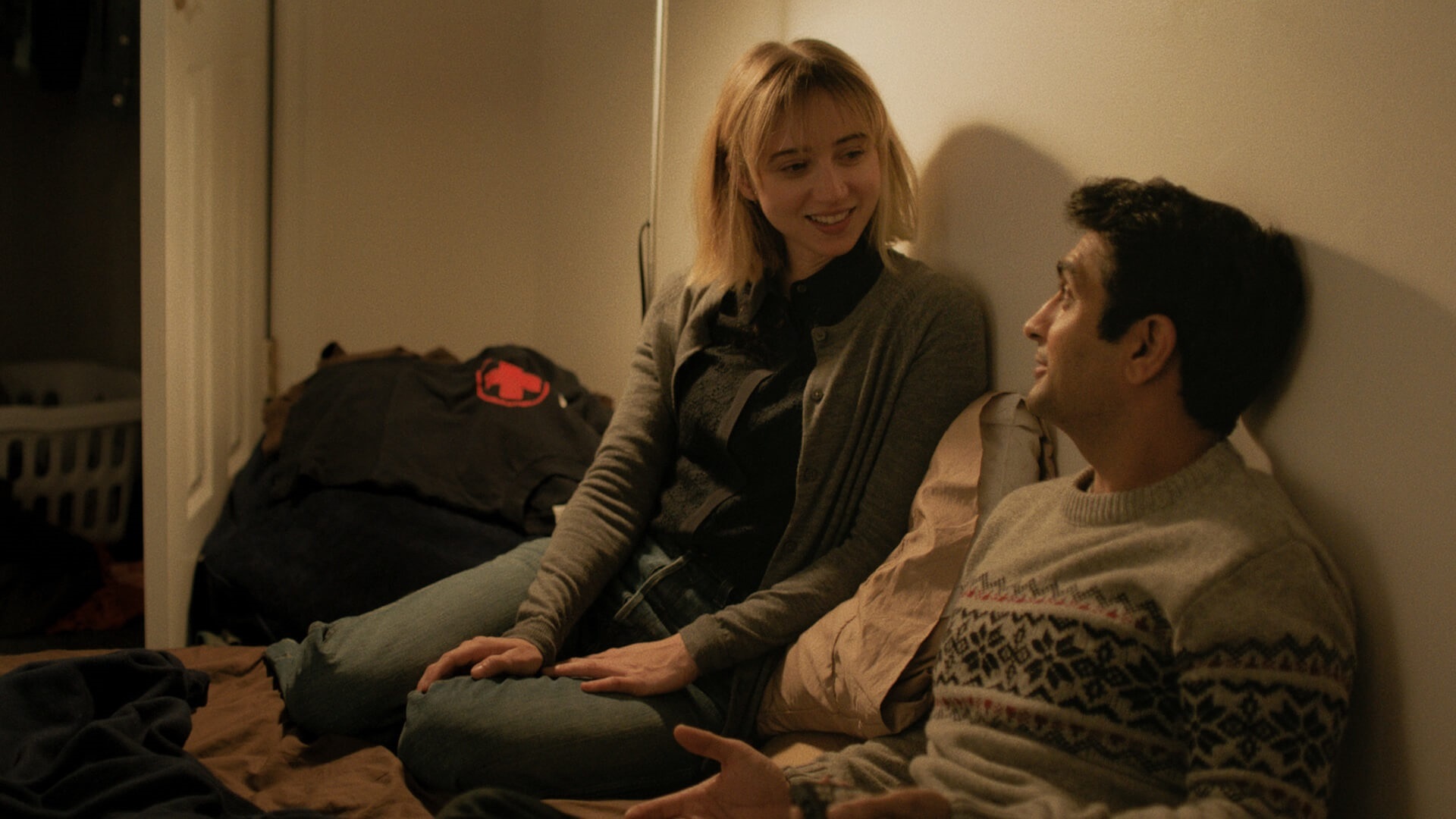
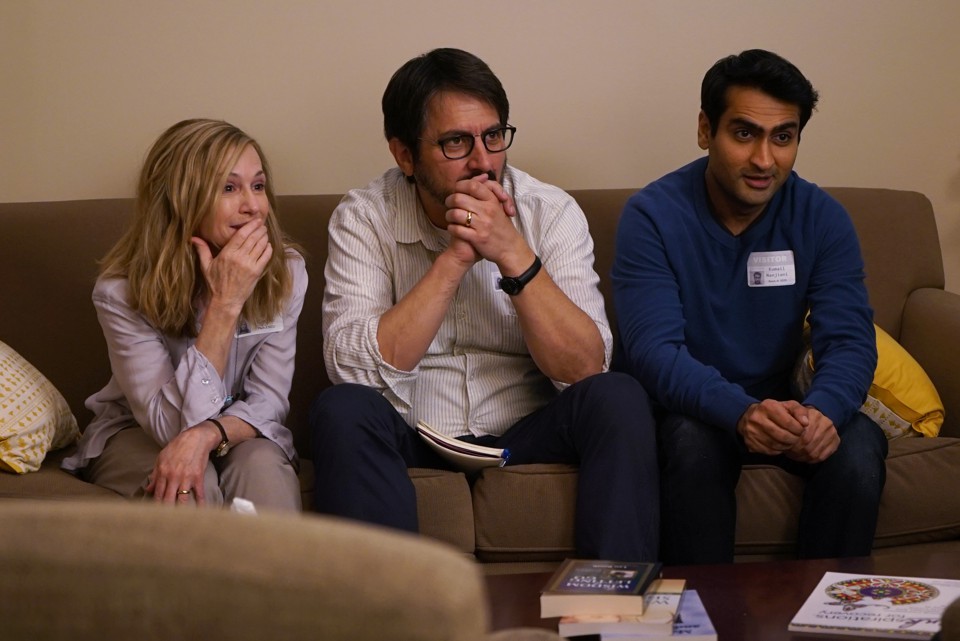
The Big Sick

Alternate Title:  Everybody Loves Kumail

One sentence synopsis:    A Pakistani-American stand-up comedian tries to deal with his white girlfriend's serious illness, while juggling the pressures of his family's traditionalist views.


The Verdict: I don't watch a lot of television. Movies are more my thing. In consequence, I had no idea who Kumail Nanjiani was nor why I should give a damn about him and his life. The Silicon Valley/Portlandia/Franklin & Bash alum was, to me, simply the latest in a long line of comedians who have decided to grace my theater screens with their autobiographical stories. And while I may know very little of Nanjiani's work, I do know a fair amount about what projects like this one typically result in, having subjected myself to both Sleepwalk With Me and Don't Think Twice. Those two movies were, to put things simply, bad, and I had every expectation that this one would be yet another entry in the "I'm a comedian, look how interesting my life is!" hall of shame. I had consequently resolved to avoid this movie at all costs, and had to be dragged into it by main force. The fact that the alternatives began with Despicable Me 3 didn't help my case to avoid it.

Fortunately, though, the resulting film turned out to be slightly different than the aforementioned disasters. How so? Well unlike those other movie, The Big Sick is funny.

Actually it's really funny, riotous even, thanks to an extremely strong script and superb comic actors to perform it. Not only is Nanjiani miles better at portraying his own autobiography (that's gotta be awkward, doesn't it?) than either Mike Birbiglia or the collection of humorless dunces that made up Don't Think Twice, but he has wisely buttressed his own performance with veteran comic talent such as an unrecognizable Ray Romano, and the increasingly ubiquitous (and irreplaceable) Holly Hunter. I was never a big fan of Ray Romano's sitcom work back in the day (I did mention that TV isn't my thing), but I have always liked his ultra-dry standup work, and that's the dynamic he brings to this one. The humor is black, he's playing the father of a young woman dealing with a mysterious, possibly fatal illness, after all, but there's such an effortless verisimilitude to his ramblings about how Kumail's life is a mess, and so is his own, that it's impossible not to laugh along. Holly Hunter meanwhile, who was the only good thing in Batman v. Superman (and that's not a small matter) plays Romano's wife, Kumail's eventual mother in law, as an irascible North Carolinian filled with piss, vinegar, and drunken stories. I don't think I appreciated just how wonderful Holly Hunter was until recently, but she's absolutely wonderful in this film, particularly in a scene where a bro-douche starts shouting racial epithets at Kumail moments before she jumps him with a liquor bottle. Hunter and Romano have an effortless, beautiful chemistry to them, and they alone make the movie worthwhile.

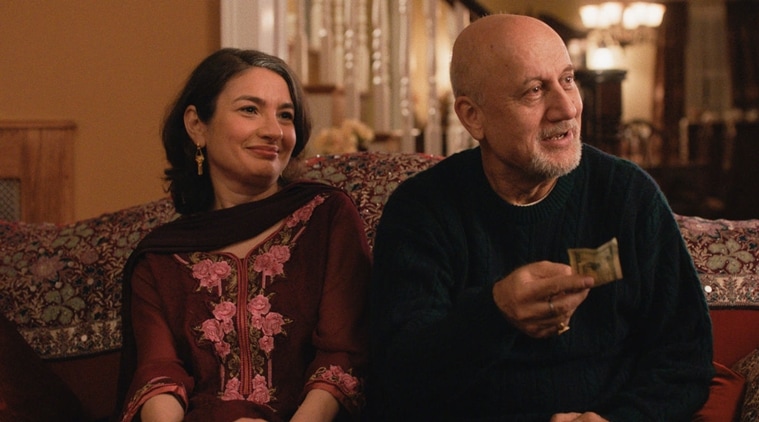
But they're not alone. Like I said, I don't know Kumail Nanjiani from anyone else, but while his standup routine in this film isn't anything to write home about, his interactions with the other comedians in his little group, which (in keeping with all inter-comedian dialogue in every film I've ever seen), is brutal and savage and entirely without restraint. We also get to meet Kumail's family, including Silver Linings Playbook's Anupam Kher as his father, and Zenobia Shroff as his forever-meddling mother, whose brittle attempts at pretending that the succession of Pakistani women she brings over to meet him have "just dropped by" are so stale that even the rest of his conservative family roundly mocks them. The tensions between Kumail's family and his desire to live a modern, secular life with his white girlfriend is a major element of the plot, and fortunately, it is handled deftly and with tremendous skill, neither showcasing Kumail as some perfect, passionate crusader against the demands of his rigid family (we've only seen that story done a hundred and thirty times), nor muddled with personal anecdotes of no interest to anyone except the author himself (as happened to Sleepwalk With Me).


And that's... pretty much all there is to it. The Big Sick is a romantic comedy crossed with a family drama (actually multiple family dramas all rolled together), but it all just works, in fact it works astoundingly well, given how badly most of these sorts of films tend to fail. The whole exercise has a warmth to it, a wondrous chemistry that one sees only on the rare occasions when a cast and a script come together in just the right way. All of the minor characters, from Kumail's fellow comedians (mostly SNL alums like Aidy Bryant and Bo Burnham), to his more conservative brother Naveed (Adeel Akhtar), to the patient herself, played by Zoe Kazan, who has the unenviable role of portraying the writer of the movie. Everyone just works so well together in this one that the whole movie gels around them. As a result, despite every expectation I had, The Big Sick turned out to be one of the best films I've seen in this remarkable year.

Final Score:  8/10


o-o-o-o-o


Spider-man: Homecoming

Alternate Title:  Spider-man, or, The Unexpected Virtue of Meta-casting

One sentence synopsis:   Peter Parker struggles to balance life as a high schooler with his desire to become an Avenger, while confronting an underground arms trafficking ring and trying to prove himself to Tony Stark.


The Verdict:  I'm a Marvel kid. As such, the offerings of the MCU have been a neverending fount of riches to me. But that said, Spider-man was not really my thing. I don't have anything against the character, mind you, just no particular enthusiasm for him (my preference was for Iron Man and Cap). Ever since Spider-man first made it to screen back in 2002, he's shown up six times, in the original three films, which were very good (up until number 3, at least), in the two Sony reboots, which were godawful, and in Civil War, which... was. The news that, following the cataclysm that was Amazing Spider-man 2, that Spidey would be returning to the MCU where he belonged, was certainly overdue, and a source of some approval from me (more MCU is an absolute good at this point), but I wasn't blown away by the prospect of starting all over again with Spider-man, having done so twice already in this young century.

I should have been.

Spider-man: Homecoming is a superb movie, one of the better offerings of the post-Avengers' MCU, a small-scale film with big-scale skill behind it, one that manages to fit Spider-man, or more precisely this Spider-man into the wider universe as though he had always been there, finding a niche for him that isn't taken up by the other films in the MCU canon. It boasts yet another stellar super-cast, which begins with Billy Elliot's Tom Holland as a Peter Parker who finally both looks and acts like a High Schooler. While there are varying opinions on how good Toby McGuire was in the role, and Andrew Garfield would eventually go on to become a fine actor in his own right, I think it's unquestionable that Hooper is the best Peter Parker we've so far seen, naive and foolish and trying to be more responsible than his age normally allows for. Hooper plays a nerd (and an American one at that) perfectly, and is supplemented by a whole host of other high-school(ish) aged actors for his peers, from newcomer Jacob Batalon as Peter's best friend Ned, Disney channel star Zendaya Coleman as "MJ", re-envisioned in this film as a slightly weird, intellectual loner, and Grand Budapest Hotel's Tony Revolori as "Flash", the class dickhead, who is fortunately much better in this film than he was in that one. All of these kids act like kids, awkward as hell, smart-asses to a fault, completely without an idea what they are doing most of the time, and obsessed with looking cool, however they imagine that to be. The kids, Parker in particular, are at the center of the story, which is one of the main reasons this film works at all.

But of course there are other elements to the film as well, including Robert Downey Jr., reprising his role once again as Tony Stark, who this time is tasked with taking on a sort of mentorship role to a young would-be superhero. Tony Stark is, of course, roughly the last person in the MCU one would normally trust with molding young minds (next to Ultron, I suppose), but the movie plainly knows this, and more importantly, doesn't over-use Stark, having him step in where necessary for a series of stupifyingly-good scenes, among the best in the film overall. Part of this is the fact that, ten years on, Downey as Stark is still the greatest casting job in history, but it's also just a measure of how far the character has come that he can fit into a situation like this at all, lecturing Peter on irresponsibility before hesitating and remarking to himself that he sounds like his father.

The rest of the cast is stellar as well, from Jon Favreau reprising his role as Happy Hogan, tasked this time with keeping an eye on Peter, to Marisa Tomei (whose casting caused a stir for some reason) as Aunt May, a more down-to-earth version than the elderly saints we have thus far seen in the role. Smaller appearances by Donald Glover (much better than he was in The Martian), Bokeem Woodbine, and Jennifer Connelly of all people, voicing a Stark-designed onboard AI within Peter's high-tech spider-suit. But the biggest stunt cast is, of course, Michael Keaton, whom I do not need to make any jokes about because the fact that he has come full circle from Batman to Birdman to The Vulture has already been talked to death by everyone living. Keaton is magnificent, because of course he is, a working-class construction worker-made-good who is now trying to stay on top economically by any means necessary, even if that means stealing alien super-tech from the Government and Stark Industries and selling it to the highest bidder. Keaton is a charming bastard even when in a murderous frenzy, but the film never turns him into a mustache-twirling asshole the way a lot of Marvel villains have. Marvel is unique among superhero franchises in building its films not on its villains but on the main characters (this is not as common as it might sound), but Keaton's Vulture is a major step away from that, and while he's not quite the equal of Loki, he's still one of the best villains the series has given us.

Homecoming isn't perfect, of course. The plot, despite the excellent use of detail and setting, is fairly bog-standard, and the movie seems to be aiming for either an underclass anti-hero or Donald-Trump-as-a-supervillain theme with Vulture, neither of which ultimately come to fruition. The stakes and scale are kept deliberately low as well, so if you're obsessive about big sweeping changes being made to the universe as a whole, it will be possible to dismiss the film as nothing but filler (as some already have. But the film is ultimately just extremely well-made , with Onion News Network's Creative Director Jon Watts at the helm. By this point, Marvel hitting these things out of the park is so routine it barely merits comment (he said while commenting upon it...), but given what the rest of the world manages to foul up when it comes to superheroes, the fact that they're not only still going but still going at this level is worth stopping to recognize, even if we've done it so many times before.

And if the trailers for Thor 3 are anything to go by, we'll probably be doing so again before the year is out.

Final Score:  7.5/10


o-o-o-o-o


The Little Hours

Alternate Title:  Chanson de Geste

One sentence synopsis:    A servant fleeing from the vengeance of his master masquerades as a deaf-mute worker at a rural convent where the nuns are all crazy.


The Verdict:  People occasionally accuse me of not seeing enough indie movies, accusing me of having too much love for the MCU, for instance, or for the mainstream wing of Hollywood overall. And it's true, I have always rejected the temptation to engage in hipsterisms, whereby movies are only good if they have budgets of nine dollars and nobody else has ever heard of them. It does not hurt that some of the worst films I've ever seen on this project, films like Under the Skin or White God or Ballet 422, are all obscure indie films watched by a handful of critics, and one savage, raving lunatic (hi). But while I've never made a secret of my appreciation for popular filmmaking (at least when it's not undertaken by Michael Bay, I have standards), a quick glance through my back-catalogue of reviews will reveal many dozens of obsure indie films that I saw on a lark, some of which I hated and some of which I did not. And if anyone needs more proof, consider the film before us here, a narrow-released indie comedy based on the works of a 12th century poet.

Indie enough for you, motherfuckers?

The Little Hours comes to us courtesy of boyfriend/girlfriend team Jeff Baena and Aubrey Plaza, respectively director of and star of this film, one of several they've done together. Baena I know nothing about, as his previous work failed to cross my radar, but Plaza I do know, and don't like. It's not that she's a bad actress, far from it, it's that her preferred character is one designed, as if in a laboratory, to piss me the hell off, the entitled, hipster douche who gets to be a dickhead to everyone because this is her movie (I call this particular malady 'House Syndrome'). But while I'm no fan of Plaza's, I'm a huge fan of John C. Reilly, who has only risen in my estimation with (almost) every film I've seen him in, and who steals the show in this movie, playing a jovial, lecherous, drunken, charming, wonderful priest named Father Tommaso, head of a convent of nuns who are themselves abusive, violent, foul-mouthed lechers, and who fits right in perfectly. These nuns are played variously by such actresses as Alison Brie, Kate Micucci, and Plaza herself, who betrays a certain self-awareness of her archetypical role by casting herself explicitly as a horrible, grating person who is also a violent rapist and a human-sacrificing witch.

Yes, this is still a comedy.

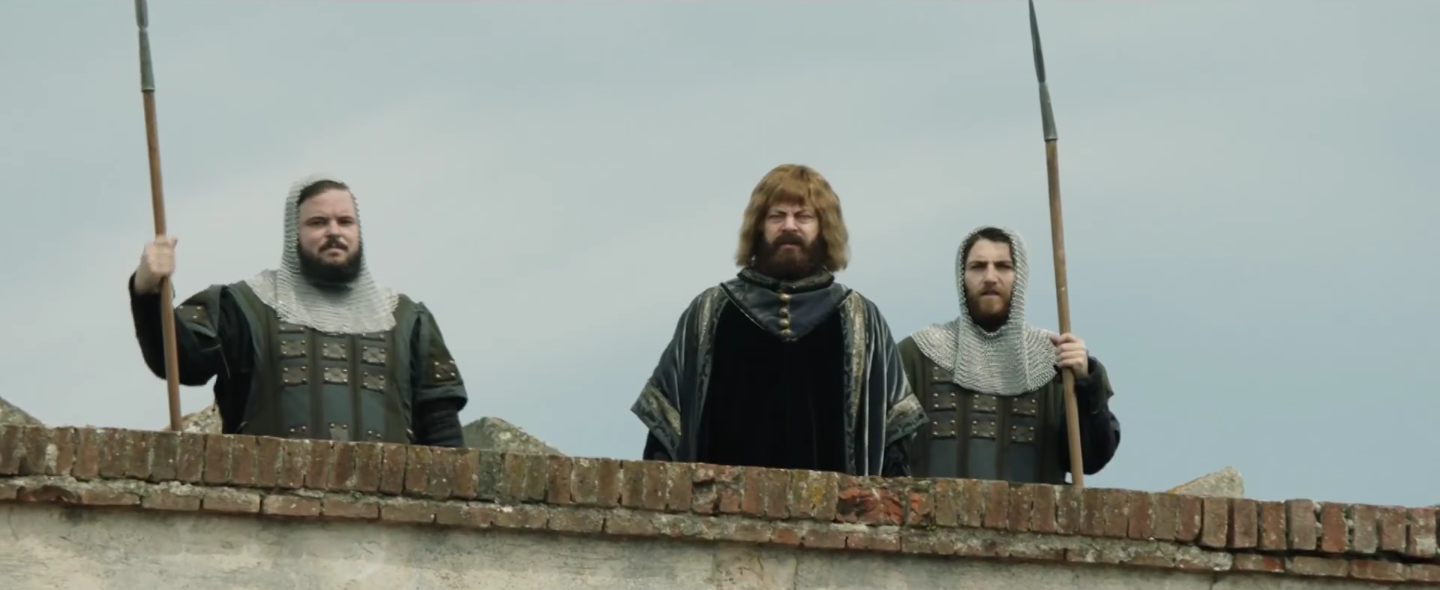
In fact, it's not just any comedy. The Little Hours is in fact a re-telling of Giovanni Boccacio's Decameron, the classical collection of novellas written in the mid-14th century about a group of young, wealthy Italians who amuse themselves by making up and telling ribald tales. The framing story is absent here, but the plot itself is straight out of the Boccacio's tales, which are reasonably obscure now but were the Lord of the Rings of the late Middle Ages, read endlessly, compared to Dante's Divine Comedy, and used as the explicit model for Chaucer's Canterbury Tales. Where Plaza and Baena got the notion to turn a handful of these tales into a movie, I have no idea, but they have studiously done so, placing the film in its historical setting of Northern Italy, while updating the language to make everyone sound like foul-mouthed Brooklyners, as a way of "de-mystifying" the language of stories which were originally about everyday, average folk in all their drunken, debauched lechery. The result is a classical, medieval farce, featuring such people as Fred Armisen as a hysterical Bishop and Nick Offerman as a noble lord obsessed with the goings-on of the Guelfs (I can't decide if Offerman's inability to pronounce 'Guelf' is intentional or not). Dave Franco (brother of James), finally finds a worthwhile role after the tepid fart that was the Now You See Me series, playing a young man fleeing from Offerman's guards after cuckolding him (someone is always getting cuckolded in classical farces), and who winds up staying at a nunnery from hell, where he is abused and raped and nearly sacrificed by a coven of witches, before everyone involved is revealed to be equally lecherous and bawdy and merriment is permitted to break out at last. It's a classical farce, this is what you get.

But classical or not, is it any good? Well... actually yeah, surprisingly so. Some movies need a while to percolate in one's mind before one can make definitive claims on them, and The Little Hours was one that I was lukewarm on initially but have thought more and more highly of as the days have passed. It's certainly not going to be to everyone's taste, and the story structure (such as it is) is a complete mess by modern standards, but I find I admire the film for daring to be what it is, for adopting the anachronistic elements of the old 14th century story, warts and all (nuns raping men was the rage back in the early modern period) without a care in the world as to what people might think of it. I admire it for not attempting to force a modern three-act structure into a tale that was designed as a throwaway piece of light entertainment, and for wisely selecting Reilly as a soft, emotional core of the film, rather than bloviating endlessly on the iniquities of women's roles in the 14th century or some other academic polemic. Its ribaldry is properly ribald, not merely an occasional recitation of a four-letter word, and it neither luxuriates in how backwards the Middle Ages were, nor "modernizes" them the way a lot of over-artistic crap does. And to top all, it's actually funny. Not screamingly-so, but funny enough to be worth a see, if you are inclined to check out the weirder side of the indie world.

I don't pretend that The Little Hours is for everyone, but not every movie has to be. And loathe as I am to admit it, I am pretty much exactly the intended audience that it is for. Maybe that means I can't be impartial, but if I can't use this blog to champion quirky little films that are weird and horrible in all the right ways, what purpose in having it in the first place?

Final Score:  6.5/10



Next Time: Can Chris Nolan pull off a war movie?

Monday, July 3, 2017

Summer Vacation Roundup

And now, a note

As some of you might already know, I spent a number of weeks on vacation last month in various remote parts of the world (Stalingrad!). As such, this threw my schedule into more chaos than it typically is in even at this time of year, and I was unable to give proper reviews and attention to a handful of movies I saw, and liked. Though the films below are now pretty much all out of theaters, I wanted to record, for the record, my thoughts on a trio of films that you may or may not have seen, such that if you did miss them, you have a chance to make up for it on Netflix or other such services.

I also wanted to take the chance to talk about a film that deserves no longer review, but we'll get there...


Three films you should see if you haven't already (and one you should not)


Sleight

Alternate Title:  Straight Outta Frankenstein

One sentence synopsis:    A young man with a passion for street magic gets tangled up in the drug world while trying to find a way out for himself and his sister.


The Verdict: When the mainstream theaters fail you, and they eventually will, I find that the indie parts of the multiplex often provide relief. And so it was that I decided to see an intriguing little film by the name of Sleight, a biopic of sorts about Bo (Jacob Latimore) a young black man living in the bad parts of LA. With his parents both dead, Bo's life consists of trying to make enough money to get himself and his younger sister out of the ghetto. By day, he works as a street magician, using sleight of hand, misdirection, showmanship, and clever film editing (all magician movies give into this temptation eventually) to amaze crowds on Venice Beach. By night, he works as a drug dealer for regional drug baron Angelo (played by The West Wing's Dulé Hill), selling pot and ecstasy to partyers and club owners around Los Angeles. Bo treats his drug work as just another job (as, I assume, do most dealers), but inevitably things begin to get darker when a rival gang moves in and Angelo's demands begin to escalate from drug running to hardcore violence, and Bo must find a way to get out of a life he no longer wants any part of.

Oh, and there's also mad science.

Yeah, Sleight is kind of a weird one, folks, in that it's a perfectly conventional "nice kid tries to escape the hard life" story that periodically dips into semi-deranged territory, as early on we discover that Bo's magic isn't a hobby or even a vocation but an obsession, a means by which he can, as he puts it "do what nobody else can", using everything from old-fashioned tricks to backyard cybernetic surgery to give himself the capacity to amaze and astonish. If that means implanting an electromagnetic dynamo in his shoulder and swabbing the resulting infection with iodine every day, then in Bo's mind, it's a small price to pay for greatness. As such, while the whole pattern of the movie is something we've seen a dozen times before, the film has these moments where all of a sudden it replaces the scared, naive kid at the center of the swirling world of drugs and crime with Magneto and just kind of watches what happens. The result isn't quite as revolutionary as it could be, but it has its moments, such as one scene where Bo walks into Angelo's house and responds to a gangster's threats by ripping out his dental fillings.

All of the participants do a reasonably decent job with the material, particularly Latimore, and Seychelle Gabriel, playing Bo's girlfriend Holly (and whose previous appearance in a movie I saw shall not be spoken of). Neither one are transcendent, mind you, but this is a genre where the primary competition is Pras in Turn it Up, and both of them manage to clear that low bar with fair ease. Dulé Hill, meanwhile, tries his best to be a menacing gangster in the vein of Denzel Washington from American Gangster, talking a big game and smiling a lot before switching on the screaming tirades and machete mutilations, but is hampered by the fact that Dulé Hill has always appeared approximately as intimidating as a bowl of soup, regardless of the role. The story is entirely predictable, from the gradual descent into moral quandaries to the beyond the pale threats of the villainous gang leader, to the final rousing scene in which our hero finally stands up to the violent thugs who are oppressing him, but the details, tinged as they are with the unhinged, keeps things reasonably fresh, even if we know where the movie is ultimately going.

In the end, I have to admit that I liked Sleight a good deal more than I expected to. There are, after all, always new ways to tell a well-worn story, and while Sleight never quite lives up to the zaniness of its premise, it does enough to avoid being just another stale rehash of one of Hollywood's oldest tales. And given that I've seen movies with literally a thousand times its budget come up with literally a thousandth of its sincerity and charm, I'm certainly not going to gainsay an interesting movie for not being anything more.

Final Score:  7/10


o-o-o-o-o


Guardians of the Galaxy, Volume 2

Alternate Title:  Daddy Issues

One sentence synopsis:   The Guardians discover Starlord's semi-divine father while fleeing from a host of old foes hellbent on taking their revenge.


The Verdict:  And speaking of small, modest indie films that you've probably never heard of...

Guardians of the Galaxy was a spectacular movie in more senses than one, proof positive (if ever it were needed) that Marvel's infinite universe of magic and wonder could extend beyond basic superhero stories and into other genres like Space Opera. I loved Guardians, but was concerned about the possibility of a sequel, so delicate was the balancing act it performed, trying to be both totally irreverent and totally sentimental at the same time. And perhaps returning writer/director James Gunn knew that, for this time he has put together a movie that is much heavier on the sentiment while going a bit lighter on the irreverence. I suppose there probably wasn't much of a choice.

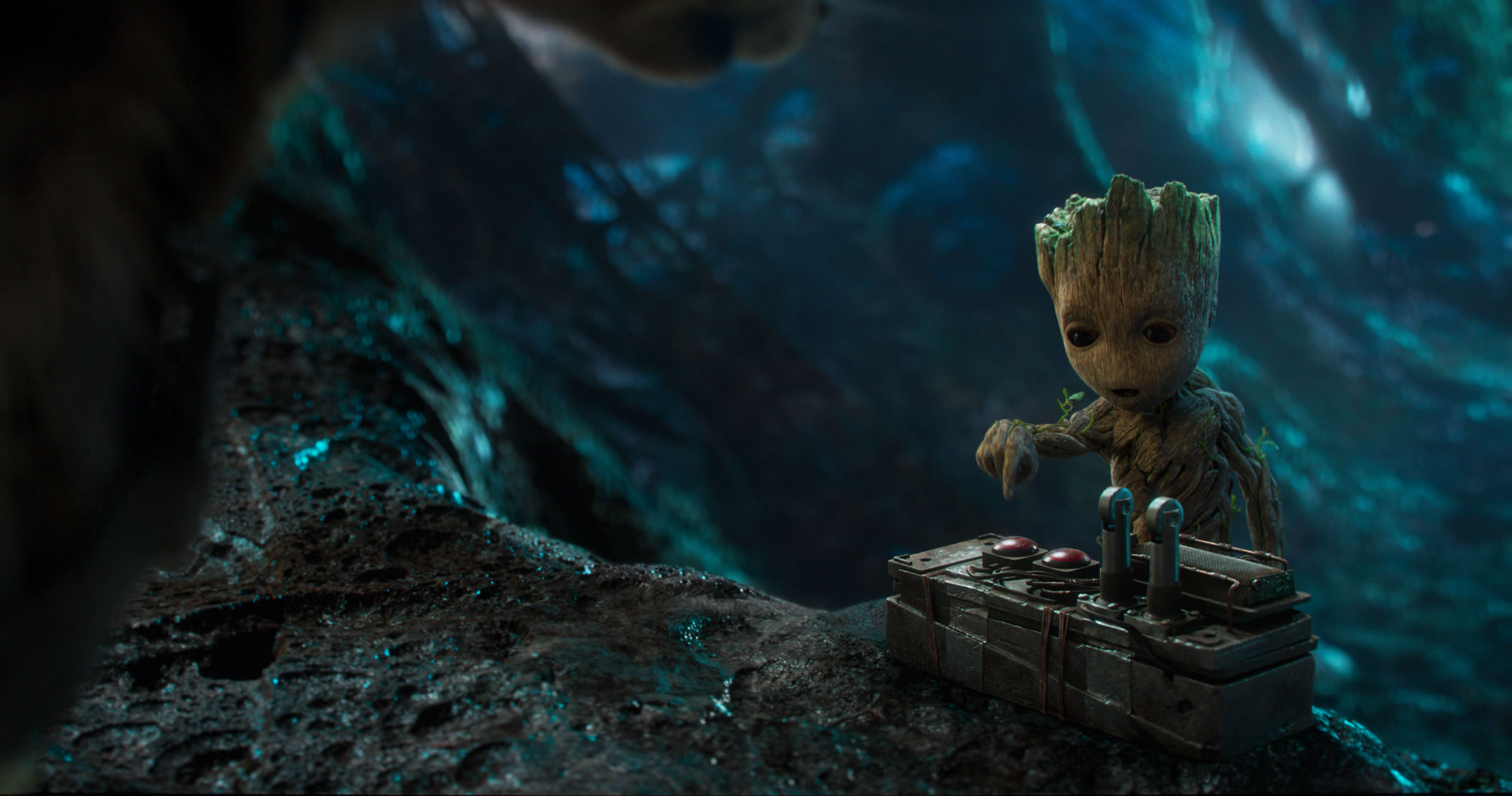
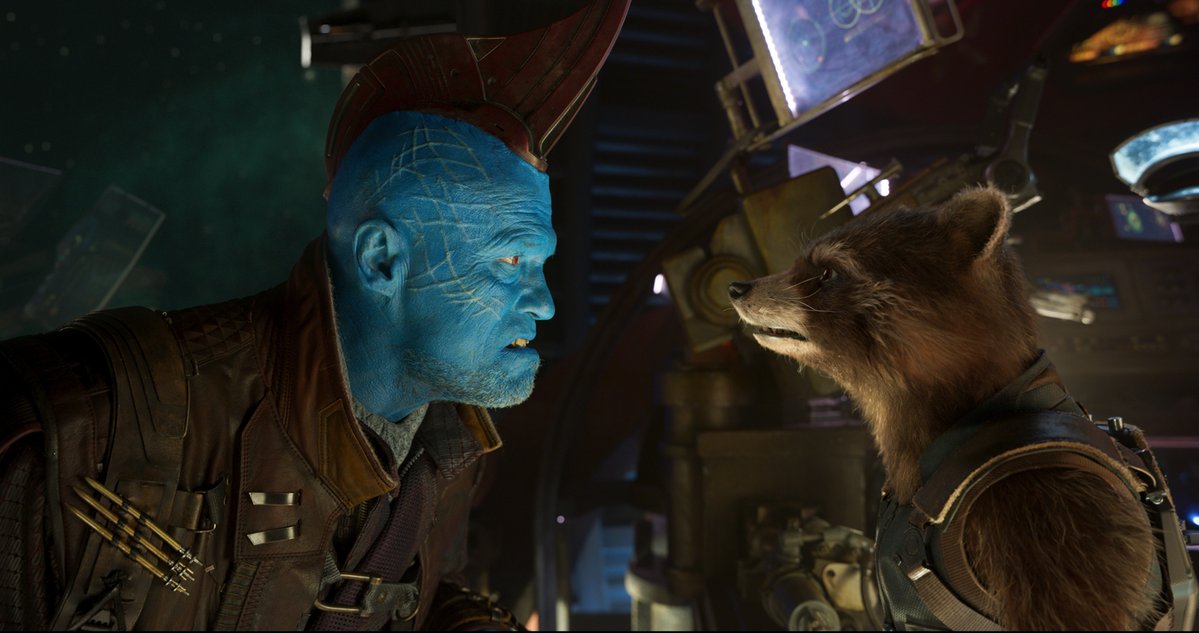
Now a semi-organized band of douchebag mercenaries/bounty hunters for hire, the Guardians have made themselves a host of enemies across the galaxy, partly because of the Marvel Cosmos being filled with officious dickheads, and partly because the Guardians themselves are the same kleptomaniacal, violent lunatics that we all fell in love with back in 2014. On the run from several different gangs of heavily armed assholes out for their heads, they encounter Kurt Russell (his character has a name, but it's basically Kurt Russell), who has been searching for them so that he can reveal to Starlord that he's his father, and that he's a God. Because of course he is. At the same time, half the galaxy is chasing down the rest of the guardians, be it Gamora's sister Nebula (Dr. Who's Karen Gillian), screaming mad and desperate for revenge, Ravager captain Yondu (Michael Rooker), now exiled from his fellow space pirates for child trafficking and looking to find Starlord for purposes he himself likely doesn't know, or an entire host of gold-painted douchebags called the Sovereign, who want to lay waste to the Guardians because they are assholes (and because Rocket, in perfect raccoon style, stole everything of theirs that wasn't nailed down. A lot of these subplots exist simply to give some of the other Guardians something to do for most of the run-time, but I'm hardly going to complain about that, resulting as it does in things like an opening battle sequence filmed completely offscreen as a backdrop to the adventures of baby Groot's misadventures, David Hasselhoff cameos, two enormous battle sequences where one of our heroes disposes effortlessly of so many heavily-armed ravagers that the sequence becomes gut-bustingly funny, and best of all, Sylvester Stallone making an appearance as a Ravager admiral with ties to Yondu. Sly seems to be sending up his performance in Judge Dredd, which given the tone of this movie, is beyond hilarious, and if this leads to him appearing in future Marvel films, so much the better.

Honestly though, the focus this time isn't on the zaniness but the characters, which is not exactly what I expected from Guardians of all movies, but looking back is probably the correct move. Starlord's lingering abandonment issues from having lost his mother and having been kidnapped by space pirates as a kid continue to haunt him, while both Gamora and even Rocket, of all people, get some excellent moments circulating around their place in a misfit surrogate family like the Guardians, and the distance between what they claim their place is and what it actually is. The film never moves into telling instead of showing, but it's plain that Gunn is more comfortable with the characters this time, and more willing to explore the dynamics between them in greater depth than the previous movie, five-way-origin-story as it was mixed with a galaxy-devouring threat, had time to do. The core theme of the film though is fatherhood, surrogate or otherwise, as evidenced by Kurt Russell trying to make up for lost time with his demigod son, Yondu's remarkably complex relationship with Starlord, one explored throughout the course of the film with surprising depth and even pathos, Nebula and Gamora's shared experience being raised by an abusive monster in Thanos, and even Sly's own semi-father relationship with Yondu (okay, I'm stretching here, but I wanted to shoehorn the fact that Stallone is in this film into the review once more).

So does this mean that Guardians of the Galaxy, Vol. 2 is just as good as its predecessor? Well... no. It's not far off, to be fair, but with this much emphasis on secondary characters and on the sentimental possibilities of certain characters' stories, someone kind of has to get the shaft. Both Dave Bautista's Drax and Zoe Saldana's Gamora have very little to do in this film save for sitting around commenting on the actions of other characters, including those of Pom Klementieff's Mantis, a fairly forgettable throwaway who doesn't bring enough to the film to justify her existence there. The writing isn't quite as sharp as it was last time, the film needing to spell more of its emotional core out rather than let it flow organically. The difference is one of degrees, but it's there, palpable in that the sequel to a movie that created a surrogate family without once using the word 'family' now has to actually hammer the point home with considerably less finesse. There's also the question of the missing humor. Not that Guardians 2 isn't funny mind you, it's just not as funny as the last film, in part because the movie is concentrating on other matters, but also because the simple fact that the characters embody their archetypes is no longer good enough. Rocket being homicidal despite being a furry little procoynid, or Drax speaking in utterly literal statements all the time is no longer good enough to carry the film. In fairness to Gunn, it's clear he and the cast knows this, but nevertheless, some of the edge that carried Guardians through the original minefield of sentiment and saccharinity has clearly been lost, and will need to be freshly honed in the sequel.

All that being said, Guardians of the Galaxy's second chapter is a really good film, the best superhero movie of the year so-far, and a worthy addition to the illustrious Marvel canon. It may be a little less fresh than its predecessor and it may feel unavoidably like filler at points, but when the filler is this good, it's hard to get upset.

Final Score:  7.5/10


o-o-o-o-o


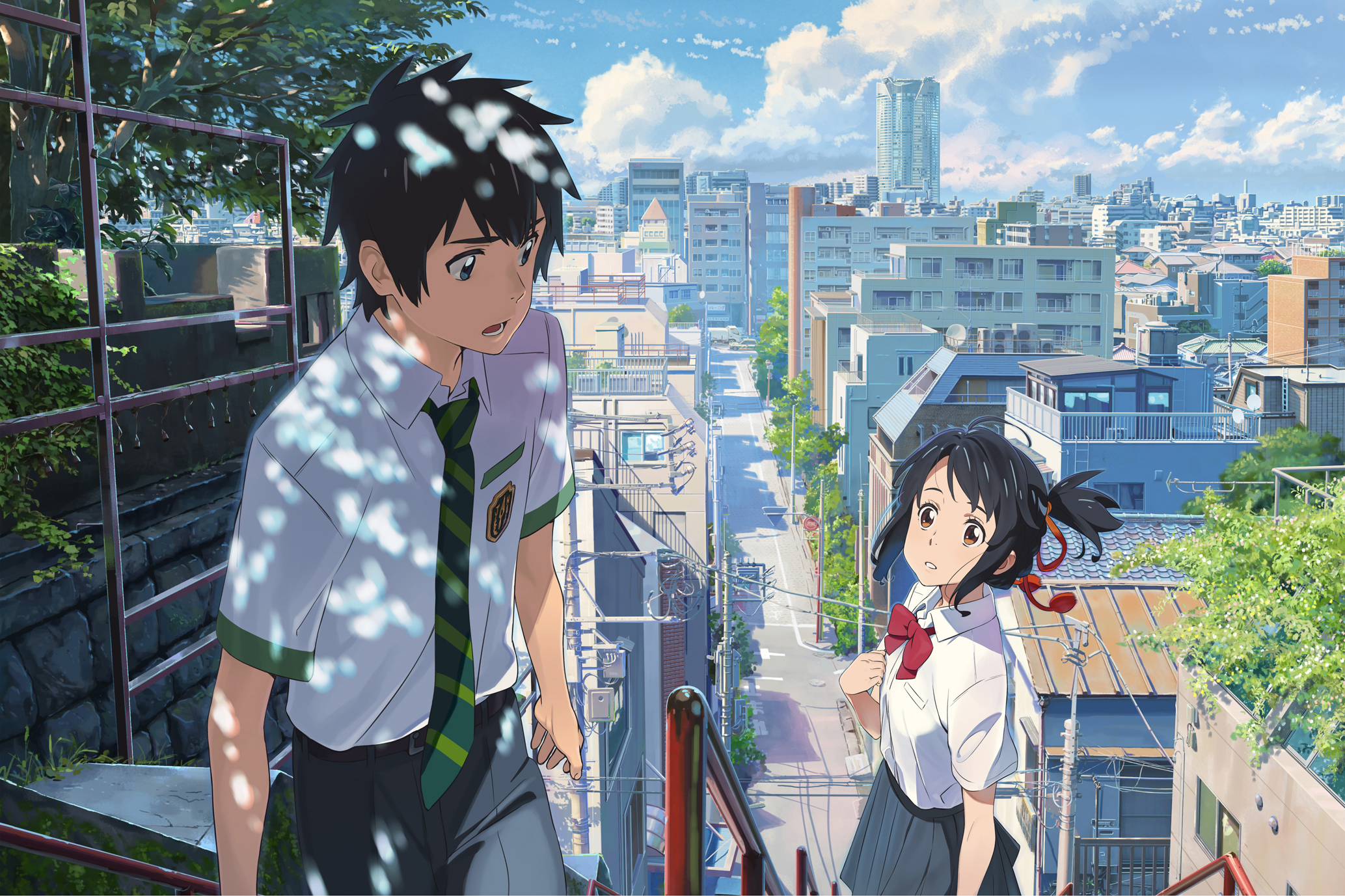
Your Name

Alternate Title:  Freaky Friday the 13th

One sentence synopsis:    A young man in Tokyo and a girl in the Japanese countryside begin spontaneously switching bodies, and struggle to discover who each other are.


The Verdict:  I will not pretend to be the biggest anime fan around. Oh don't get me wrong, I've nothing against Japanese animation, and I've seen the classics, like Spirited Away, Princess Mononoke, Naussica, Akira, Ghost in the Shell (not that one), Howl's Moving Castle, to name a few. But beyond the Miyazaki canon and a handful of other films or series that have crossed my path, Anime and I have a fairly cool, if cordial, relationship. It's not that I dislike it, it's just that the cultural conventions of the art form, from the stammering male protagonists to the unsubtle upskirt shots of the female ones, just really aren't my thing overall. Still, that sort of objection has never prevented me from catching a good movie when one presents itself, and so on the back of several absolutely glowing reports from friends of mine who do appreciate Anime, I decided to go and check out our latest import from our friends in the Far East.

Your Name comes to us from the CoMix Wave Films studio, a studio whose pedigree is second only to the legendary Studio Ghibli itself, and not by much at that. Though nowhere near as well known in the States, CoMix Wave is responsible for several classic masterpieces of the Anime film world, including 5 Centimeters per Second, The Place Promised in Our Early Days, and The Garden of Words. The majority of CoMix Wave's films, including the aforementioned three classics and Your Name itself, come from director Makoto Shinkai, CoMix' Miyazaki (though he disputes this characterization). Shinkai's specialty has always been labyrinthine films with complex, philosophical plots, rather than the more artful fantastical fare that Ghibli focuses in, and Your Name is no exception. At its core, the film is about two young people, Taki, a university student in Tokyo, who works nights as a waiter to make ends meet, and Mitsuha, a high school student from a small town in rural Japan, who serves as a shrine priestess in the local Shinto temple, and who is otherwise bored stiff by her small town's limited horizons. For reasons neither of them can understand, the two begin body swapping one day, waking up in one another's lives for a day at a time. Communicating with one another by leaving text messages on their smartphones, the two try and puzzle out what's happening without actually having physically met, at least until...

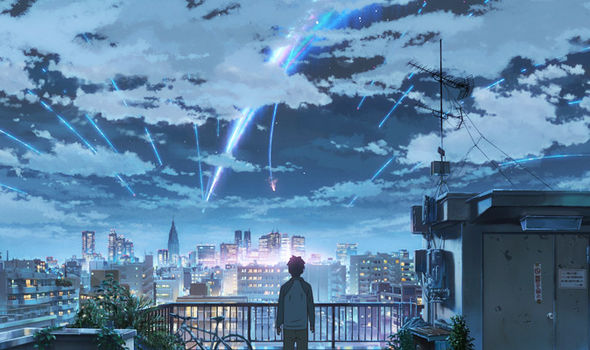
... well never mind the until, really. Let's just say the plot gets real complex real fast, as Taki and Mitsuha try and discover what seems to be happening here, and why. All of this, however, takes place before the backdrop of gorgeous animation, classical in style for anime, though not if one is only used to the Ghibli films. The focus here is on quotidian animation, fireflies at night, the glint of torchlight on painted faces, a weed-filled vacant lot near the outskirts of a town, cramped Tokyo apartments, that sort of thing. It's a far cry from the hyper-extended fantasias of films like Paprika or Spirited Away, but no less beautiful for the lack. The characters, as well, are more subdued than the customary anime stock types, less explosive screaming and sweat drops than the typically-madcap pace of Anime allows for (I don't want to paint with too broad a brush here, but Anime does have its tendencies). The characters are well written, and sharp enough to follow along with the twists of the plot, and the film overall has a charming, romantic quality to it that translates well out of context, cultural and otherwise.

Unfortunately, the need to translate out of context is pretty vital, because Your Name, for all its charming simplicity at points, is a tremendously complicated film, involving not only body swapping but time travel, astrophysics, spiritualism, hallucinogenic drugs, memory loss, and a pair of narrators, both of them unreliable. Readers of this blog know that I've got nothing against a complex plot, I sang the praises of Cloud Atlas for years after all, but Your Name stuffs so much intricacy into its runtime that it is legitimately difficult to follow. This is not an uncommon problem with more adult-oriented anime (not that kind of adult-oriented... well maybe that kind too). Ghost in the Shell's films and TV shows both involved complex philosophical-political discussions about everything from cognitive theory to tax policies in parliamentary governments, smashed into the middle of a modern techno-thriller. Your Name, though, is supposedly a lightweight romantic drama, which periodically gets so dense that the audience is expected to simultaneously keep track of intricate animation, complex subtitles, and explanatory super-titles used to illustrate untranslatable subtleties of grammar and wordplay within the sub-titled dialogue. Watching a film while reading two books at the same time is a tall order for anyone, and it's for that reason that, contrary to all of my snobbish tendencies, my recommendation for those who do go looking for Your Name is to find a dubbed copy, and reduce the parallel tracks you have to simultaneously juggle to two or so.

Honestly, Your Name is quite a good film, though its indulgence of far too much complex gamesmanship keeps its from being a great one. It bears very little in common with most of the popular anime which we of the non-Otaku world encounter, but it's no less of a film for it, a highly-complex telling of a very simple story, done without the melodrama and artifice that such stories would normally be lathered with, either in Japan or here. And given the number of people I know who absolutely adore this film, I'd bet that if you're willing to put work into decoding it, Your Name may just wind up surprising you.

Final Score:  7/10


o-o-o-o-o


Megan Leavey

Alternate Title:  The Arf Locker

One sentence synopsis:   A marine with a troubled past bonds with her bomb-sniffing dog while deployed to Iraq.


The Verdict:  As longtime readers of this project already know, some weeks do not offer a lot of choice when it comes to what to see, weeks that offer either a slate of movies I've already seen, or things like Alien: Covenant (Prometheus did not warrant a sequel) or The Mummy (now with 90% less fun!). As such, I went to see Megan Leavey despite my ambivalence towards both subject and cast, in the hopes that, as has happened many a time, the movie would prove better than my expectations allowed for.

It did not.

Admittedly, it didn't prove much worse either. Megan Leavey stars Kate Mara, older sister of Rooney Mara, and an actress I have never, despite all the stuff I keep seeing her in, decided if I like or not. Marta plays the titular character of Megan Leavey, a washed up kid from some dead-end town on the Atlantic seaboard who joins the Marines due to a lack of options beyond overdosing on drugs, and through a series of misadventures, winds up assigned to the K-9 corps, working with an "incorrigible" German Shepherd named Rex. They don't like one another at first, they bond, they go to Iraq, they get into combat and perform heroically, they have trouble adjusting to civilian life back home, you've seen this song and dance before, both better and worse, in a hundred other movies. So what makes this one different?

Well... not much, to be honest. This one has a dog, certainly, and that's not nothing, as the dog actor playing Rex is the best actor in the movie (animal actors often are, I find, mostly because they have better lines). True, the film has the usual problem wherein they get the dog to bark a few times and then expect the audience to pretend that it's a 'wild, uncontrollable beast', but I suppose there's limited options for getting a nice dog to appear fearsome. There are, admittedly, a couple of nice lines relating to the business of dogs in Iraq, such as the one where a soldier tries to scare Megan with tales of how the insurgents will kidnap K-9 dogs and strap bombs to them before sending them back to their handlers, only for Megan to respond that, given that Rex can tear a man's arm off with his jaws at her command, she's not overly concerned about that possibility (there's a really awesome action movie to be made here somewhere).

There's also the cast, which is somewhat more exalted than one might normally find in movies like this, though the film does not exactly take full advantage of that fact. Common, who I'm finding increasingly ubiquitous in my filmgoing experiences, plays Megan's tough-but-with-a-good-heart sergeant at the K-9 corps, but while on paper this should seem to be a perfect choice, the fact is that Common is not a particularly good actor when forced to play things straight, being wooden and inflexible in all the wrong ways. Granted, there are movies where he can work around this (John Wick 2 for instance), but here he goes into his Selma/Timothy Green style of direct unemotional declarations of his lines, and it just doesn't work. Tom Felton, of the Harry Potter series, has a small role as a veteran dog handler, which seems to have been added to the movie purely to make the young girls coo (which several of them literally did upon seeing him in my screening), while veteran stars Edie Falco and Will Patton get to play Megan's mother and step-father, the former as a bubble-headed shrew, the latter practically without lines. Neither has much chance to do more than play stereotypes. At least they get a better shot than Bradley Whitford though, who is horrifically mis-cast as Megan's blue-collar working stiff father. I love Whitford, I have for years, but he's about as authentically blue collar as Donald Trump, and has about the same ability to pretend as much, and his attempts to portray a salt-of-the-earth character are just embarrassing, given his polished accent and upper-crust mannerisms. Whitford works great in films like Get Out or The Cabin in the Woods, not in this.

Ultimately, Megan Leavey isn't a bad film. The dog is always entertaining, and Mara is actually pretty decent given the material, underselling everything heavily, which is the right call in a story that can easily slide into melodrama. But the movie overall is really nothing special, a re-hash of American Sniper with dogs, and of about the same level of quality. Unless you're one of those who absolutely has to see every movie involving the military out of some misplaced sense of patriotism (or if you're punishing yourself with a weekly film schedule), there's just no reason to run out for this one. If you've seen the trailers, you've already seen the entire production.

Final Score:  5/10
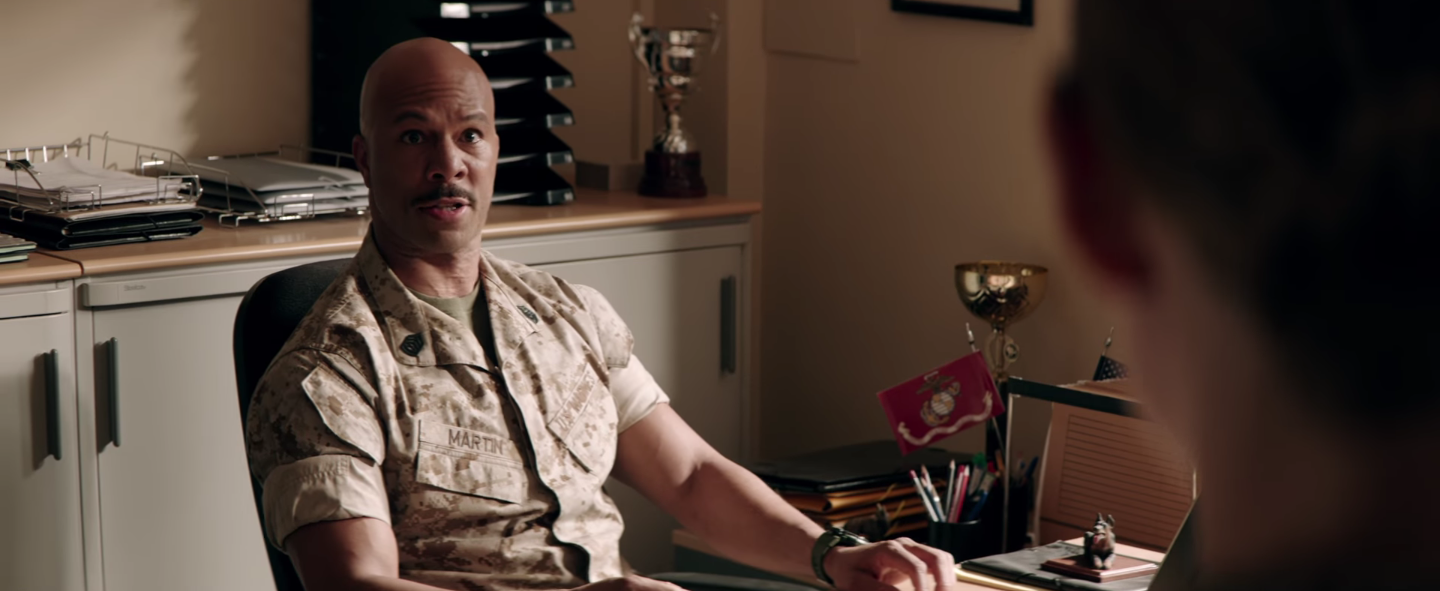


Next Time: We kick off the heart of the summer blockbuster season with style.

The General's Post Summer 2018 Roundup

Let's get back into the swing of things, shall we? The General's Post Summer 2018 Roundup Ant-Man and the Wasp Alternate Ti...