Sunday, June 4, 2017

Colossal


Alternate Title:  Gone Kaiju
                                                                                                                                                            
One sentence synopsis:  Following a traumatic breakup and dealing with spiraling alcoholism, a woman returns to her hometown to reconnect with old friends just as a tremendous monster begins attacking a city on the far side of the world.


Things Havoc liked:  I had an astoundingly hard time coming up with the synopsis above, because Colossal, whatever else it might be, is a really weird movie.

A personal project directed and written by Spanish director Nacho Vigalondo (none of whose previous work I am familiar with), Colossal was a movie I went to see entirely on spec. A woman named Gloria (Anne Hathaway), unemployed and a raging alcoholic, breaks up with her boyfriend (Beauty and the Beast's Dan Stevens) in New York City, and moves back to her hometown somewhere in small town middle America. There, she meets an old childhood friend (Jason Sudeikis), who gives her a job at his bar to get back on her feet, and seems to be interested in kindling a relationship, introducing her to his friends around town and helping her put her place in order. What sounds like a setup for a particularly boring romantic dramady is salvaged however, by two complicating factors. One of these factors is that a two hundred foot reptilian monster begins assaulting the city of Seoul, South Korea, smashing things, killing people, and vanishing into thin air from whence it came. Over the course of several nights of these rampages broadcast on live news and YouTube, Gloria begins to realize that the monster is mirroring her own actions whenever she stumbles home drunk at eight in the morning through a disused playground somewhere in town, and that she is consequently responsible for the murder of hundreds and the destruction of much of Seoul. The other one of these factors is actually important.

But... before we get to that, let's talk about what we've got here. All of the above actors, particularly Hathaway, are sublime. Of course Anne Hathaway is always sublime, even in bad movies like Bride Wars or Alice in Wonderland. Her character is a blind drunk, accustomed to getting away with murder (metaphorically, one hopes) by acting cute and batting her eyes, and pivoting instantly to hyper-serious when confronted with real consequences, such as being thrown out of her home or realizing that she may have started World War III by accident. A great early sequence has Hathaway effortlessly expressing total desperation, shock, and misery, all without a word, after her boyfriend throws her own of their shared apartment and her drunken friends carry on carousing behind her, oblivious. Given the weirdness of a premise that requires her to discover that she can control Godzilla, she, and the movie, plays things very down to earth, as she struggles to find a way to make things right without the wider world discovering what is actually going on. Vigalondo's direction is light on effects and heavy on quotidian observation (he wrote, smugly), with the emphasis firmly on the characters and their reactions to what, in a worse movie, would be a world-shattering discovery leading to super-heroism or chase scenes, and in this movie leads to slurred conversations in bars while watching events play out on television. In fact, one of the funniest things I've seen in years is a CNN report that plays a YouTube video of one of the Kaiju "incidents", complete with internet memes and embellishments. I almost choked.

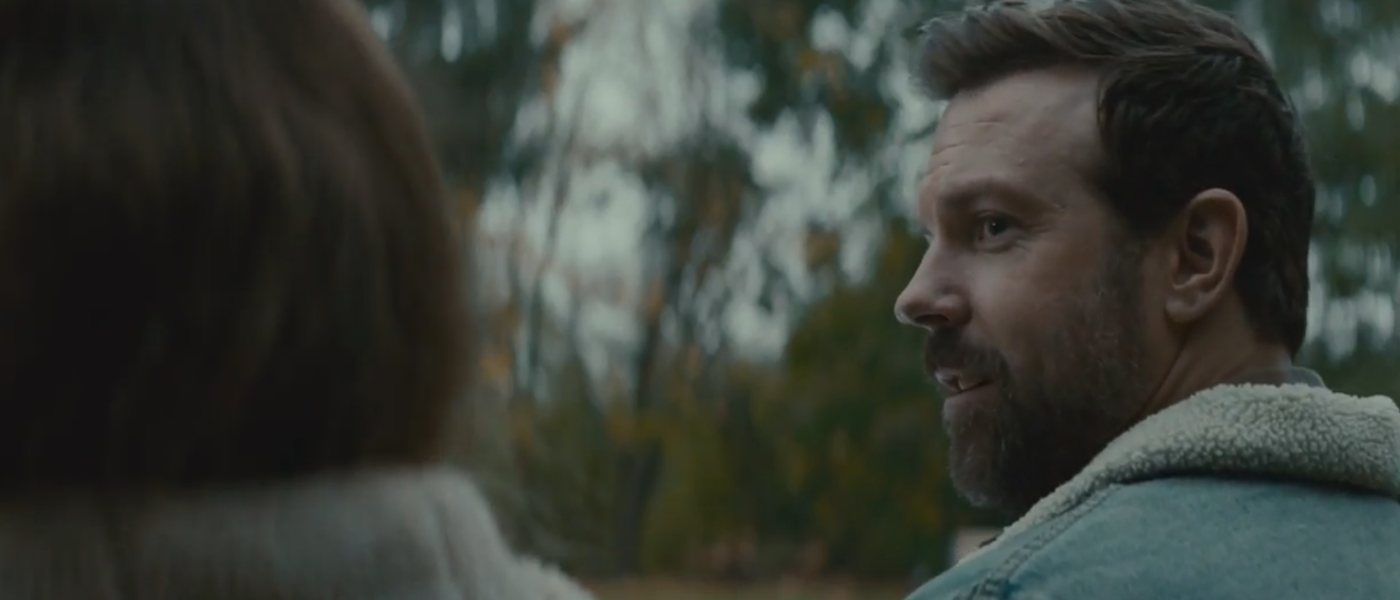
But I said a moment ago that there was another factor that was actually important. What factor is this, you ask? It's the character of Jason Sudeikis' Oscar, who starts the movie off as a friendly, neighborhood bar-owner, willing to help Gloria out with a job and spare furniture, and ends it as... well... one of the most toxic, abusive, controlling people that I have ever seen applied to screen. It's not that Oscar is a monster, although he is, it's that the movie does a sterling job of portraying what an abusive person actually looks and acts like, rather than the cartoon psychopaths that are generally put on screen. His behavior is cyclical and self-delusional, with subtle warning signs initially before spiraling into full-blown narcissistic delusion and aggressive, controlling behavior, fueled, in-part, by his own incipient alcoholism and circumstantial opportunities (the aforementioned Kaiju situation) to force his fantasies into reality. Sudeikis, an SNL alum, is an actor I've known about forever, but I don't think I've ever seen before this, at least not in movies, and he's amazing. This is a role that most directors would fill with guys like Vince Vaughn or Billy Campbell, tough-looking creepers who can loom menacingly and appear monstrous at the drop of a hat, with the usual consequence that one wonders just how the abused protagonist couldn't see this coming. But this film has Jason Sudeikis, of Mother's Day and Zach Galifianakis movies, a guy whose established movie persona and look are about as threatening as a bowl of soup, turning on the repressed rage and toxicity, rather than unconvincingly turning it off. It's an incredibly good performance, a star-making performance, helped by a restrained script that only provides the barest glimpses of what must be going on underneath the surface of the character, letting the audience figure it out for themselves.


Things Havoc disliked: So... here's the thing...

Some films are just bad. That's hardly a shocking statement. Some are the product of bad scripts or writing, some of terrible performances, some of awful direction, a rare few are victims of all of the above. Over the years I've been doing this, in fact, I've come to appreciate that there are an infinite number of ways to make a bad movie, and in the aftermath of one, it is often not that easy to sit down and parse out what actually went wrong. That's one of the reasons (beyond simple procrastination) why these reviews take so long. You need to give a movie time to percolate, time to settle in your mind. Sometimes you simply need to take the time to clarify your thoughts on a film before you can start speaking intelligently about it. And this is often the case for films, like this one, that are objectively very well made, with good acting and good writing and a good director overseeing it all, and yet which, for whatever reason, I found I didn't like.

Why? What more could I be asking for beyond a bunch of good actors acting well together in a refreshing story that occasionally had me howling in laughter? Initially, I thought that the problem was that the movie reminded me too much of films like Enough, the 2002 Michael Apted "thriller" that starred Jennifer Lopez as a woman fleeing her cartoonishly-evil ex-husband, who would sneer at the camera before monologuing about how deliciously evil he was and how helpless she was to thwart him. But as I mentioned above, that comparison isn't fair, as Sudeikis' performance (and, frankly, Vigalondo's directing) is miles beyond the cheap mawkishness of that early-00s snoozer (there's a reason the 1997-2004 period is now regarded as the Dark Age of Cinema). What, then, was the problem? Was there something more fundamental in this film that made me react this way, some deep-rooted issue of script or premise? Or was it instead a subjective matter, and whatever it was had nothing to do with the movie at all, just a facet of the baggage that all critics, no matter how objective they try to be, bring into the theater with them?

Maybe. Or maybe the problem lies, not with Enough, but with a movie from 2014 called Gone Girl.

Long-time readers will remember Gone Girl, the David Fincher film based on a Gillian Flynn book, the one that starred Rosamund Pike and Ben Affleck at the top of their form, with a labyrinthine script involving insanity, betrayal, murder, manipulation, and the hunger for scripted villains by mass media. It was, by many standards, a great film, well created and shot, and written crisply enough that even Tyler Perry wound up looking good. And I hated it. Not because of any of the things above, but because I concluded, following a similar agonizing process to the one above, that it was a shallow, manipulative piece, coded in the language of misogynist sexism, one that romanticized all of its men, no matter how awful, and condemned all of its women, no matter how unbelievable. It was a movie that pretended to show the steamy underworld of obsession and manipulation, but refused to play fair with its characters, with the audience, or with the scenario it had set up, preferring instead to deal in thin stereotypes hidden by good performances and direction. At the time I reviewed Gone Girl, I said that I rejected the film, in part because "If a movie was made this way about men (and there have been some), I and others would be trumpeting outrage to the skies." And readers, I'm sad to report that the time has come, because Colossal is that movie.

The problem isn't Sudeikis' character, not really. He's an obsessive, evil, manipulative person, willing to commit horrific acts so as to control Gloria's life, but that much isn't sexism any more than Norman Bates was, it's a character of terrible depths played brilliantly, and one we don't often get to see, at least not with this spin. No, the problem, as always, is in the context in which we get to meet this character, because this isn't a simple story of girl-goes-home-and-is-manipulated-by-monster, Kaiju-laden or otherwise, and the movie treats it like it is. Gloria, lest we be reminded, is herself a blind drunk, one who, even after discovering this miraculous capacity to control the actions of Godzilla, drunkenly plays with the notion and shows off to her friends, resulting in the deaths of thousands and the obliteration of large portions of Seoul. It would be one thing if the story were one of Gloria learning from her terrible mistakes and taking back control of her life, while Oscar slides deeper into the throes of his own demons, but it's not, not really. Instead, Gloria is instantly forgiven everything that she's done wrong because... well because she's the heroine, I guess. She cures her raging alcoholism, a disease that has led her to kill thousands of people, offscreen, suddenly no longer suffering from it because she apparently decided not to. She does this, despite still working in a bar, surrounded by alcohol, an environment no alcoholic on Earth has sufficient willpower to resist. And just as she does so, everyone else in the movie swallows their evil pill, so that she can appear more saintly. Not only does Oscar take a turn from "weird and creepy" to "utterly irredeemable" (which is fine), but her ex-boyfriend (Stevens), the one who broke up with her in the beginning of the film because he didn't know what else to do, and has spent the movie calling her up and begging her to get help, even apologizing for sounding so superior and lecturing about it, the one who turns up in her hometown, having faked a buisness trip for the purpose, because he's afraid that she may be in real trouble (which she absolutely is), this boyfriend suddenly turns around and becomes a negging, verbally abusive, dismissive egomaniac, denigrating her attempts to do exactly the things he had previously been begging her to do, just so that when she inevitably tells him off and excises him from her life, the audience can feel good about cheering.

But that's not the only character this happens to. Consider Tim Blake Nelson, a wonderful character actor whom I've adored in films like Holes, Syriana, and O Brother, Where Art Thou. He plays Garth, an ex-drug abuser and friend of Oscar, whom Oscar turns on one night in a drunken rant, exposing his past as a drug addict and belittling him mercilessly. He tells Oscar off, and... is never seen again. Despite the fact that his character has been set up heavily as an important part of the story, and the fact that he knows the secret about the Kaiju, one of the most explosive in the history of mankind, he vanishes outright from the rest of the film, something the film tries to frame as moral cowardice, and I am tempted to re-frame as the film being afraid that having a male character who isn't an abusive monster will undercut their heroine. For proof of this, look no further than Austin Stowell, of Whiplash and Bridge of Spies, Oscar's other friend, with whom Gloria has a brief fling, prior to him turning into a doormat and an enabler for all of Oscar's worst habits, actively abetting him in the murder of thousands of people with no reason given beyond the fact that, well, he's a man, and you know how they are. I don't mind that these characters are all flawed, or addicts, or stupid, or abusive, or even monstrous. I've loved many a film with many a character that evidenced all of those things, some with much less acting skill than is on display here. I mind that the movie is coded such that they are those things because they're men. And that Gloria, no matter what she does, no matter who she kills, is not any of those things, because she isn't.


Final thoughts:   It should be noted that the people I saw this movie with had no such experience, and thought the movie was interesting and well made, and rated it highly. I do not claim that they are necessarily wrong, but I will note that I felt the same way about Gone Girl when I left the theater, and that it was only after much time and conversation with those who had reacted negatively to that film's latent misogyny that I came to realize that I hated it. I would not go so far as to say that I hated Colossal the same way I ultimately did Gone Girl, but I did not like it, not when I saw it and even less now, with several weeks' distance to think about the matter. The issue isn't just that it stereotypes men as abusive, manipulative monsters, although it absolutely does this. It's that in doing so, it also manages to imply that the only way the audience will empathize with a woman in the throes of an abusive relationship is by making her literally the only likable person in existence, beatifying her by proxy despite the fact that she manifests many of the same behaviors as everyone else. The only difference is that, as a woman, she's infallible, while men are the scum of creation. And if you think I'm laying this on too thick, consider for a moment that the character is named Gloria, and that one of the final scenes has her literally walking on water.

Enough then. I don't expect that many people will hate Colossal, in fact I expect quite the opposite, as the movie is unquestionably well made and acted by all concerned. I don't begrudge those who find value in the exercise as a result, but I cannot number myself among them. I mentioned in the Gone Girl review that a good film can be made about any subject, but only if it made with honesty, and like that film, Colossal is a crude simplification that gathers airs of depth because of its evident technical virtues. I denounced Gone Girl because of its insidious misogyny despite these virtues, and I will not refrain in this case simply because the shoe is on the other foot. To do anything else would be dishonest, and that would make me no better than the film itself.

Final Score:  4/10


Next Time:  Magic, Mayhem, and Mad Science.

Monday, May 29, 2017

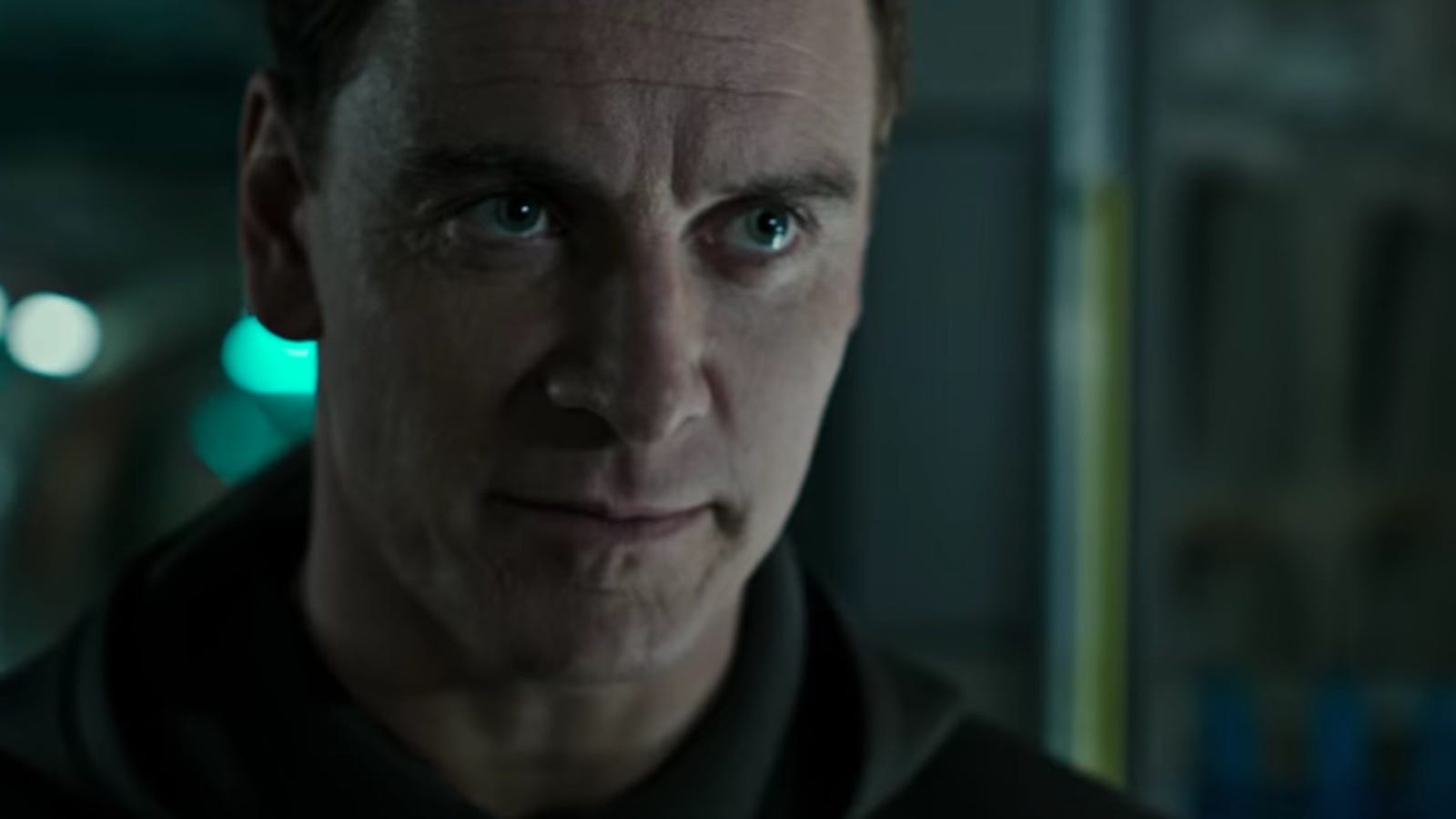
Alien: Covenant (Guest Review)

Alternate Title:  An Android's Love Language (and Other Bad Life Decisions)

One sentence synopsis:     Colonists land on a planet occupied by a certain android.  Horror ensues.


A Note Before We Begin:  Having recently returned from my trip abroad, I am presently engaged in catching up on all the wonderful things I missed.  But as there have been a handful of movies that have come out recently that I had no intention of seeing whatsoever, I managed to threaten convince one of my cinematically-inclined associates to assist me by seeing one of these godawful phenominal movies that I simply wasn't going to have interest in time to see.  And so, without further ado, let me reintroduce to you all one of my finest contributors and collaborators over the years (and the man who, after myself, bears the most blame for the 2014 Worst of the Year Musical Showcase) , the incomparable Dr. Comrade Tortoise.


A Note from our Guest Reviewer: Hello there!  In case you hadn’t guessed, I am not General Havoc.  Instead, I am the creature (in)formally known as Comrade Tortoise.  A bit of background is in order, I think.  I need to get my Alien street cred out there.  I first saw Alien when I was two, loved the Xenomorphs, and now study vicious predatory and parasitic insects. This naturally means that when Havoc was gone, came back, and had catching up to do, I volunteered to shoulder the burden of a movie he was (justifiably, given Prometheus) nervous about inflicting upon himself.  There are limits to his masochism, ladies and gentle-beasts.

That said, I do things a bit differently.  I am scoring different aspects of the film separately, and providing a composite score consisting of the average of its components at the end, along with final thoughts.  These scores will be in the form of grades, with the final composite score being a GPA on a standard 1-4 scale.


Cinematography and Visuals: A

Ridley Scott is a visual storyteller. No matter what else one might say about his films, they look amazing, and this movie is no exception to the rule.  Every shot is perfectly framed and the CGI is crisp and realistic looking, including the various creatures appearing to and behaving as if they have mass.  This is often a problem with films heavily dependent on digital rather than practical effects (as an example see The Lizard in The Amazing Spider Man) and something that was successfully dodged in this movie.  The sets (physical and CG) were realistic looking and faithful to the original retro-future look of the original film (though with some modern tweaks), everything that needed to remind us of the glory of H.R. Giger did so successfully.

Plot: C-

Here I am defining plot as the overarching story, not the details that comprise it, but the filmed representations of the storyboard elements.  Here, without spoiling anything, it holds up pretty well.  Colony ship, things happen and decisions get made, land on planet, terrible things happen.  It is not especially creative, but it works.  There are no notable plot twists, and everything is pretty well telegraphed.  Probably too well, actually.  I was able to easily predict most of it, including the kill-order of the various characters, so for that it takes something of a hit.

Writing: D

This is where it falls off.  If plot is the A to B to C of a film, the writing consists of the details that get you to the various points.  Here… oh god. The quantity of contrivance and ridiculously bad decisions that get us to the end game is awful.  Just awful.  It literally starts in the first five minutes of the film, with the shit going down that initiates the sequence of events leading to planetary landing.  It is a ridiculously improbable event.  Then the crew decides to do something reckless (landing on an uncharted system that was either passed over for colonization or *somehow* not seen in stellar surveys over the objections of the XO, and that when they arrive is horribly unsuited for manned surveys).  No environment suits. This planet just so happens to be the one planet in all the universe that David landed on… The list goes on and on and on.  In the original Alien, most people made smart decisions except where outright malice or very human concern for a friend came in.  They died anyway.  In Alien: Covenant, people make stupid decisions and you find yourself wanting them to be punished for them.  That said, the dialogue is good, and the way the film slowly reveals just how fucked up David is (even with the bad decisions of those around him) was very well done.  These things don’t give the writing a passing grade, but they do rescue the film as a whole.

Writing: B-

Every actor did an adequate job selling that shitty writing as something their characters would do, for the most part, the performances were competent. If Fassbender were not involved, the score would be a C.  However, he was involved and managed to single-handedly elevate the performance.  His portrayals of David (and malignantly narcissistic psycho AI) and Walter (his Friendly AI counterpart) were perfection. I have to give a shout-out to the sheer terror portrayed by a shuttle pilot as well.  It was… delicious.

Final Score: 2.33, C

This movie scrapes by with a middling C, like so many slacking undergrads who will never make it into medical or law school but who may find themselves in a corporate boardroom or the oval office one day.  It was… Okay.  It had the potential to be a great film, but the writing failures and lackluster plot drag down the actors and the amazing visuals into a film so mediocre it hurts to behold.  “What could have been…” looms large in my assessment of the film..

Final Score (Translated into Havoc's Rating): 6/10

Wednesday, May 24, 2017

The Fate of the Furious


Alternate Title:  As The Rock Turns
                                                                                                                                                            
One sentence synopsis:  Following a shocking betrayal from within, the Toretto crew must team up with old friends and adversaries to stop an international cyber-terrorist from seizing control of a doomsday weapon.


Things Havoc liked:  Let us now consider a work of high art...

The Fast and Furious franchise is one of the strangest things in film, an action movie series that somehow re-invented itself halfway through and became awesome on its fifth installment. How it did this is a complete mystery to me, partly because this is something that is simply never done, and partly because I took one look at the original Fast and the Furious and noped out right then and there. It took the dregs of 2015's indie dreck to drag me, kicking and screaming, into Fast & Furious 7, where I discovered to my amazement that the series had metamorphed into an action-soap opera involving wonderful self-aware humor, and some of the most ludicrous action setpieces I've seen since the heyday of the 80s. The writing was terrible, the actors sub-par, the plot ludicrous, the movie patently stupid. I kind of loved it. And now here we are, two years later, with another sequel, the eighth in the franchise, and one which has, at time of writing, scored the biggest opening weekend in the history of cinema (a record that is broken every six months or so, but still). Not bad for a movie series where two of the lead characters can't act and the third one is dead.

Too soon?

The Fate of the Furious is a movie directly taken from the vein of the previous films (I assume. Remember, I haven't seen any but 1 and 7). Dominic (Vin Diesel) and Letty (Michelle Rodriguez) are on their honeymoon in Cuba, visiting old friends, when trouble arrives in the form of Charlize Theron's Cypher, a super-hacker/Bond villain with ties to Dom's past (after eight movies, are there people still in existence who do not have ties to Dom's past?) out to do nefarious things for the sake of being nefarious. This is the sort of villain character that we have seen time and again in bad action movie after bad action movie, but this is Charlize Theron, a woman who embodies campy insanity, as a glance at the Snow White and the Huntsman movies will tell you, and she makes it work by vamping it up with icy-blonde dreadlocks and a murderous stare. She joins a cast that by now has passed unmanagably large and entered ludicrous territory (zing!), including The Rock, Kurt Russell, and F&F7's main villain (now converted into a protagonist, like every Fast and Furious villain), Jason Statham. Each and every one of these men are veterans of myriad bad action movies, and know just what they are doing here, from The Rock's larger-than-life personality (an early scene where he coaches a girls' soccer team includes a hilarious bit I would not dream of spoiling), to Kurt Russel's cock-eyed, self-assured arrogance (something he does oh-so-well), to Jason Statham's virtuosity when playing an abrasive asshole (something he is so much better at than playing a leading nice guy). These characters join the "crew", now comprising half-a-dozen members in their own right, even without the late Paul Walker, including Ludacris, Tyrese Gibson (I love these two men so much), Nathalie Emmanuel (who played a hacker character in the seventh movie that I assumed was disposable, forgetting that this series never discards anyone), Michelle Rodriguez, Elsa Pataky, and... you know what if I keep going, we're gonna be here all day, so let's just leave it at "also everyone else in the universe". Some of these people are good actors, some are not, but every one of them inhabits a lived-in role designed just for them, one that fits their strengths and er... non-strengths... just right, with the result that even the bad performances are charming in their own way. This isn't a movie you go to see in order to watch great thespians bare their souls. It's a movie you go to see to watch shit explode and one-liners said.

So who is the ringmaster of this absurd collection of action movie tropes and variable-quality acting? None other than F. Gary Gray, who we last saw two years ago directing the incomparable musical biopic Straight Outta Compton. One forgets, given the critical acclaim that movie produced, that Gray got his start directing stupid, stupid action movies like The Negotiator, The Italian Job (the 2003 version), and Law Abiding Citizen. While I would not recommend you all run out to find those movies (especially not the last one), they are in the vein of this sort of willfully absurd action extravaganza, and fortunately, Gray, as well as long time series screenwriter Chris Morgan (whose other work we shall not speak of here), seem to have found their senses of humor this time to go along with the ridiculous action. One of the secrets of this series' success is just how little it cares about how dumb everything is, and while it's hardly the first action series to give in to the stupidity and just run with everything, Gray succeeds where others fail by playing up the melodrama of everything to truly hilarious levels. Characters cannot simply discuss their feelings, they must weep and wail and gnash their teeth and cast about for scenery to chew upon, so overwrought are they by the soap opera-style drama and relationship complexities that overcome them minute by minute. With a lesser cast, this sort of thing would be insufferable, but Gray trusts his cast to go for it, relying on the good actors (or at least the good bad actors) to carry the bad ones through the material, and the stunts and action to take care of the rest.

Oh did I mention there was action in this movie? Because there is. And it's awesome. Granted, I don't know that anything will top the sheer lunacy that was the climax to the last movie (recall that that one ended with an akimbo lug-wrench fight between Vin Diesel and Jason Statham on top of a collapsing building), but I'll be damned if they don't try. Listing everything insane that happens in this movie would take a hundred years, but standout sequences include one where a computer hacker seizes control of thousands of self-driving cars for a chase through New York City, one that quickly comes to echo the zombie hordes from World War Z more than your traditional car chase. An extended, Mad-Max-style car chase sequence on a frozen estuary livens things up with the addition of a nuclear submarine to the mix, while Jason Statham, in the company of several cameos that made us all howl with laughter, gets to have a brutal hand to hand fight with innumerable military goons while holding a baby in a bassinet. I won't say this is the weirdest fight I've seen Statham engage in (the aforementioned lugwrench fight comes to mind, as does the occasion in The Expendables 2 when he fought off a platoon of soldiers with an incense censer), but it's one of the funniest, as Statham mugs for the baby (and the camera) during the entire engagement, which had me, at least, in stitches.


Things Havoc disliked: I love a good, stupid action movie as much as anyone, believe me, but all joking aside, I don't mistake it for a work of high cinematic achievement. Vin Diesel and Michelle Rodriguez simply cannot act, not like this (in Rodriguez' case, not ever), and I'd be lying if I said it didn't get tiresome watching them try. And the film, in making them share the screen with actors like Charlize Theron, does not do them any favors, nor even when it pairs them with people like Statham and The Rock, who whatever their acting limits, are extremely good at overacting in action movies like these, and thus can't help but show up those in the cast who do not have such skills. This was a problem in the seventh movie as well, but it's a bigger one here, as the soap opera turns of the plot (has Dom Toretto turned on his "family"?!?!) forces everyone to start overacting in a hyper-melodramatic manner, resulting in about seventy billion repetitions of the already pre-established fact that the crew here are a family, and that family is very important when family bonds are strained by familial family obligations of family family family family family. Given that Guardians of the Galaxy managed to set up a believable, fun, surrogate family dynamic without ever once using the word 'family', it's a little much to sit through scene after scene after scene in which characters narrate their own familial relationships to one another in repetitive detail, especially when the actors doing so have no idea how to deliver a goddamn line.

That said, there's nothing wrong with the concept of course, in fact more movies could stand to have a showcase of characters of different ethnicities, backgrounds, and accents like this, family or not. But if you're going to have a cast this size, then the question of what the hell to do with everyone is going to rear its head, and while the film manages to give most of the cast something to do, there's an unavoidable sense that some people are just here because they're expected to be here. With so much attention on Dom's dilemma and his cat-and-mouse games with Theron's evil villainess, the rest of his crew gets short shrift. Gibson and Ludacris are mostly there to score points off one another and flirt with Emmanuel, Rodriguez has nothing whatsoever to do besides look constipated and growl the word family every five minutes, and a new character, a stick-in-the-mud G-man played by Suicide Squad's Scott Eastwood (because an association with fucking Suicide Squad was what this series needed), is pretty much introduced becasue we need someone to play the handsome generic white dude in the absence of Paul Walker, and I guess he'll do. Even The Rock, whom I adore to death, has very little material in this film, other than a handful of fun scenes playing off his rivalry with Statham. I understand that there's a limited number of movie minutes to go around, but a film that fails to use The Rock properly is a movie that is struggling to invent a reason why everyone is there. I grant that plot is a tertiary concern at best in a movie like this, but there has to be something in it for everyone, or the film will begin to resemble nothing but franchise maintenance, along the lines of the third films from the X-Men and Iron Man series.


Final thoughts:   Granted, I wouldn't quite go so far to directly compare Fate of the Furious with those films, but the parallel did assert itself as I was watching, and thus for all its action setpieces and soap opera plotting, I have to confess that Fast & Furious 8 is not as good a film as its direct predecessor was. By no means is it a bad film, but it feels... limited, in a way that the previous one did not. It's possible that's just a reversion to the mean, or a factor of the previous film being an auspicious combination of low expectations and bad competition, but I honestly think that the series, given its disregard for taste and its enormous cast of quality bad actors, is capable of better than this.

That said, for all my reservations, I do recommend Fate of the Furious, perhaps not as strongly as its predecessor, but strongly nonetheless, as only in this series have I found such a wonderful disregard of logic crossed with an embracing of fun, despite all the efforts to ape it by lesser studios and series. For my part, I shall file this one away as a lesser-but-still-fun episode of my favorite action-soap opera, and wait for better things. Of course, given the fact that Fate of the Furious has just finished making roughly all of the money in existence, I expect that the aforementioned cast will soon have an opportunity to try the whole exercise again. And when they do, I will be there to see it.

Final Score:  6/10


Next Time:  The Princess Diaries 3:  Attack of the Kaiju

Wednesday, May 3, 2017

Ghost in the Shell


Alternate Title:  Whites in the Film
                                                                                                                                                            
One sentence synopsis:  A special forces operative with a cyborg body confronts the truth of her own past in a techno-futurist Tokyo.


Things Havoc liked:  Anime is not, by and large, my thing. Oh I've seen the classics, Akira, the Miyazaki films, Paprika, and so forth, but the conventions and cultural stamps of Anime just aren't really what appeal to me, absent a handful of exceptions. One of the biggest of these exceptions, however, was Ghost in the Shell, an animated series (and pair of films) about an anti-terrorist unit in nano-tech-era Tokyo, one that not only included excellent action and cool technological gadgets, but also involved byzantine political plots, and lengthy discussions on the ethics, philosophies, and new questions brought about by the logical extremes of the information age. Though, as I mentioned, the series spawned its own animated films, rumors of a live action Hollywood adaptation have abounded for years. And now they've been finally brought to fruition, albeit in a form guaranteed to piss off a huge segment of the population that would naturally be inclined to see the movie. Well done, you geniuses of Hollywood, well done.

So let's start with what works, shall we?

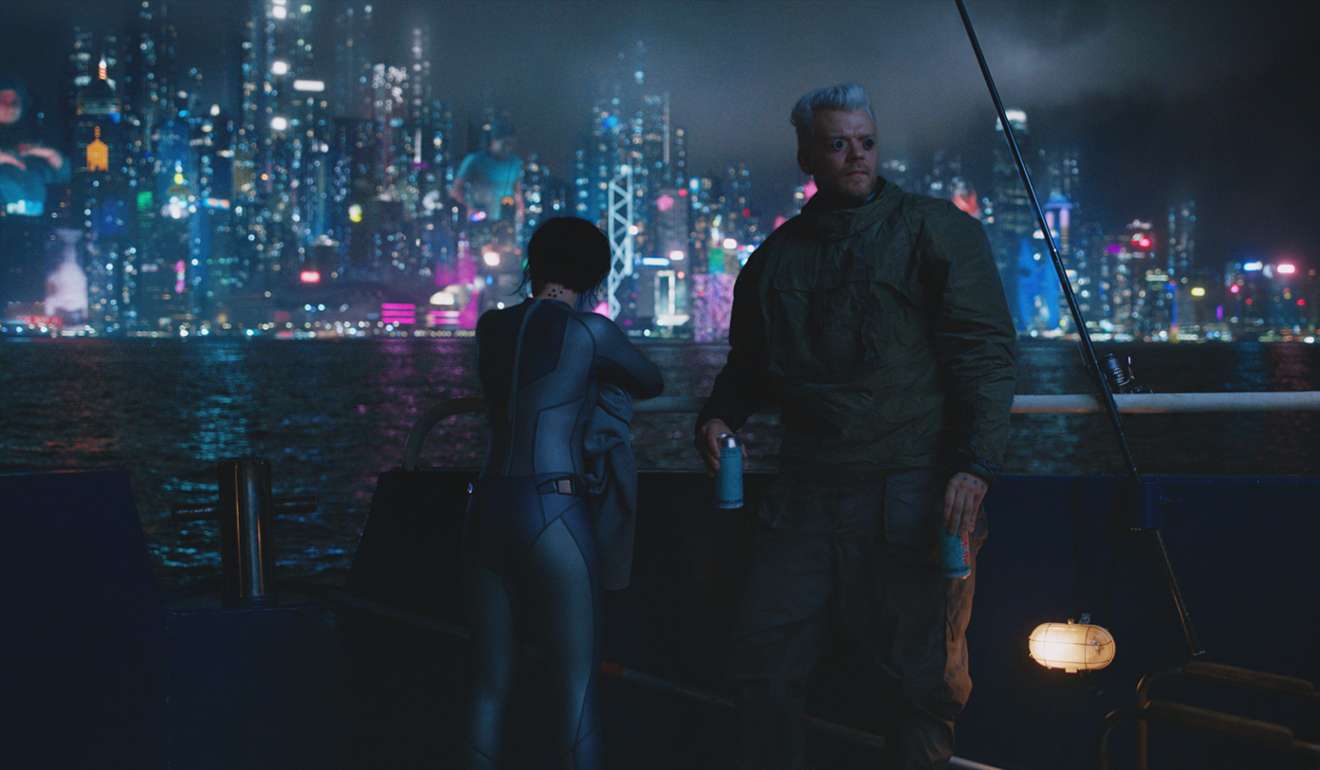
Ghost in the Shell, directed by Snow White and the Huntsman alum Rupert Sanders, is first and foremost a gorgeous film, stunningly beautiful in sequence after sequence. Much of the credit for this belongs rightly to veteran cinematographer Jess Hall, of Brideshead Revisited, Hot Fuzz, and a handful of other films. It showcases a futurist society in all its splendor and sleaze, but unlike the usual cyberpunk ultra-metropoli that one encounters occasionally in the movies, this one is filmed (usually) in the full light of day, or the sharp neon-tinted glow of a lit night. It's as if Wes Anderson decided to re-shoot a Ridley Scott film, it's that stylistically impressive, with a full color palate and plenty of set-piece imagery drawn, not merely from someone's vibrant (or depraved) imagination, but also from the anime itself. Indeed, several shots and even whole scenes are re-created from the original anime film shot for shot, including a couple of the most visually memorable ones from the entire enterprise, including a battle between a gun-wielding terrorist and an invisible assailant, filmed on a flooded street, and a sequence inside a ruined zen-temple-turned-arena featuring the aforementioned assailant and a walking tank designed to resemble a spider. The color palate is rich and deep and vibrant, with garish imagery that could have been rotoscoped off of a high-quality cartoon, contrasted with inky shadows and stark relief shots. Given that most cyberpunk seems to take place entirely within a New Jersey trash dump at three in the morning during Hurricane Sandy, this sort of thing is a welcome addition to the genre. So gorgeous was the imagery in this film, that I broke a cardinal rule of mine and saw it in IMAX 3D (the fake kind), and was not disappointed, though as always the 3D merely served to not suck the life out of the film, rather than adding much.

There are other matters of use here as well. The score, by veteran film scorer Clint Mansell, is superb, an electro-choral orchestral soundtrack that sets a techno-futurist patina on the entire proceeding. I've been a massive fan of Mansell's work since Requiem for a Dream, and he does not fail to deliver here, particularly during intense action sequences, which are not scored with pulse-pounding thriller beats, but with strange ethereal music, as though the action were but the surface elements of the true depths being portrayed. The actors themselves, meanwhile, vary widely in quality and usefulness, but particular mention should go to Danish actor Pilou Asbæk, who plays Batou, the second in command of the counter-terrorist unit the movie circulates around, as well as legendary Japanese actor/filmmaker "Beat" Takeshi Kitano, who plays the Section chief of the selfsame organization. Asbæk's character is not quite (or at all) the same as the one in the show I so loved, but I've never permitted myself to condemn a film for not being like another film I would have preferred to see, and his portrayal is actually fine, in keeping with the style of the movie this is, a monotone professional soldier and world-weary loner who keeps to himself and watches his teammates' back. As to Kitano, his character of Chief Aramaki was my favorite in the show, an old man whose experience in penetrating political and terrorist conspiracies to get to the truth of the matter was unparalleled. Kitano doesn't get to do a lot of that sort of thing, but he still gets several awesome sequences in his own right, where the movie laboriously reveals that he was five steps ahead of his opposition all along. It's nothing revolutionary, but I just so enjoy watching Kitano do his thing, that I couldn't help but enjoy every moment he was on screen.


Things Havoc disliked: Let's talk about the elephant in the room here.

Motoko Kusinagi, the main character of every version of Ghost in the Shell that there is, is Japanese. Scarlett Johansson, the actor who was selected to play her in this movie, is white. Not surprisingly, this has attracted a hell of a lot of criticism from a number of sources accusing the studio of whitewashing the movie to suit their own racist, or at least mercenary, ends. This is not the first film I've come across that has done such a thing. Both The Flowers of War and Doctor Strange were pilloried for supposedly placing white actors in Asian roles, to say nothing of the furor that erupted over Cloud Atlas. With all three of the aforementioned films, I denounced this interpretation, in the first case because it was bullshit (the character in question was white), in the second case because the movie could not have been made without making a change of the sort (such is the reality of PRC censorship), and in the third because the very purpose of the movie was to break the laws of race and gender. I believe I consequently have plenty of standing as not being some sort of easily-offended keyboard warrior looking to show off my progressive credentials to my echo chamber. And as such, I'd like you all to gauge my criticisms in context when I say that casting Scarlett Johansson as Major Kusinagi in a Ghost in the Shell movie is utter bullshit.

Forget, for a moment, that Scarlett Johansson is simply not a good actress, or at least is a very limited one. Forget that her vaunted "cyberpunk credentials" are based around a set of godawful movies that start with Lucy and get worse from there. Forget the thin excuses about whether a movie that didn't have a recognizable name at the top of the marquis would appeal to American audiences (because Lord knows the one we got with that name still managed to bomb severely). This casting decision is bullshit because it is not the only one in the movie. Not only is the main character of the film switched over inexplicably from a Japanese character to a white one, but so is everyone else in the goddamn film. The main villain, the secondary members of the squad, the scientists and businessmen at the heart of the conspiracy, everyone with a speaking role has been re-cast from their original race. In fairness to the filmmakers, not all of the re-casts are with white actors, yet somehow, as if by accident, all the characters that have nothing to do with anything, the bit characters that barely have lines or any purpose in the film, those are the ones with black and Hispanic and Asian actors, while all the actual roles, including multiple major characters from the original series/films, all just happen to have white people in them. Trying to play this off as nothing more than a co-incidence is worse than simple run-of-the-mill racism, it's the sort of racism that insults your intelligence while it's doing it.

And you know what's worse? The movie knows all this. Why else would they have basically built the entire plot of the story around the question of Kusinagi's origins, and how it is that she came to look like Scarlett Johansson, throwing out all of the byzantine plots, political intrigue, and cyber-philosophy that was at the core of the original series. Horrible as I found this decision, it isn't in and of itself a bad thing. There are movies (World War Z comes to mind) that have entirely discarded their source material and still made something great, and there is a version of this film I can imagine wherein the fact of casting a white actress to play a Japanese role would be used as an examination of the fetishization of white women in Japan. But this film is written by none other than Ehren "Fucking" Kruger, one of, if not the worst writers in all of Hollywood, and given that Tyler Perry and Adam Sandler still have careers, boy is that saying something. The writing in this film is consequently terrible as one might expect from the pen of the auteur of such works as Transformers 2, 3, and 4, The Brothers Grimm, and The Ring Two. Every line in the film is stilted, robotic, and entirely functional, serving to inform the audience that a certain character is the designated evil business leader, or the designated conflicted scientist, or that the plot is about to enter action section 4b (sub-paragraph nine). An example midway through the film comes when Johansson inexplicably walks into the home of an older Japanese woman, who, without prompting, invites her to have a cup of tea, and talks about how she rarely has visitors now that her daughter, who would be about Johansson's age, disappeared under circumstances that nobody knows about, and how much she misses how she used to do things that Johansson also does. WHERE COULD THIS PLOT POSSIBLY BE GOING, THE WORLD WONDERS?! As a result of all this, the entire film feels flat and empty, a soulless exercise in violence and pretty pictures, where every scene serves simply to get us to the next scene along the painfully pre-established "revelations" that anyone with half a working brainstem will have figured out five seconds into the film, and must then spend the next hour and forty-six minutes waiting for the movie to catch up. We get no sense of the character of the Major, of the villain, of anyone really, for the simple reason that nobody preparing the script had the skill to give them any.


Final thoughts:   Ghost in the Shell is a frustrating film, far more so than it really deserves, to be honest. It would be easy to dismiss it as the product of studio-sanctioned racial games, along the lines of the abortion that was The Last Airbender, or even simply as a low-rent animesploitation flick like Ultraviolet. But the sad part is that the movie does have virtues locked away inside it, namely its gorgeous style and distinctive visual world, one realized in loving, painstaking detail by aficionados of the genre and the source material. Yet all the efforts of a great many talented people have been committed in service of a film that is, when you get past the outrage, simply bad, a victim of awful writing, poor scripting, terrible casting, and hackneyed production overall.

At time of writing, Ghost in the Shell is in the process of losing Paramount roughly 60 million dollars, which is only appropriate given what it is. And yet what gets me is that the nominal argument for doing all of this crap has always been that in order to attract an audience, such films need to whitewash simply to get a big name actor. Leaving aside the question of whether this is a moral act or not, the fact that the movie did this and then lost a pile of money anyway, just like all the other movies that have done this (Last Airbender, Gods and Kings, 21, Aloha) should serve to torpedo this particular line of argument. Of course Hollywood is a place where people need a long time and a lot of failures to learn their lessons. But if Ghost in the Shell can serve as a stepping stone in that particular path, then maybe there was a point to the entire exercise after all.

And if not, well, maybe the DVD version will let you mute the dialogue.

Final Score:  4.5/10


Next Time:  A daring and fearless look into the philosophical nature of man.

Sunday, April 30, 2017

Kong: Skull Island


Alternate Title:  Viet-Kong
                                                                                                                                                            
One sentence synopsis:   Near the end of the Vietnam war, A joint army-research expedition heads to a mysterious island to discover its terrible secrets.


Things Havoc liked:  I've never been a big fan of the King Kong movies, mostly because the majority of them suck. Leaving aside the original 1933 classic, which is hard to evaluate properly in a modern setting, all of the other King Kong movies (and there have between 7 and 13, depending on which ones count) have been godawful rubber-suit-monster affairs, over-effected "extravaganzas", or big-budget wastes of time, particularly 2005's Peter Jackson version, in which the Lord of the Lord of the Rings managed to give in to all of his worst habits while wasting a stellar cast. As such, I was not exactly chomping at the bit to go see this one, cast or no cast, but in the Doldrums season, one must often take what one can get, and so to the theater I went, to watch Samuel L. Jackson endeavor to get these motherfucking apes, off this motherfucking island.

... I'll stop.

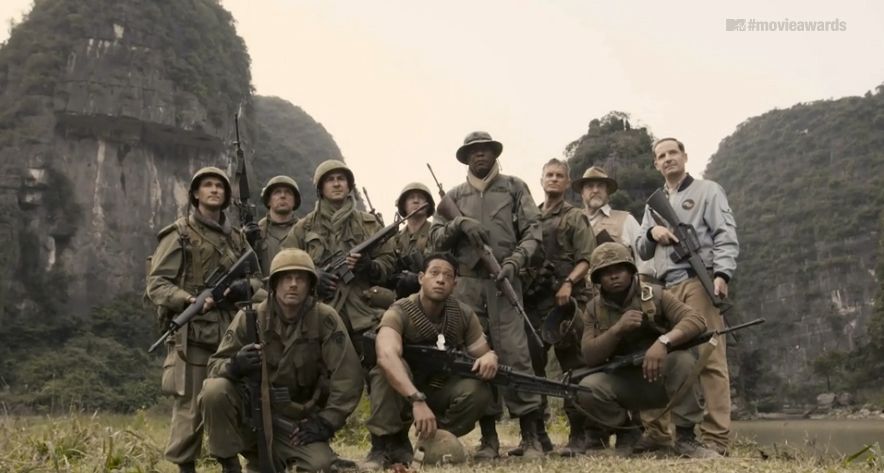
Yes, Kong: Skull Island stars Samuel L. Jackson, he of the shouting and the myriad biblical quotes, as Colonel Packard, a hardcore military man of the sort that Jackson has played many times before, and God-willing, will play many times again. Bitter over the US' impending withdrawal in Vietnam, he leads an expedition in the best Doc-Savage-meets-Apocalypse-Now tradition to Skull Island, a hidden island that has peaked the interest of government agencies, corporations, and researchers for a variety of purposes, altruistic and nefarious. Jackson is amazing, because of course he is, a hard-bitten military officer who takes the Captain Ahab role after things begin to go FUBAR and King Kong beats the ever-loving crap out of his hyper-macho air cavalry force. I shouldn't have to tell any of you now that Samuel L. Jackson knows how to play a role like this, and his turn reminds me, in kind of a weird way, of The Rock's performance in the 2005 movie adaptation of Doom, a terrible movie whose one redeeming quality was the snarling, over-the-top macho military commander trying to seize control of the situation back from the demons in whose hands it lay. Or maybe he's doing a sendup to Robert Duvall's Colonel Killgore. Who knows?

The rest of the cast does not let the side down. John Goodman, America's slightly sleazy-but-fun uncle, plays Bill Randa, head of "Monarch", a government organization designed to investigate... well anything monsterous and dangerous it appears, who has stapled his own research team to the military expedition, and gets to look forlorn and world-weary as everything goes to hell around him. Corey Hawkins (Dr. Dre in Straight Outta Compton) and Chinese actress Jing Tian, get the 'young, idealistic scientist' roles, and do a fine job with them, horrified civilians entirely unready for the pulp-movie insanity that is exploding all around them. But the biggest surprise within the cast is none other than John C. Reilly, who plays a WWII fighter pilot shot down (along with his quarry) on Skull Island some thirty years before. Though Reilly is known for buffoonish roles, he's an excellent actor, and here he gets to actually play the wise voice of reason for once, filling the characters (and the audience) in on what is actually going on in this mysterious island. Reilly wrings considerable depth and even heartfelt sentiment from his character, a man who has been looking to go home for thirty-something years, not precisely what I was expecting to encounter in a movie about giant apes and dinosaurs.

Oh, did I mention there were giant apes and dinosaurs? And giant tree-spiders that can impale a man with one stomp? Because there are those things, and there are also Huey attack helicopters, machine guns, grenade launchers and flame-throwers with which these things are repeatedly fought, and if that's not the sort of thing that interests you, then you should mentally chalk this movie up right now as "not for you" and walk away from it. For all the rest of us who appreciate the chance to see giant monsters beating the holy hell out of one another, this movie has plenty to offer. Unlike 2014's utterly useless Godzilla, this movie is full of Kong, from a thunderous opening sequence that calls back to the best of Oliver Stone and Francis Ford Copolla's work, only with a hundred-foot ape dropped into the middle of everything, to the obligatory monster-on-monster fights, shot in vibrant technicolor, in full daylight, with every bone-shattering impact there to see on the screen. I cannot believe that in 2017 I still have to express surprise whenever a filmmaker does something as revolutionary as show us what the movie is about, but one takes what one can get after a point. And when Kong isn't on screen, we have other monsters to tide us over, enormous dinosauroid-things called Skullcrawlers, arachnids so large that they can pass for bamboo stalks, and a host of other creatures with voracious appetites and an overabundance of teeth. Our heroes are devoured, stabbed, smashed, and crushed in their dozens (of course), but the film never gets to the creature-feature levels that the Jackson version did, remaining in the realm of campy action fun, the way these movies are supposed to.


Things Havoc disliked: I could nitpick, of course. I could talk about how the weapons that the air-cavalry brings with them seem about as effective as potato guns, despite the fact that they are shooting at living, breathing creatures, and that the weapons in question were designed to punch holes in face-hardened steel plate. I could talk about the fact that people seem awfully willing to take the aforementioned useless weapons up against the monsters time and time again, despite the fact that the previous occasions have generally involved people firing the same useless guns at the same ravenous monsters before being turned into the same bloody smears. But this sort of thing is a convention of the monster movie, and it would be a bit churlish to get up in arms over it.

What is not churlish to object to are our actual two leads, Tom Hiddleston, playing an SAS/Lone Competent soldier named James Conrad (BEHOLD THE WONDEROUS SUBTLETY OF THE SYMBOLISM IN THIS FILM!!!), and Brie Larson, playing a peacenik photojournalist who is here to serve as our token "maybe we should not barge onto the island and butcher everything in sight" moral compass. I unabashedly love Tom Hiddleston in the Thor films of course, but I have to admit that, outside the MCU, he has not made a particularly good case for himself, appearing either in middling films like Only Lovers Left Alive and Crimson Peak, and utter dreck like High Rise. Hiddleston here plays a Great White Hunter archetype that really exists only to contrast with the macho military men who obediently waltz off to be slaughtered, and has little to no character beyond the fact that he does not believe in beating his head uselessly against sixty-foot eating machines. As to Larson... well I just can't quite figure out if Brie Larson is any good as an actress or not, as she keeps popping up in movies I don't care about, or playing roles that demand nothing of her. This is par for the course, as she's more or less here just to be a purely platonic love interest for Hiddleston, without even the token interest of having the giant gorilla fall in love with her, as is typical with the other movies in this series. Neither of these two are bad per se, it's just that there's nothing at all interesting about either of them, which makes all the time we spend with them as opposed to Samuel L. Jackson or the office-building-sized monstrosities that inhabit the island, something of a waste.


Final thoughts:   I expected nothing of Kong: Skull Island, as I have expected nothing of basically any giant monster movie for the last twenty years, but lo and behold, this one surprised me. It's not a masterpiece of the genre or anything (and I am not qualified to pronounce it one even if it was), but it's a fun, enjoyable movie, sufficiently campy and pulpy for the central conceit to work, and full of lush, vibrant action, several legitimately hillarious sight gags (the heroic last stand of a character played by veteran character actor Shea Whigham is amazing), and excellent Vietnam-style cinematography by newcomer director Jordan Vogt-Roberts (as well as his co-director, his epic beard of power). Supposedly, this film, like every other film in existence nowadays, is supposed to be the start of a wider franchise of giant monster movies, one which includes Godzilla and several more films to come. I'm rather ambivalent on that subject at the moment, but leaving the future aside for the moment, Skull Island is a worthy film and a good use of time if, like me, you think Oliver Stone could stand to throw a few more giant monsters into his movies.

If nothing else, it would make his next movie (a hagiographic puff piece about how Vladimir Putin is the best person ever) considerably more interesting.

Final Score:  7/10


Next Time:  Hollywood adapts a Japanese classic.  Goody.

Beauty and the Beast


Alternate Title:  Hermione Granger and the Castle of Hallucinogenic Allergens
                                                                                                                                                            
One sentence synopsis:   A bookish girl from a parochial village in fairy tale France becomes the prisoner of a terrible beast locked in a castle until someone learns to love him.


Things Havoc liked:  Though it has its detractors, I stand by the notion that 1991's Beauty and the Beast is one of the finest works that Disney's Animation studio ever produced, a small step behind the Lion King as the best Disney film. A Golden Globe and Oscar-winning film, the first (and only) animated movie ever nominated for a Best Picture award at the Academy Awards, and a film selected for preservation by the Library of Congress as being "culturally, historically, and aesthetically significant". And now, following the... success(?) of last year's Live Action Jungle Book remake, a film that has also been re-imagined in live action form, thanks to the unstinting efforts of the director of Twilight - Breaking Dawn (yipee...).

As you all know, I was rather lukewarm on the subject of the Jungle Book remake (my compatriot Corvidae went so far as to put on her list of worst films of the year), and did not actually intend to go see this one, unconvinced as I was that a live-action remake of Beauty and the Beast could be anything but an awkward mess, given the strength of the original. Cooler heads prevailed (mostly due to the fact that I owed several people after the Suicide Squad disaster), so the question thus became, having been dragged into the theater by main force, what did I think of the re-imagined live version of an all-time animated classic?

The answer? I loved it.

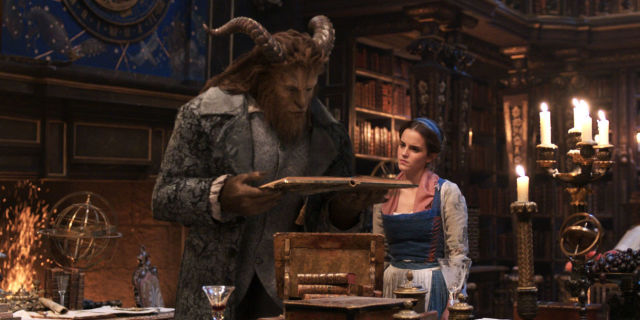
Beauty and the Beast, in its modern, live-action form, has lost absolutely nothing of the charm it evidenced some 26 years ago, and has, in fact, layered considerable additions on top of it. Despite all of my misgivings, despite the evident awkwardness that a live-action musical generally involves, despite the middling results the last time Disney tried this, this time, in this year, this movie is just wonderful, though whether this is because of careful production, the underlying strength of the source material, or both is somewhat difficult to say. But if we're going to discuss the virtues of this film, the best place to begin is, as is often the case, the cast. The film stars Emma Watson and Dan Stevens, the former of Harry Potter fame, the latter of Downton Abbey and little else, as the titular Beauty and Beast, and both are excellent, with Watson affecting the same sort of bookish charm she brought to the Potter series , while Stevens cuts the bestial rage with the pomposity of an over-educated aristocrat, which is not the worst decision ever. Both actors are called upon to sing quite a lot (naturally) and both do very well at it, particularly Stevens, whose big solo number Evermore (a new song written specifically for the film) is probably the strongest of the lot overall, no small feet given the songs that the rest of the movie is replete with. The big surprise though is neither Watson nor Stevens but Luke Evans of all people, the quasi-useless doofus from the Hobbit films and last year's High-Rise, who is almost perfect as the swaggering asshole non-hero Gaston. Though Evans lacks Gaston's oversized physicality (as would anyone not named The Rock), he lacks pretty much nothing else, delivering a performance that is melodramatic and over-the-top in all the right ways, the sort of performance that will make me forget an actor's flaws and embrace their strengths, strengths which appear to involve being campy as hell, something I've noticed before with actors I don't much care for (Jessica Chastain comes to mind).

But the real strength of the cast comes from the supporting cast, either on-screen or off, which includes Ewan McGregor taking on the role of Lumiere, a role previously played by the late, great, Jerry Orbach, using one of the most outrageous French accents that film records. McGregor, following in Orbach's footsteps, matches that accent with an awful one of his own, which is the manifestly correct move. The rest of the castle cast involves luminaries such as Ian McKellan as Cogsworth (bringing all his Gandalfian grumpiness to the role), Emma Thompson as Mrs. Potts (the CG face of whom will give you nightmares), Gugu Mbatha-Raw as Plumette (upgraded to a talking character), and several entirely new servants/furnitures including the irreplaceable Stanley Tucci as the irascible Maestro Cadenza, a harpsichord, and husband to the operatic Madame de Garderobe (Audra McDonald). Though these performers mostly serve as voice actors, their work is unformly excellent, and complements well the surreal rococo stylings of the various characters, from the over-elaborate brass finishings on Lumiere to the intricate arms and gears comprising Cogsworth's face, to an animate wardrobe that could only have cost the lives of fifty keyframe animators. But lest we all drown in computer-generated tchotchkes (that's a real word, people), we also receive the services of Kevin Kline, one of my favorite actors working, playing Belle's father Maurice in a more subdued role than the mad scientist of the previous version, and Josh Gad, an actor who continues to surprise me, playing Le Fou, in the 1991 version, a simple comic relief character from the original film who here is... well still a comic relief character, certainly, but with a very different slant, being portrayed as a screamingly gay sidekick whose unrequited love for Gaston is invariably interpreted as platonic admiration (to truly hilarious effect several times). This attribute got the movie banned in several regressive places like Malaysia, Kuwait, Russia (momentarily), and portions of northeastern Alabama. It's statistics like these that I must rely upon when making my weekly decisions as to which movies will make the cut around here.

The score of Beauty and the Beast has never been in question, as it's one of the finest musical scores to come from an animated film in history, a fact proven when Alan Menken and the late Howard Ashman were nominated for three separate songs at the Academy Awards and won one of them. Most of the songs from the original film had a fairly rough style to them, sung as they were by actors who did not have a background in song, and who were occasionally saddled with ludicrous accents to boot. The new film retains those attributes, rough edges and all, supplementing them with new songs either taken from the Broadway musical or written specifically for the film itself, all of which fit in perfectly to the general symphonic aesthetic of the show as a whole. The world is visualized in absurd splendor, with the Beast's Castle being re-imagined into an elaborate riot of baroque artistry that could easily have been taken from the palatial estates of Louis XIV, while the pastoral bustle of Belle's village and the spooky atmosphere of the haunted woods surrounding the castle retain the sense of semi-animated artificiality that plays well with timeless tales like this. As to the plot, it obviously runs the same route as the original film, but with additions that tighten or expand on the story just a bit here and there. We get a renewed focus on the servants themselves, on their desperation to return to human form, and on what it was that caused the enchantress to curse them all in the first place alongside their noble lords. Belle's own backstory (and that of her father) is embellished upon to give her a bit more depth than 'the nerdy daughter of a lunatic'. But the biggest shifts come in the conversations and scenes between Belle and the Beast directly. Beauty and the Beast has long been subject to criticisms that it portrayed an abusive, perhaps Stockholm-syndrome-style relationship, and while the dynamic between the two is still strained, a great effort is made by the film to show why the two might fall in love, and what attributes they share, playing up the fact that, curse or no curse, the Beast was once a Prince, and thus well-educated and erudite, something which would naturally appeal to a bookish girl desperate to escape the limited intellectual horizons of her provincial town. A scene in which Belle mentions that she would like to see Paris results in the Beast reminiscing about the times he spent there, presenting (rather paradoxically) a wider world trapped within his castle than she was experiencing outside of it. I'm not going to pretend that the subtext isn't still awkward, it is, and unavoidably so in all likelihood. But the effort to update the story and polish it further with a narrative that fits a more modern conception of the fairy tale strikes just the right chord, and really serves to push the film into a truly superb work in its own right.


Things Havoc disliked: Fair or unfair, a movie like a live-action remake of Beauty and the Beast is going to be saddled with comparisons, generally unflattering, with the original, and while it stands quite well against the best that the original has to offer in many cases, there are obvious areas where more could perhaps have been done. A couple of the songs, particularly Gaston's number, Be Our Guest, and the Mob song are mixed quite poorly (this afflicted the Mob song in the original film as well), rendering it actually quite difficult to figure out what people are singing about, even if one knows the lyrics by heart, as I do. This tends to afflict the earthy ensemble pieces more than the grandiose ballads for which the movie is more famous, but it does spoil some of the charm of the numbers in question. Moreover the action in the movie, which was energetic, frantic, and frightening in the animated film, is here somewhat muted. Gaston looks almost bored as he calmly shoots at the Beast during his ultimate scene, the wolf attacks seem rather perfunctory, like the dogs-attacking-the-Hulk scene from Ang Lee's Hulk, and many of the human characters seem occasionally perplexed as to what sort of emotion they should be emoting at a particular moment. And while the makeup for the Beast is excellent (sharing even a few notes from the Ron Pearlman TV series of the late 80s), and the blend between CG and real life is all but seamless, there is nevertheless a certain loss of freedom when it comes to a movie that was once animated and is no longer. The Beast is less feral, the fight scenes less violent, the slapstick comedy less hilarious, and the camera work less unconstrained, thanks to the basic, unavoidable fact that real people are acting in a real location, even if it's a location covered with green-screens, with a bevy of computers on-hand to assist in producing the necessary magic.


Final thoughts:   One is tempted, at this stage, to ask the inevitable question of whether the new Beauty and the Beast is better or worse than its illustrious predecessor from the Silver Age of Disney Animation. I have thought much on that question in the weeks since I saw the movie, and have no answer for it, but I do know that the new film is worthy of the old, and that alone places it in rare company. Maybe it's simply the material itself that's so strong, the Menchin songs and timeless nature of the tale itself, which does indeed date back to the mid-1700s if not before. Maybe it's the quality of the cast or the new additions to plot and soundtrack. Or maybe I'm just a sucker for the right sort of fairy tale. But for whatever reason, I truly loved Beauty and the Beast, just as I once loved the original, and for a remake to induce anything like that to its audience is unheard of, even in these remake-obsessed days that we live in. But even if the film does not have the same impact upon you, either because you never much liked the original in the first place, or because you find that the deviations made from the original's template are simply not acceptable, we are still left with a charming, wonderful, and warm rendition of a timeless story.

Ultimately, Beauty and the Beast is a fantastic movie, one of the finest if not the finest that I have seen so far this year. Whether you take that statement in the context of its predecessor or not, all that really matters, in the end, is whether you will enjoy the act of watching the film. And to that, my only suggestion is to go forth and determine for yourself.

Final Score:  8/10


Next Time:  Time for some Monkey Business.

The General's Post Summer 2018 Roundup

Let's get back into the swing of things, shall we? The General's Post Summer 2018 Roundup Ant-Man and the Wasp Alternate Ti...