Showing posts with label Drama. Show all posts

Saturday, June 23, 2018

Hotel Artemis


Alternate Title:  Budget John Wick
                                                                                                                                                            
One sentence synopsis:  Various characters turn up at a secret hospital for criminals during a massive riot in near-future Los Angeles.


Things Havoc liked: I don't see enough of Jodie Foster. She's one of Hollywood's gems, always interesting to watch, choosing interesting roles, and I only encounter her about once every five years or so, and the last time was Elysium, so to hell with that. I went to see this movie entirely because she was in it (and because of who else was), and so before we go anywhere else, I want recognition from you all that this was a good decision.

Hotel Artemis stars Jodie Foster as a nurse, known almost exclusively as "The Nurse", an agoraphobic who runs a seedy hotel named the Artemis that moonlights as a hospital for paying members of a criminal club that strongly resembles the one in the John Wick movies, albeit the low-rent version. Foster's brilliant in this one, shuffling through the halls of her semi-decrepit old hotel like an old woman, trying to keep the plates spinning as one semi-crazed criminal after another requires her services on the night of a gigantic riot sweeping through downtown Los Angeles. Wrapped up in an inexplicable Brooklyn accent, she carries the film effortlessly.

Though not without help. Indeed Hotel Artemis has a whole bunch of actors in it that I adore seeing. Sterling K Brown, whom most of you will remember as N'Jobu (Father of Killmonger) in Black Panther, plays Waikiki, an armed robber whose brother is shot in the theft of a bank vault and who winds up having to hole up at the Artemis as the riots spread across the city. Similarly holed up are Sofia Boutella, one of my favorite action actresses working, playing (what else) a French super-assassin, and Charlie Day (of Lego Movie) as a douchebag (Charlie Day is very good at this). Dave Bautista, meanwhile, who has become a much better actor since getting his start in Guardians of the Galaxy, plays Everest, who is so named because... well... you get it. The combination of all of these actors together would be enough for me, but add Zachary Quinto and Jeff Freaking Goldblum (playing a mafia don of all things) really pitches the film over the edge into truly awesome territory. I would watch these actors having lunch, let alone starring in a crazy kooky action-hijinx movie. And fortunately, Hotel Artemis is not about them having lunch.


Things Havoc disliked: Unfortunately, it's not a crazy kooky action-hijinx movie either.

I don't know who's been setting up trailers for these films recently, but this is the third or fourth film in a very short amount of time whose trailers were written by lying liars who tell lies. Hotel Artemis was pitched to me in the trailers as being a fun action-comedy, a crazy madcap movie full of wacky hijinx and hilarious interplay between the various characters. Instead, the movie is a fairly dramatic character-study of the Nurse and a number of other characters, all set against the backdrop of a dystopian cyberpunk reality.

Now this isn't necessarily a bad thing, in fact the resulting film is possibly more interesting than the alternative would have been, but it's never a great thing to go in expecting comedy and not receiving it, and Hotel Artemis does that. Instead, there are interminable sequences wherein we are intended to get to know the characters better through threat and dramatic interplay. Some of these work, mostly because it's excellent actors engaging in them, and some do not, such as an endless sequence that goes nowhere involving a cop that the nurse decides to allow into the facility, in violation of the hallowed "rules". Your mileage will vary as always, I didn't have too much of a problem with the bait and switch, but do not go into this movie expecting a cornucopia of wacky fun, as suggested by the marketing campaign.

There's also the question of the film's ending, which is a muddled mess of bad ideas, as though the scriptwriters, having gotten to a certain point, could not figure out what to do afterwards. There are obligatory fight sequences, not shot with any particular energy or stylism, there are tearful departures and triumphant moments as characters overcome the handicaps they have been presented as living with, it all feels tremendously rote. The dystopian elements of the background setting are never expounded upon or dealt with in any way, making it feel as though large sections of plot were cut for time or interest, and the entire film just sort of... ends eventually. It's hardly enough to ruin everything, but it's not the best way to leave a strong impression of your movie as I'm walking out the door.


Final thoughts:   Hotel Artemis is a strange film, there's no question, and it is not the film that I was
expecting to watch, but despite a meandering plot that seems to waste a lot of time and an ending that goes nowhere in particular, the cast itself has such a genuine strength and chemistry to it that I have to admit I enjoyed it quite a bit. It's not a movie destined to reshape the landscape of film or anything (and it's presently engaged in bombing spectacularly), but it's a solid movie, interesting enough to be worth a watch, and unlike Red Sparrow, it will not send anyone into flashbacks.

Well, unless groaty hotels bring up your worst nightmares, that is.

Final Score:  7/10


Next Time:  Anything you can Steal, I can Steal Better.

Sunday, January 28, 2018

I, Tonya


Alternate Title:  Abuse: A Comedy
                                                                                                                                                            
One sentence synopsis:  Tonya Harding deals with her abusive mother and husband, all while trying to win acceptance through figure skating before and after the attack on Nancy Kerrigan.


Things Havoc liked: Like everyone else who was alive and above the age of eight at the time, I remember the infamous Tonya Harding/Nancy Kerrigan incident from the 1994 Lillehammer Olympics. It was, in many ways, the perfect scandal, filled with lurid details to titillate and thrill a news audience, women fighting one another for supremacy, America's sweetheart attacked by a violent thug, lurid plots among stupid people, overtones of classism, one of the first big media frenzies. I was there man, every one of us ate it up with a spoon. Following the Olympics, in which Kerrigan won a silver medal, and Harding won such infamy, Tonya Harding disappeared into the tabloids, popping up on news feeds periodically in celebrity boxing matches, in sex tapes, and in one trashy thing after another. I cannot say that I thought much about her in the intervening years, but all of a sudden, here we have a movie about the story of Tonya Harding from beginning to end, a film I ultimately decided to see purely because I felt I owed its main actress another shot.

You see, I didn't see I, Tonya, because I really desperately wanted to know more about Tonya Harding, I saw it because of Suicide Squad, a movie so bad I still suspect it to have been the result of some gruesome experiment in human psychology. Margot Robbie, who had the singular misfortune of starring in that film as Harley Quinn (a misfortune only slightly lesser than those of us who had to watch her) is an actress I have seen in nothing else to date (save a cameo in The Big Short), and while she was pretty goddamn awful in Suicide Squad, that much could easily be explained by the fact that everything touched by Suicide Squad turned to galvanized shit. After all, Viola Davis and Will Smith are both charismatic actors of considerable skill, and neither one of them could salvage any dignity. I therefore felt, given her increasing prominence, that I owed it to Margot Robbie to find out if she could act at all, an exercise I try to engage in when I encounter actors or actresses who have had the misfortune of making their major debut in a film so bad that nothing positive could be gleaned from it. The ur-example here is Twilight, a film that forced me to seek other examples of Robert Pattinson and Kristen Stewart's acting efforts, determining empirically that while Pattinson can act, Stewart cannot.

So with all that preamble aside, can Margot Robbie act? Ohhhhh yes. Yes she can, in fact Margot Robbie, playing a character that none of us ever got to know except in the pages of a tabloid, is phenomenal this time around, a treasure of a performance that fully justifies all of the faith that people placed in her following the atrocity that was Suicide Squad. Biopics are a dangerous game, as apt to win you condemnation as they are an Oscar, but Robbie, playing a character nobody really knows anything about, is exceptional, bringing all the classless rancor, the bitter devotion to her craft, the wounded patched-together pride of a victim of nigh-constant abuse, the serially-unreliable mentality of someone trying to make sense of her own life, bringing all of it together into a performance that merits the Oscar nomination that should be (and at time of writing, has been) forthcoming. It's a career-making performance, comic and tragic all at once, while still retaining the essence of what the public remembers of the character, and if that wasn't Robbie performing the fantastically-difficult skating maneuvers studded throughout, then the movie certainly fooled me.

I, Tonya, comes to us courtesy of Craig Gillespie, an Australian director who has yet to feature on this project, due to his propensity for mostly doing projects that don't look particularly interesting. The only movie of his prior to this one that I know anything about is 2007's exceedingly-odd Ryan Gosling vehicle Lars and the Real Girl, a movie that was effectively a weirder version of Her, and if you remember Her, that's quite a statement. This one is a bit more accessable than that one was, but is done in a fourth-wall-shattering style that emphasizes just how unreliable the various stories that the characters involved tell of the Kerrigan incident and everything that led up to it are. The result resembles The Big Short, or other movies that use unconventional directing techniques as a tool to emphasize the artificiality of the concepts they're attempting to get across, and in retrospect, it's probably the only way to do something like this without turning the entire thing into a Rashomon-style philosophical treatise, which would be highly unsuited for the material. It does, however, require a superb cast to be able to pull something like this off, and fortunately Gillespie has assembled one. Sebastian Stan, Bucky Barnes from the Marvel films, is utterly unrecognizable as Jeff Gillooly, an abusive loser who Tonya falls for due primarily to the fact that she has been conditioned by her upbringing to expect nothing but abusive losers to be interested in her. It's deceptively difficult to play a loser on screen, if only because most successful actors are charismatic, and the camera introduces such tremendous bias in their favor, but Stan pulls it off, giving us a character by turns entirely loathsome and yet completely believable, not a screaming monster but a person whose life is what it was always fated to be, and whose worst traits go utterly unexamined by himself or even his victims. But the best performance of all is Allison Janney's, because she gets to play a true monster. Tonya's mother LaVona, expertly portrayed by the one-time West Wing alum, is a vile, twisted, hyper-abusive harpy, an utterly loathsome creature whose every action and thought drips bitterness and resentment. And yet even here, Janney puts together a character that isn't just a caricature of an abusive single mother, but simply a person who is missing parts of their soul, who acts as she does because she thinks it the only way to properly act. We hate her all the more because we understand where she is coming from, and is that not the definition of an excellent villain?

If it sounds like the theme of abuse is coming up a lot in my description so far, that is because the movie is rife with it, not sensationalized, not dialed up to some unwatchable level, but inculcated into its very bones. The story of Tonya Harding, the movie claims, is a story of long-term abuse, not always cinematic and violent, and not always unreciprocated, but always there, poisoning everything it touches until actions that would seem unthinkable to any normal, rational person, are perfectly normal and indeed not deserving of comment to the characters that inhabit this world. Tonya is abused by her mother, by her husband, by the Media, by the US Figure Skating association which is made to look, probably with very good reason, like a bunch of classic snobs who never even considered giving Harding a real shot. Months and years of brutally-difficult work are rewarded time and again with "stylistic" point deductions and low-seeded rankings, despite Tonya being an exceptionally gifted technical skater, the only American woman to perform a Triple Axel jump. Without ever calling things out explicitly, the movie effortlessly places you in a mindset wherein anything, even attacking a rival with a retractable baton, seems reasonable, given that nobody else is playing fairly either. Moreover, despite everything I've just finished saying, the movie is also riotously funny at parts, mostly due to just how stupid so many of the participants in this little farce of a conspiracy were. Paul Walter Hauser, whom I've never seen or heard of before, plays Shaun Ekhart, Tonya's bodyguard, a loser among losers, who fancies himself some kind of CIA-trained espionage expert while living in his mother's house and plotting the dumbest caper in the history of dumb capers. Bobby Cannavale, whom I love dearly, gets the job of narrating most of this to us as a spray-tanned Hard Copy producer, describing in breathless glee how dumb the plan to assault Kerrigan actually was, with one conspirator staking out Kerrigan's training arena for three days, parking in an empty parking lot, and moving his car around it every fifteen minutes to avoid suspicion! Why only for three days? Because that's how long it took him to realize that Kerrigan was actually training in a different arena entirely in another state.


Things Havoc disliked: The film goes to some lengths to ensure that you know just how unreliable all participants in this absurd farce are. Everyone has their own version of what happened before and during the Kerrigan assault (the movie calls it "the incident"), and none of those versions stack up at all, particularly those of Harding and Gillooly themselves. This is fine, indeed it's only to be expected, nor is it surprising, given how much time it spends humanizing her, that the film ultimately winds up taking more of Harding's perspective than anyone else's. But the problem is that about two thirds of the way through the movie, without mentioning it or otherwise indicating, it basically hews entirely to the notion that Harding knew nothing about the impending attack, and if she did know something about it she didn't understand it, and if she did understand it she thought it was a joke, and if she didn't think it was a joke she thought the plan would involve threats, not violence, and if she did think the plan involved violence well it was only to be expected given her upbringing.

Um... right...

Look, nobody but Tonya Harding herself really knows how much she was or wasn't actually involved in the assault on Kerrigan, and given the nature of human memory and rationalization, probably not her either at this point. And it is certainly possible, though not much more, that Harding had nothing to do with the planning of the assault that put her back in the Olympics after her career was largely over. But for the movie to turn around so far into a story that is being told from multiple directions, and suddenly claim authoritatively that not only was the entire prosecution of Harding nothing but a political witch-hunt on the part of a classist Figure Skating world looking to finally be rid of her, but that it knows this for a fact is just ridiculous on its face. I don't demand that all movies represent nothing but the unvarnished truth, especially when that truth is open to interpretation, but when the movie's central thesis is that nobody knows the truth, it's a bit churlish to suddenly reframe everything that's happening as the truth because it casts your sympathetic protagonist in a more flattering light. And if you're going to do that, suddenly pivot from an unreliable to an authoritative viewpoint on the events in question, it's probably a good idea not to misrepresent the few actual facts that are known about the case. The movie's climax involves a tearful court hearing, where a barely-controlled Harding begs and pleads for her life after a stern, unsympathetic judge bans her from figure skating for life. Powerful stuff, if it had actually happened, but it did not. It doesn't take much research to know that criminal courts have no bearing on who can and can't participate in Figure Skating associations, and Harding was never so-sentenced. Instead, after she pled guilty to obstructing justice in the investigation of an assault on one of her competitors, the US Figure Skating association banned her for life, after their investigation concluded that she knew about the attack before it happened. Call the investigation a witch-hunt if you like, but please don't make up criminal penalties that never happened, framed to make your unreliable protagonist look sympathetic, and then wrap yourselves in the mantle of the one true arbiters of truth.


Final thoughts:   But I have to say, whatever the film's authorial bent or pretensions of truth and honesty, I, Tonya is an incredible film, a tightly-crafted, instantly-compelling, and brilliant-acted piece of 90s absurdity, taking a story we all knew and giving us even more salacious details about it, assuming we're willing to acknowledge that doing so makes us no better than the other people who tried to exploit Tonya Harding for our own purposes. It is a fantastic movie across the board, one that is entirely deserving of its buzz, and a fitting place to leave off the greatest single year I have ever experienced at the movies. With Awards season finally upon us, I, Tonya, along with many other fine films, is once more being re-released in theaters, and you all owe it to yourselves to give it a shot, whether you know the story or not.

Thank you to everyone who has followed these reviews over the course of the year now past. It has been quite a run, and I hope you are all ready to hear about it again, because it is finally time to evaluate the best this year offered us, and the worst...

Final Score:  8/10


Next Time:  Ladies and gentlemen, IT IS TIME!!!

Sunday, June 4, 2017

Colossal


Alternate Title:  Gone Kaiju
                                                                                                                                                            
One sentence synopsis:  Following a traumatic breakup and dealing with spiraling alcoholism, a woman returns to her hometown to reconnect with old friends just as a tremendous monster begins attacking a city on the far side of the world.


Things Havoc liked:  I had an astoundingly hard time coming up with the synopsis above, because Colossal, whatever else it might be, is a really weird movie.

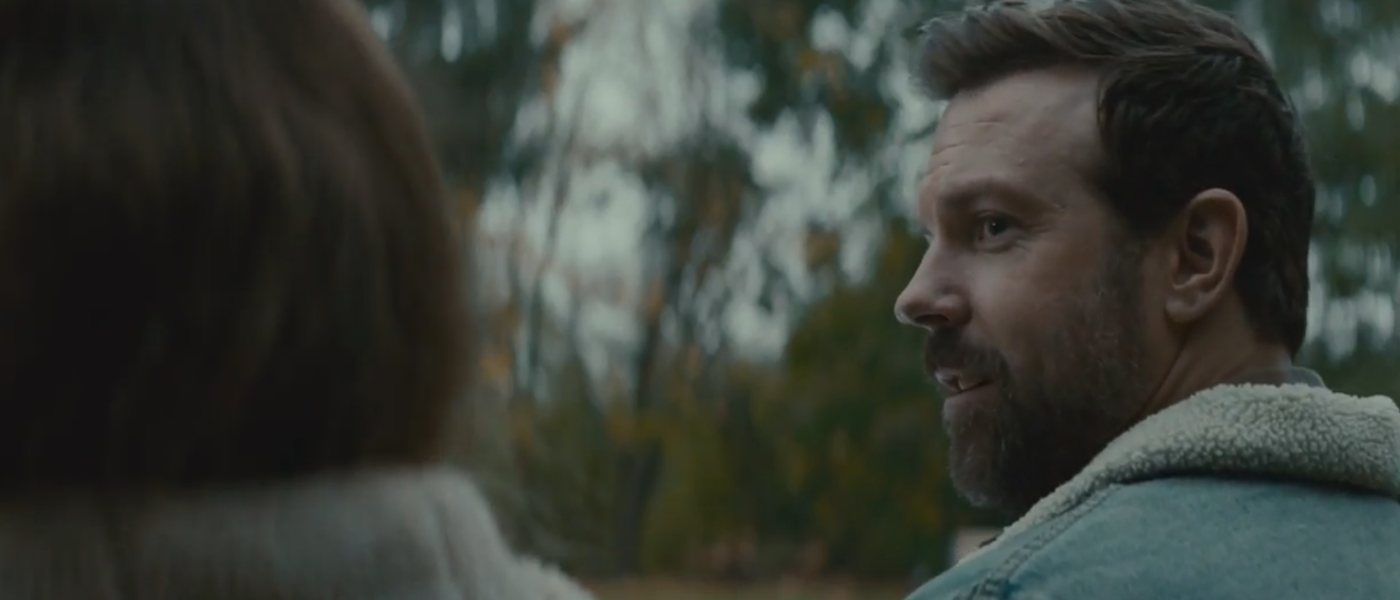
A personal project directed and written by Spanish director Nacho Vigalondo (none of whose previous work I am familiar with), Colossal was a movie I went to see entirely on spec. A woman named Gloria (Anne Hathaway), unemployed and a raging alcoholic, breaks up with her boyfriend (Beauty and the Beast's Dan Stevens) in New York City, and moves back to her hometown somewhere in small town middle America. There, she meets an old childhood friend (Jason Sudeikis), who gives her a job at his bar to get back on her feet, and seems to be interested in kindling a relationship, introducing her to his friends around town and helping her put her place in order. What sounds like a setup for a particularly boring romantic dramady is salvaged however, by two complicating factors. One of these factors is that a two hundred foot reptilian monster begins assaulting the city of Seoul, South Korea, smashing things, killing people, and vanishing into thin air from whence it came. Over the course of several nights of these rampages broadcast on live news and YouTube, Gloria begins to realize that the monster is mirroring her own actions whenever she stumbles home drunk at eight in the morning through a disused playground somewhere in town, and that she is consequently responsible for the murder of hundreds and the destruction of much of Seoul. The other one of these factors is actually important.

But... before we get to that, let's talk about what we've got here. All of the above actors, particularly Hathaway, are sublime. Of course Anne Hathaway is always sublime, even in bad movies like Bride Wars or Alice in Wonderland. Her character is a blind drunk, accustomed to getting away with murder (metaphorically, one hopes) by acting cute and batting her eyes, and pivoting instantly to hyper-serious when confronted with real consequences, such as being thrown out of her home or realizing that she may have started World War III by accident. A great early sequence has Hathaway effortlessly expressing total desperation, shock, and misery, all without a word, after her boyfriend throws her own of their shared apartment and her drunken friends carry on carousing behind her, oblivious. Given the weirdness of a premise that requires her to discover that she can control Godzilla, she, and the movie, plays things very down to earth, as she struggles to find a way to make things right without the wider world discovering what is actually going on. Vigalondo's direction is light on effects and heavy on quotidian observation (he wrote, smugly), with the emphasis firmly on the characters and their reactions to what, in a worse movie, would be a world-shattering discovery leading to super-heroism or chase scenes, and in this movie leads to slurred conversations in bars while watching events play out on television. In fact, one of the funniest things I've seen in years is a CNN report that plays a YouTube video of one of the Kaiju "incidents", complete with internet memes and embellishments. I almost choked.

But I said a moment ago that there was another factor that was actually important. What factor is this, you ask? It's the character of Jason Sudeikis' Oscar, who starts the movie off as a friendly, neighborhood bar-owner, willing to help Gloria out with a job and spare furniture, and ends it as... well... one of the most toxic, abusive, controlling people that I have ever seen applied to screen. It's not that Oscar is a monster, although he is, it's that the movie does a sterling job of portraying what an abusive person actually looks and acts like, rather than the cartoon psychopaths that are generally put on screen. His behavior is cyclical and self-delusional, with subtle warning signs initially before spiraling into full-blown narcissistic delusion and aggressive, controlling behavior, fueled, in-part, by his own incipient alcoholism and circumstantial opportunities (the aforementioned Kaiju situation) to force his fantasies into reality. Sudeikis, an SNL alum, is an actor I've known about forever, but I don't think I've ever seen before this, at least not in movies, and he's amazing. This is a role that most directors would fill with guys like Vince Vaughn or Billy Campbell, tough-looking creepers who can loom menacingly and appear monstrous at the drop of a hat, with the usual consequence that one wonders just how the abused protagonist couldn't see this coming. But this film has Jason Sudeikis, of Mother's Day and Zach Galifianakis movies, a guy whose established movie persona and look are about as threatening as a bowl of soup, turning on the repressed rage and toxicity, rather than unconvincingly turning it off. It's an incredibly good performance, a star-making performance, helped by a restrained script that only provides the barest glimpses of what must be going on underneath the surface of the character, letting the audience figure it out for themselves.


Things Havoc disliked: So... here's the thing...

Some films are just bad. That's hardly a shocking statement. Some are the product of bad scripts or writing, some of terrible performances, some of awful direction, a rare few are victims of all of the above. Over the years I've been doing this, in fact, I've come to appreciate that there are an infinite number of ways to make a bad movie, and in the aftermath of one, it is often not that easy to sit down and parse out what actually went wrong. That's one of the reasons (beyond simple procrastination) why these reviews take so long. You need to give a movie time to percolate, time to settle in your mind. Sometimes you simply need to take the time to clarify your thoughts on a film before you can start speaking intelligently about it. And this is often the case for films, like this one, that are objectively very well made, with good acting and good writing and a good director overseeing it all, and yet which, for whatever reason, I found I didn't like.

Why? What more could I be asking for beyond a bunch of good actors acting well together in a refreshing story that occasionally had me howling in laughter? Initially, I thought that the problem was that the movie reminded me too much of films like Enough, the 2002 Michael Apted "thriller" that starred Jennifer Lopez as a woman fleeing her cartoonishly-evil ex-husband, who would sneer at the camera before monologuing about how deliciously evil he was and how helpless she was to thwart him. But as I mentioned above, that comparison isn't fair, as Sudeikis' performance (and, frankly, Vigalondo's directing) is miles beyond the cheap mawkishness of that early-00s snoozer (there's a reason the 1997-2004 period is now regarded as the Dark Age of Cinema). What, then, was the problem? Was there something more fundamental in this film that made me react this way, some deep-rooted issue of script or premise? Or was it instead a subjective matter, and whatever it was had nothing to do with the movie at all, just a facet of the baggage that all critics, no matter how objective they try to be, bring into the theater with them?

Maybe. Or maybe the problem lies, not with Enough, but with a movie from 2014 called Gone Girl.

Long-time readers will remember Gone Girl, the David Fincher film based on a Gillian Flynn book, the one that starred Rosamund Pike and Ben Affleck at the top of their form, with a labyrinthine script involving insanity, betrayal, murder, manipulation, and the hunger for scripted villains by mass media. It was, by many standards, a great film, well created and shot, and written crisply enough that even Tyler Perry wound up looking good. And I hated it. Not because of any of the things above, but because I concluded, following a similar agonizing process to the one above, that it was a shallow, manipulative piece, coded in the language of misogynist sexism, one that romanticized all of its men, no matter how awful, and condemned all of its women, no matter how unbelievable. It was a movie that pretended to show the steamy underworld of obsession and manipulation, but refused to play fair with its characters, with the audience, or with the scenario it had set up, preferring instead to deal in thin stereotypes hidden by good performances and direction. At the time I reviewed Gone Girl, I said that I rejected the film, in part because "If a movie was made this way about men (and there have been some), I and others would be trumpeting outrage to the skies." And readers, I'm sad to report that the time has come, because Colossal is that movie.

The problem isn't Sudeikis' character, not really. He's an obsessive, evil, manipulative person, willing to commit horrific acts so as to control Gloria's life, but that much isn't sexism any more than Norman Bates was, it's a character of terrible depths played brilliantly, and one we don't often get to see, at least not with this spin. No, the problem, as always, is in the context in which we get to meet this character, because this isn't a simple story of girl-goes-home-and-is-manipulated-by-monster, Kaiju-laden or otherwise, and the movie treats it like it is. Gloria, lest we be reminded, is herself a blind drunk, one who, even after discovering this miraculous capacity to control the actions of Godzilla, drunkenly plays with the notion and shows off to her friends, resulting in the deaths of thousands and the obliteration of large portions of Seoul. It would be one thing if the story were one of Gloria learning from her terrible mistakes and taking back control of her life, while Oscar slides deeper into the throes of his own demons, but it's not, not really. Instead, Gloria is instantly forgiven everything that she's done wrong because... well because she's the heroine, I guess. She cures her raging alcoholism, a disease that has led her to kill thousands of people, offscreen, suddenly no longer suffering from it because she apparently decided not to. She does this, despite still working in a bar, surrounded by alcohol, an environment no alcoholic on Earth has sufficient willpower to resist. And just as she does so, everyone else in the movie swallows their evil pill, so that she can appear more saintly. Not only does Oscar take a turn from "weird and creepy" to "utterly irredeemable" (which is fine), but her ex-boyfriend (Stevens), the one who broke up with her in the beginning of the film because he didn't know what else to do, and has spent the movie calling her up and begging her to get help, even apologizing for sounding so superior and lecturing about it, the one who turns up in her hometown, having faked a buisness trip for the purpose, because he's afraid that she may be in real trouble (which she absolutely is), this boyfriend suddenly turns around and becomes a negging, verbally abusive, dismissive egomaniac, denigrating her attempts to do exactly the things he had previously been begging her to do, just so that when she inevitably tells him off and excises him from her life, the audience can feel good about cheering.

But that's not the only character this happens to. Consider Tim Blake Nelson, a wonderful character actor whom I've adored in films like Holes, Syriana, and O Brother, Where Art Thou. He plays Garth, an ex-drug abuser and friend of Oscar, whom Oscar turns on one night in a drunken rant, exposing his past as a drug addict and belittling him mercilessly. He tells Oscar off, and... is never seen again. Despite the fact that his character has been set up heavily as an important part of the story, and the fact that he knows the secret about the Kaiju, one of the most explosive in the history of mankind, he vanishes outright from the rest of the film, something the film tries to frame as moral cowardice, and I am tempted to re-frame as the film being afraid that having a male character who isn't an abusive monster will undercut their heroine. For proof of this, look no further than Austin Stowell, of Whiplash and Bridge of Spies, Oscar's other friend, with whom Gloria has a brief fling, prior to him turning into a doormat and an enabler for all of Oscar's worst habits, actively abetting him in the murder of thousands of people with no reason given beyond the fact that, well, he's a man, and you know how they are. I don't mind that these characters are all flawed, or addicts, or stupid, or abusive, or even monstrous. I've loved many a film with many a character that evidenced all of those things, some with much less acting skill than is on display here. I mind that the movie is coded such that they are those things because they're men. And that Gloria, no matter what she does, no matter who she kills, is not any of those things, because she isn't.


Final thoughts:   It should be noted that the people I saw this movie with had no such experience, and thought the movie was interesting and well made, and rated it highly. I do not claim that they are necessarily wrong, but I will note that I felt the same way about Gone Girl when I left the theater, and that it was only after much time and conversation with those who had reacted negatively to that film's latent misogyny that I came to realize that I hated it. I would not go so far as to say that I hated Colossal the same way I ultimately did Gone Girl, but I did not like it, not when I saw it and even less now, with several weeks' distance to think about the matter. The issue isn't just that it stereotypes men as abusive, manipulative monsters, although it absolutely does this. It's that in doing so, it also manages to imply that the only way the audience will empathize with a woman in the throes of an abusive relationship is by making her literally the only likable person in existence, beatifying her by proxy despite the fact that she manifests many of the same behaviors as everyone else. The only difference is that, as a woman, she's infallible, while men are the scum of creation. And if you think I'm laying this on too thick, consider for a moment that the character is named Gloria, and that one of the final scenes has her literally walking on water.

Enough then. I don't expect that many people will hate Colossal, in fact I expect quite the opposite, as the movie is unquestionably well made and acted by all concerned. I don't begrudge those who find value in the exercise as a result, but I cannot number myself among them. I mentioned in the Gone Girl review that a good film can be made about any subject, but only if it made with honesty, and like that film, Colossal is a crude simplification that gathers airs of depth because of its evident technical virtues. I denounced Gone Girl because of its insidious misogyny despite these virtues, and I will not refrain in this case simply because the shoe is on the other foot. To do anything else would be dishonest, and that would make me no better than the film itself.

Final Score:  4/10


Next Time:  Magic, Mayhem, and Mad Science.

Wednesday, May 24, 2017

The Fate of the Furious


Alternate Title:  As The Rock Turns
                                                                                                                                                            
One sentence synopsis:  Following a shocking betrayal from within, the Toretto crew must team up with old friends and adversaries to stop an international cyber-terrorist from seizing control of a doomsday weapon.


Things Havoc liked:  Let us now consider a work of high art...

The Fast and Furious franchise is one of the strangest things in film, an action movie series that somehow re-invented itself halfway through and became awesome on its fifth installment. How it did this is a complete mystery to me, partly because this is something that is simply never done, and partly because I took one look at the original Fast and the Furious and noped out right then and there. It took the dregs of 2015's indie dreck to drag me, kicking and screaming, into Fast & Furious 7, where I discovered to my amazement that the series had metamorphed into an action-soap opera involving wonderful self-aware humor, and some of the most ludicrous action setpieces I've seen since the heyday of the 80s. The writing was terrible, the actors sub-par, the plot ludicrous, the movie patently stupid. I kind of loved it. And now here we are, two years later, with another sequel, the eighth in the franchise, and one which has, at time of writing, scored the biggest opening weekend in the history of cinema (a record that is broken every six months or so, but still). Not bad for a movie series where two of the lead characters can't act and the third one is dead.

Too soon?

The Fate of the Furious is a movie directly taken from the vein of the previous films (I assume. Remember, I haven't seen any but 1 and 7). Dominic (Vin Diesel) and Letty (Michelle Rodriguez) are on their honeymoon in Cuba, visiting old friends, when trouble arrives in the form of Charlize Theron's Cypher, a super-hacker/Bond villain with ties to Dom's past (after eight movies, are there people still in existence who do not have ties to Dom's past?) out to do nefarious things for the sake of being nefarious. This is the sort of villain character that we have seen time and again in bad action movie after bad action movie, but this is Charlize Theron, a woman who embodies campy insanity, as a glance at the Snow White and the Huntsman movies will tell you, and she makes it work by vamping it up with icy-blonde dreadlocks and a murderous stare. She joins a cast that by now has passed unmanagably large and entered ludicrous territory (zing!), including The Rock, Kurt Russell, and F&F7's main villain (now converted into a protagonist, like every Fast and Furious villain), Jason Statham. Each and every one of these men are veterans of myriad bad action movies, and know just what they are doing here, from The Rock's larger-than-life personality (an early scene where he coaches a girls' soccer team includes a hilarious bit I would not dream of spoiling), to Kurt Russel's cock-eyed, self-assured arrogance (something he does oh-so-well), to Jason Statham's virtuosity when playing an abrasive asshole (something he is so much better at than playing a leading nice guy). These characters join the "crew", now comprising half-a-dozen members in their own right, even without the late Paul Walker, including Ludacris, Tyrese Gibson (I love these two men so much), Nathalie Emmanuel (who played a hacker character in the seventh movie that I assumed was disposable, forgetting that this series never discards anyone), Michelle Rodriguez, Elsa Pataky, and... you know what if I keep going, we're gonna be here all day, so let's just leave it at "also everyone else in the universe". Some of these people are good actors, some are not, but every one of them inhabits a lived-in role designed just for them, one that fits their strengths and er... non-strengths... just right, with the result that even the bad performances are charming in their own way. This isn't a movie you go to see in order to watch great thespians bare their souls. It's a movie you go to see to watch shit explode and one-liners said.

So who is the ringmaster of this absurd collection of action movie tropes and variable-quality acting? None other than F. Gary Gray, who we last saw two years ago directing the incomparable musical biopic Straight Outta Compton. One forgets, given the critical acclaim that movie produced, that Gray got his start directing stupid, stupid action movies like The Negotiator, The Italian Job (the 2003 version), and Law Abiding Citizen. While I would not recommend you all run out to find those movies (especially not the last one), they are in the vein of this sort of willfully absurd action extravaganza, and fortunately, Gray, as well as long time series screenwriter Chris Morgan (whose other work we shall not speak of here), seem to have found their senses of humor this time to go along with the ridiculous action. One of the secrets of this series' success is just how little it cares about how dumb everything is, and while it's hardly the first action series to give in to the stupidity and just run with everything, Gray succeeds where others fail by playing up the melodrama of everything to truly hilarious levels. Characters cannot simply discuss their feelings, they must weep and wail and gnash their teeth and cast about for scenery to chew upon, so overwrought are they by the soap opera-style drama and relationship complexities that overcome them minute by minute. With a lesser cast, this sort of thing would be insufferable, but Gray trusts his cast to go for it, relying on the good actors (or at least the good bad actors) to carry the bad ones through the material, and the stunts and action to take care of the rest.

Oh did I mention there was action in this movie? Because there is. And it's awesome. Granted, I don't know that anything will top the sheer lunacy that was the climax to the last movie (recall that that one ended with an akimbo lug-wrench fight between Vin Diesel and Jason Statham on top of a collapsing building), but I'll be damned if they don't try. Listing everything insane that happens in this movie would take a hundred years, but standout sequences include one where a computer hacker seizes control of thousands of self-driving cars for a chase through New York City, one that quickly comes to echo the zombie hordes from World War Z more than your traditional car chase. An extended, Mad-Max-style car chase sequence on a frozen estuary livens things up with the addition of a nuclear submarine to the mix, while Jason Statham, in the company of several cameos that made us all howl with laughter, gets to have a brutal hand to hand fight with innumerable military goons while holding a baby in a bassinet. I won't say this is the weirdest fight I've seen Statham engage in (the aforementioned lugwrench fight comes to mind, as does the occasion in The Expendables 2 when he fought off a platoon of soldiers with an incense censer), but it's one of the funniest, as Statham mugs for the baby (and the camera) during the entire engagement, which had me, at least, in stitches.


Things Havoc disliked: I love a good, stupid action movie as much as anyone, believe me, but all joking aside, I don't mistake it for a work of high cinematic achievement. Vin Diesel and Michelle Rodriguez simply cannot act, not like this (in Rodriguez' case, not ever), and I'd be lying if I said it didn't get tiresome watching them try. And the film, in making them share the screen with actors like Charlize Theron, does not do them any favors, nor even when it pairs them with people like Statham and The Rock, who whatever their acting limits, are extremely good at overacting in action movies like these, and thus can't help but show up those in the cast who do not have such skills. This was a problem in the seventh movie as well, but it's a bigger one here, as the soap opera turns of the plot (has Dom Toretto turned on his "family"?!?!) forces everyone to start overacting in a hyper-melodramatic manner, resulting in about seventy billion repetitions of the already pre-established fact that the crew here are a family, and that family is very important when family bonds are strained by familial family obligations of family family family family family. Given that Guardians of the Galaxy managed to set up a believable, fun, surrogate family dynamic without ever once using the word 'family', it's a little much to sit through scene after scene after scene in which characters narrate their own familial relationships to one another in repetitive detail, especially when the actors doing so have no idea how to deliver a goddamn line.

That said, there's nothing wrong with the concept of course, in fact more movies could stand to have a showcase of characters of different ethnicities, backgrounds, and accents like this, family or not. But if you're going to have a cast this size, then the question of what the hell to do with everyone is going to rear its head, and while the film manages to give most of the cast something to do, there's an unavoidable sense that some people are just here because they're expected to be here. With so much attention on Dom's dilemma and his cat-and-mouse games with Theron's evil villainess, the rest of his crew gets short shrift. Gibson and Ludacris are mostly there to score points off one another and flirt with Emmanuel, Rodriguez has nothing whatsoever to do besides look constipated and growl the word family every five minutes, and a new character, a stick-in-the-mud G-man played by Suicide Squad's Scott Eastwood (because an association with fucking Suicide Squad was what this series needed), is pretty much introduced becasue we need someone to play the handsome generic white dude in the absence of Paul Walker, and I guess he'll do. Even The Rock, whom I adore to death, has very little material in this film, other than a handful of fun scenes playing off his rivalry with Statham. I understand that there's a limited number of movie minutes to go around, but a film that fails to use The Rock properly is a movie that is struggling to invent a reason why everyone is there. I grant that plot is a tertiary concern at best in a movie like this, but there has to be something in it for everyone, or the film will begin to resemble nothing but franchise maintenance, along the lines of the third films from the X-Men and Iron Man series.


Final thoughts:   Granted, I wouldn't quite go so far to directly compare Fate of the Furious with those films, but the parallel did assert itself as I was watching, and thus for all its action setpieces and soap opera plotting, I have to confess that Fast & Furious 8 is not as good a film as its direct predecessor was. By no means is it a bad film, but it feels... limited, in a way that the previous one did not. It's possible that's just a reversion to the mean, or a factor of the previous film being an auspicious combination of low expectations and bad competition, but I honestly think that the series, given its disregard for taste and its enormous cast of quality bad actors, is capable of better than this.

That said, for all my reservations, I do recommend Fate of the Furious, perhaps not as strongly as its predecessor, but strongly nonetheless, as only in this series have I found such a wonderful disregard of logic crossed with an embracing of fun, despite all the efforts to ape it by lesser studios and series. For my part, I shall file this one away as a lesser-but-still-fun episode of my favorite action-soap opera, and wait for better things. Of course, given the fact that Fate of the Furious has just finished making roughly all of the money in existence, I expect that the aforementioned cast will soon have an opportunity to try the whole exercise again. And when they do, I will be there to see it.

Final Score:  6/10


Next Time:  The Princess Diaries 3:  Attack of the Kaiju

Sunday, April 16, 2017

Logan


Alternate Title:  Requiem for a Wolverine
                                                                                                                                                            
One sentence synopsis:   In a dystopian future bereft of all mutants, Logan and Charles Xavier must protect a young mutant from a PMC intent on taking her into custody.


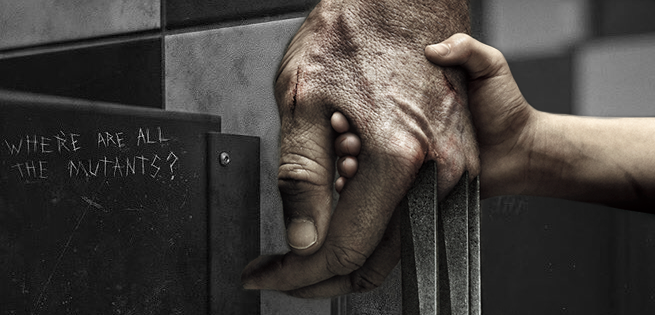
Things Havoc liked:  For seventeen years and ten films, the X-men movies have existed in one form or another. Seventeen years and ten films, some good (X-Men 2, First Class, Days of Future Past, Deadpool), some execrable (Origins, The Wolverine, X-Men 3, Apocalypse). If nothing else, here at the end of all things, it's worth stopping and recognizing just how long and how important this series has been in the ongoing godzilla-like rampage of Superhero movies at the box office. And while the question of whether or not Logan represents an end to the entire affair is more open than I anticipated when I first saw the movie, for whatever it's worth, Logan feels like an ending to a series of weight and importance, and deserves to be judged as such. The promises of the ad campaign that preceded it were that we had never before seen a superhero movie like this, and that, for better or worse, was no lie.

The year is 2029, a dystopian time of brown skies, corporate dominance, and wind-blown grit. Logan (Hugh Jackman), AKA the Wolverine, is an old man at last, his body ravaged by the abuse he has suffered over the years (centuries if you believe X-Men Origins, but I can understanding why one would not), and by the fact that his unbreakable adamantium skeleton is finally starting to poison him to death. Kept going only by his preternatural healing factor and the need to care for a nonagenarian Charles Xavier (Patrick Stewart), whose brilliant mind is finally disintegrating under the weight of raw age and raw despair. Together with a new-to-the-series precognitive mutant named Caliban (a barely-recognizable Stephen Merchant), these three may well be the last mutants on Earth, due to a combination of an unexplained cessation in mutant births some twenty-five years ago, and a horrible accident, only hinted at in the story, in which Xavier's faltering mind obliterated a large number of mutants and humans some years previously. I normally try not to go so deep into plot matters in these reviews, but what's important here is how distinct this setup is from anything else we've ever seen in X-men movies, or really in comic book movies whatsoever. The style is not high adventure, as is the common theme for these films, nor mystery or thriller or heist or space opera, as in many of Marvel's recent outings, but modern western, ala Hell or High Water or No Country for Old Men. The scenes are elongated, the characters exhausted and worn, the tone funereal and bleak, the shot selection (by Kingdom of Heaven and X-Men: First Class' cinematographer John Mathieson) positively Coenesque. If only by sheer novelty, in consequence, Logan is a revelation for the entire Superhero genre, an application of dramatic cinematic language to a genre still dismissed by many critics as having no soul. I've never seen someone try to adapt a Cormac McCarthy book to the screen with superheroes in it, but if I ever do, I expect it will look exactly like Logan.

The director of Logan, James Mangold, also directed Wolverine's last solo instalment, 2013's The Wolverine, which was distinguished only in that it was better than its predecessor. For Logan, though, Mangold has chosen a very tight story, wrapped closely around three characters, trusting that the actors involved will sell the material themselves, as they have been doing for the better part of two decades now. It's a wise decision. Jackman has always been the original genius-casting for a superhero character, even in the worst of all movies. Here, he's given an opportunity to dig down into the soul of the character in a way he was only ever allowed to hint at before, and the result is everything it should be. He plays Wolverine like a broken, beaten man going through the motions because he doesn't know what else to do, who has grown accustomed to losing, and whose primal rage is no longer sufficient to carry him through. Stewart meanwhile, in the character he defined, is the picture of sadness, his high-minded ideals in ashes, his life's work a failure. The sudden shift to an R-Rating (a first for the X-men series if you don't count Deadpool, and you shouldn't), only re-enforces things, as listening to Professor Xavier, the grandfatherly mentor of the mutants of old, cursing and weeping in a deserted steel foundry that has become his jail cell and hospice room is a more startling image than I expected it to be, accustomed as we are to seeing the character in a totally different context. And with none of the rest of the panoply of X-men characters on-hand or even mentioned, much of the film is given over to the interplay between Logan and Xavier, as though in the end of this epochal series, we have returned at last to its original roots. But the final element the film cores itself around is a new addition, a young mutant girl named X-23 (Laura, eventually), lab-grown by the inevitable evil super-corporation, and now on the run from their army of paramilitary hitmen, played by Spanish-English child actress Dafne Keen. There's a lot of you out there who, upon hearing that Wolverine was to be paired with a child sidekick, no doubt reached for vomit bags, but let me assure you, this girl, and this character, are goddamned incredible. Entirely mute for most of the film save for guttural growls of tempestuous rage, and possessed of a violent potency that makes Hit-Girl look like Kit Kittredge (the introduction to her mutant powers involves a freshly-severed head), this is not your average child sidekick, but a violent blender in the shape of a pint-sized girl, and Keen, whether speaking in English, Spanish, or not at all, is transcendently-good in the film, not merely the physicality demanded by the action, but also in holding her own against two titans of the superhero genre in the quieter, more desolate scenes that the movie is replete with.

And that's... more or less Logan in a nutshell, folks, an experiment in character and tone and the capabilities of superhero violence, as the R-rating allows the movie to get sublimely brutal with its action, befitting the darker tone of the movie and thrilling any long-time fan of ultra-violence (hi). Snapshots of Americana, such as an extended sequence with a black farming family somewhere in Kansas (headed by ER's Eriq LaSalle) are interspersed with moments of quiet desolation, allowing the characters to reflect on the irrecoverable ruin that their lives have become. The classic comic relief that comes naturally when a character as broody as Wolverine is forcibly paired with small children breaks up the tension now and again in the right spots, but the film is overall a dark and funereal mediation on the end of dreams, on the grim side of human nature, and on the human condition in its most agonizing forms.


Things Havoc disliked:  That does not make it a good movie.

I wanted to like Logan. I wanted to love it. I wanted to use it as ammunition against every snobbish artistic oligarch who have been spitting on this entire genre for twenty years, and implicitly or explicitly on those who enjoy them. I wanted to herald it as a sea-change in the makeup of Superhero filmmaking, as proof positive that these films are the Greek Myths of our modern world, re-shaped and re-packaged to deliver the universal truths of the human condition by exaggerating what it is to be human. I wanted Logan to blow me out of my seat, and to leave the theater showering it with praise. And maybe that was my mistake in the first place, because for all of the very good things in Logan... I didn't like it at all.

Why not? Well, let's see if I can illustrate.

Logan wishes, very very much, to be its own film, to be viewed as its own film, unrestrained by the decisions and canon of the nine movies that preceded it. To an extent, I understand. Ten films is a lot of films, particularly if you are not Marvel, and have not been comprehensively building your cinematic universe in a holistic manner. We've already retconned one film (X-men 3) out of existence entirely, after all, and I can fully understand the desire to break with tradition in this regard. The problem though, is that the movie wants to have its cake and eat it too. It relies entirely on those previous movies for the establishment of the characters of Logan and Xavier, to give weight to what's actually going on here. Otherwise we're just watching two ornery old men snap at one another for two hours with no context. And yet, having invited us to remember all of the previous adventures of Xavier and Logan and their band of merry mutants, the film expects us to selectively forget everything else in those movies, from Magneto to Mystique to the X-men to the fundamental themes of the X-men movies themselves, all without comment. That is a huge order for any franchise, the equivalent of releasing a Star Wars movie that has no spaceships, no Jedi, no Empire or Rebellion, no Force, no aliens, no adventure, and no fun, and then pretending that any confusion that results is the fault of viewers who are afraid of change.

Where, for instance, are the X-Men? This is not an unreasonable question to ask given that the plot of the movie is entirely contingent on the fact that they no longer exist, and that nine previous films were entirely or in part about the X-men in one form or another. I'm not asking that the movie be identical to First Class or Days of Future Past, or upset that Cyclops and Jean Grey didn't get cameos. I'm annoyed that the question of where all the mutants are is not answered in any manner save by one of the most perfunctory, stupid, and ill-thought-out plot excuses imaginable. This isn't a minor question. The entire series was built around mutants' position in society, as allegories for homosexuality or other forms of discrimination. I don't expect Logan to chain itself to the themes of previous films, but if it's going to position itself as the last word to a twenty-year series of films, it has a goddamned obligation to remember that they existed, at the very least. But no, those movies are entirely separate from this one, except for when we say so. Or indicate so. Or decide retroactively that it is so. And it doesn't stop with that question alone, indeed Logan seems almost perversely uninterested in answering any questions, whether brought up by previous films or by its own plot. If Wolverine's adamantium is poisoning him to death, then doesn't that indicate that Laura, who is established to also have Adamantium grafted to her skeleton, is also at risk of being so-poisoned? Never addressed. If the X-men have been destroyed (which I think is where the movie is going, but it hardly makes things clear), then what happened to all the other mutants of the world, particularly the world-shattering ones that the X-men fought? Never addressed. How is it that a PMC is operating throughout Mexico, Canada, and the US with massive military deployments, utterly unchecked by even a modicum of government oversight, up-to-and-including drone strikes and massive civilian casualties? Never addressed. These aren't minor nitpicks, like how Laura's growing skeleton is going to respond to adamantium grafts, or why evil corporations always think that living-weapon super-soldiers are going to pay for themselves despite their propensity to kill everyone nearby (I call this the Wayland-Yutani Paradox), these are core elements of the story, logical questions that anyone, let alone the fans of the series that the movie has gone out of its way to attract, would wonder at the instant the subjects were brought up. And the film's response is to ignore them all entirely as unimportant, because they might take valuable time away from the misery on screen.

But all of this I might have forgiven if not for the ending of the film, an ending that is so deliberately unfulfilling that it can only have been intentionally designed that way. After an hour-and-a-half of confusing but interesting buildup, of morbidly funereal tone, of the nadirs of human experience being showcased on screen, we get to the end of the film, and the filmmakers reveal that there was no point to any of it save to wallow in the misery of human suffering. Make no mistake, there are great movies that exist solely to wallow in the misery of human suffering, as films as diverse as Requiem for a Dream, Grave of the Fireflies, Dancer in the Dark, or Breaking the Waves can attest to. But those movies were trying to make a statement about their characters, their world, and what it is to be human. Logan is not, in fact Logan rejects the notion of such things so violently as to appear contemptuous of them. Not only does it seek to end the X-men movies with a whimper, but it implies in doing so that the themes around which the previous films lived or died were so unimportant that they aren't worth a mention, and that the movie's own plot, independent of what came before, is similarly unimportant. Nothing is resolved by this film, not from previous installments nor from this one itself. We never even get to know if the purpose that Logan and Xavier drove themselves out of retirement for, the driving force of the entire film, was a success or not. Some might call that decision bold. I call it lazy. And the film ended, I realized that the whole business, the quantum canonicity, the alternating respect for and rejection of the previous works, the wild and unexplained shift in tone, the casual discarding of the hallmarks of the series in favor of something else entirely... all of it spoke to me not of a movie in a series, but of Fanfiction. An experiment in fiction by those who want to take what they want of the canon and discard the rest without comment. And while I remain a stalwart defender of, and yes, even practitioner of the art of Fanfiction (come the fuck at me), Fanfiction is not what I go to the movies to see.


Final thoughts:   Logan is a movie of great paradoxes. It has many admirable qualities to it and many decisions that baffle me even now, a month after seeing it, and it is this paradox that has kept this review so-long delayed (among other things). I cannot, in good conscience, call it a great film, as many others have, though I also do not deny that it is in many ways a daring and admirable experiment in how one may take Superhero movies. As such, I remain of two minds about Logan, as I likely always will be. On the one hand, it is a film that has finally managed to be taken seriously by all and sundry, critics, audiences, and filmmakers alike. It has proven that not only can Superhero movies be serious, but that they can be R-rated and adult-themed and dour and reflective, and still make money at the box office. On the other hand though, it has also, probably inadvertently, sent a message to the critics that Superhero movies can indeed be good films, assuming that they jettison all that childish "superhero" stuff in favor of a grim deconstruction of the genre that borders on the monomaniacal at times. There is a consequent part of me that is concerned at the fact that a movie that many are calling the Greatest Superhero Movie of All Time is a film that regards the genre of Superhero movies as being stupid and lightweight to the point where it does not deserve consideration or thought.

Ultimately, Logan is a movie that many will love, some will despise, and I will not know what to do with for as long as I live. I did not, ultimately, enjoy it particularly, nor do I think that its gross ignorance of the basic conceits of plot, and its palpable contempt for and embarrassment by its predecessors somehow makes it a great film. But like it or not, Logan feels like a sea-change in how Superheros can be represented on the silver screen. I can only hope that the lessons we learn from it are to the genre's credit.

Final Score:  5.5/10


Next Time:  White People:  A Cautionary Tale

Tuesday, February 21, 2017

Silence


Alternate Title:  The Passion of the Audience
                                                                                                                                                            
One sentence synopsis:   Two priests travel to Japan to discover the fate of their teacher while trying to avoid the agents of the Japanese inquisition, determined to eradicate Christianity in Japan.


Things Havoc liked: Despite Hollywood being a star-driven system overall, if you're a true cinephile, there are certain directors you simply pay attention to. Spielberg, Tarantino, Aranofsky, the Coens. And high on that list of key directors is Martin Scorsese, a man who has made 24 full length feature films over the course of his career, and been nominated as Best Director for exactly one third of them. Though obviously best known for his crime dramas like Goodfellas, Casino, Mean Streets, or Taxi Driver, Scorsese does occasionally step outside the confines of his normal routine, whether for whimsical fantasy (Hugo), or for pissing off authoritarian governments (Kundun). So it is with this film, a long-awaited historical mediation on spirituality, religion, sacrifice, and faith, in which Kylo Ren and Spiderman go to Japan to find Liam Neeson.

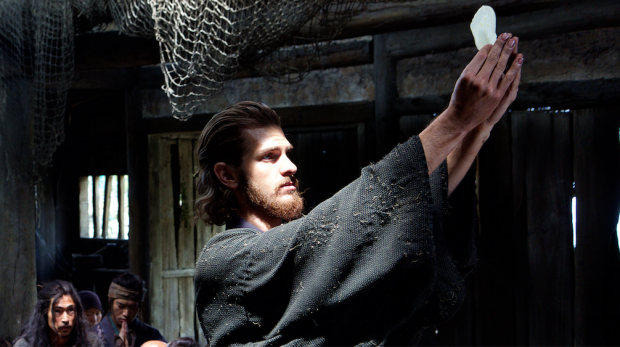
In the mid-1630, in Macao, then a Portuguese colony on the edge of China, two Jesuit priests, SebastiĂŁo Rodrigues (Andrew Garfield) and Francisco Garupe (Adam Driver), receive word through an intermediary that their former teacher and mentor, Father CristĂłvĂŁo Ferreira (Liam Neeson) has been captured in Japan while attempting to preach the gospel, tortured and forced to recant his faith in public. Both young men immediately decide to venture to Japan to find and retrieve him, while also spreading their faith as best they may, despite all entreaties to the contrary. Japan in the 1630s, after all, is in the throes of the Tokugawan persecution of Christians, an attempt by the newly-victorious ruling parties of Japan to violently extirpate the Christian faith from their shores by any means necessary. So begins an epic journey into danger and faith, of martyrdom by the helpless and suffering inflicted by the powerful. So begins, in essence, Scorsese's attempt to delve into the contents of his own on-again, off-again Catholicism, to discover truths about faith, ritual, and God.

Heavy stuff? Unquestionably. So let's return to the temporal plane with a discussion of what works, and to my surprise, we have to start with the acting. Andrew Garfield has been a hit-or-miss figure with me over the films I've seen him in, particularly the abominable Amazing Spiderman, but his performance in this film is absolutely spot-perfect. Garfield's ability to project college-aged youth-with-confidence through films like The Social Network has never been in question, and in the role of a young priest who has no idea what he is getting into, but strives as best he can to do right by the parishioners he encounters in Japan, he finds the best role of his career, not that that's saying a whole hell of a lot. All joking aside, Garfield has to anchor the movie, and does it very well, oscillating between naivety and doubt as to what his mission should be in the face of the horrific, unending brutality on display from the Japanese authorities towards Christians native or foreign. His character is not a fool, nor blind to the suffering his presence may cause, and his struggles with the dictates of his faith and desire to bring compassion in the form of Christianity to the devout worshipers that cling to existence in Japan, despite all efforts to (literally) extirpate them. Almost as good is Adam Driver, of Kylo Ren fame, whose Father Garupe, another secret traveler to Japan, an equally-committed but more hardline priest who regards the torments of the local Christians as contributions towards martyrdom, and who holds to a hard line against the demands of the shogunate to trample upon images of Christ and the saints. A lesser role goes to Liam Neeson, not phoning it in for once, as a broken priest forced to adopt Buddhism and to become a hunter of Christians. I've said before that Neeson is a very good actor when a strong director takes him in-hand (and there are few stronger than Scorsese), and he manages considerable nuance and conflict through subtle elements of his performance, saying one thing, meaning another, and probably believing a third, or perhaps not, depending on the interpretation. The Japanese cast, including veterans like Tadanobu Asano (Ichi the Killer), Issey Ogata (The Sun), and Yƍsuke Kubozuka (Strangers in the City), all execute flawlessly, particularly Yosuke, who plays the perennially lapsing Christian Kichijiro, who constantly fails tests of his faith and devotion and constantly seeks redemption and repentance for doing so. His character is all-too-human, and would make, in another world, a fine subject for a movie in his own right.

Silence is also, above all else, a gorgeous film, with long, luxurious shots of Japanese country and seacoasts. Waves crash against rocks (and Christians), torches twinkle in the bitter darkness of the night, and peasants lead un-glamorous, un-sentimentalized lives amidst fields of tall grass and azure skies. The music is sparse to the point of non-existence, the film relying instead on whistling wind, shifting branches, running water, and distant cries to form its soundtrack. All in all, the film is a masterful work by a masterful filmmaker, plainly the product of infinite care and devotion on the part of one of the great filmmakers of modern times.


Things Havoc disliked: But goddamn is it long.

Silence clocks in at 161 minutes, which is long as movies go, but not impossibly so. The Hateful Eight still had more than a half hour to go at the point when Silence stopped, but despite that, Silence feels much longer, and that's really the metric that matters. The entire movie, absent a few shots at the beginning and some setup regarding the first village of hidden Christians that the priests come to, is basically comprised of two elements: Martyrdom, and gaslighting. The former is by no means Passion of the Christ level torture-porn, but there is just so damn much of it, at such endless length, as this set of Christians are found out and tortured to death while refusing to recant, and then this set, and then this one over here. I know this is the point of the movie and I know that martyrdom is a core element of the Catholic faith. I also know that seventeen separate scenes of "will the villager step on the image of Christ as commanded by the inquisitor or will he refuse" rapidly gets monotonous for anyone not as obsessively lapsed-catholic as Martin Scorsese, particularly when the answer is always "he will refuse", and the result is always "he will be abused and martyred for doing so".

As to the gaslighting, well if nothing else, this movie finally made it clear to me what is meant by that term, as Garfield is more or less subjected to the technique endlessly for about the last two thirds of the movie, as the authorities alternate the torture of Christians with telling Garfield that he is to blame for them being tortured. This may well be true from a certain point of view, and it certainly is historical to what went on (the Japanese authorities, recognizing that martyrdom was counterproductive, told priests that they would torture Japanese peasants until the priests apostatized. Again, it feels rather churlish to blame the movie for including things that it is ostensibly about, but we get the idea very early on in the process, and the terrible indecision that Garfield undergoes at interminable length only holds the interest for so long. And not to spoil the ending, but given that the movie is more or less entirely about Garfield and his reactions to the terrible tortures being inflicted upon him and others around him, the lack of any clear idea of what he (or anyone else) eventually comes to believe about all of this does not make for compelling filmmaking. The Japanese gaslight a young priest for what appears to be months until he either does or does not recant. Which does he do? Um...


Final thoughts:   There's a degree to which movies like this are enjoyable, as one can respect a good filmmaker making a project he believes in, but that degree ended for me quite a ways from the end of Silence, which ultimately is a punishing movie to sit through, not as literally as Passion of the Christ or its imitators, certainly, but in all the ways that a three hour movie with one hour of content in it can customarily be, irrespective of subject matter. The film is acted very well, shot very well, directed extremely well, and scored... not at all, to be honest, but that's plainly the intent. And yet I left the theater in no hurry to watch it ever again, so certain was I by the end that I had wrung every possible drop of interest out of the concept presented here. Still, subjective as my opinions are, I do try to retain a certain level of objectivity when it comes to a movie that is made as well as this one, but there is a limit to how far I can go in my praise for a movie I did not actually enjoy the act of watching. Catharsis is one thing, after all, but boredom is very hard to defend, no matter what the subject matter is.

Final Score:  6/10


Next Time:  DARKNESS!  NO PARENTS!!!

The General's Post Summer 2018 Roundup

Let's get back into the swing of things, shall we? The General's Post Summer 2018 Roundup Ant-Man and the Wasp Alternate Ti...